Friday
04 September, 2026
News Flash
News Flash
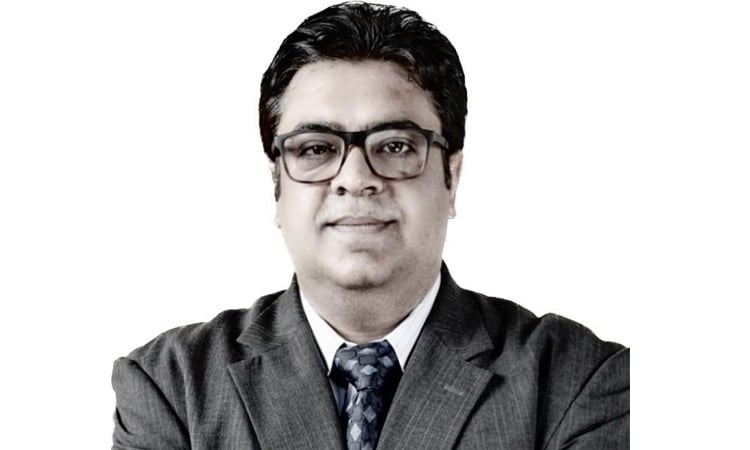
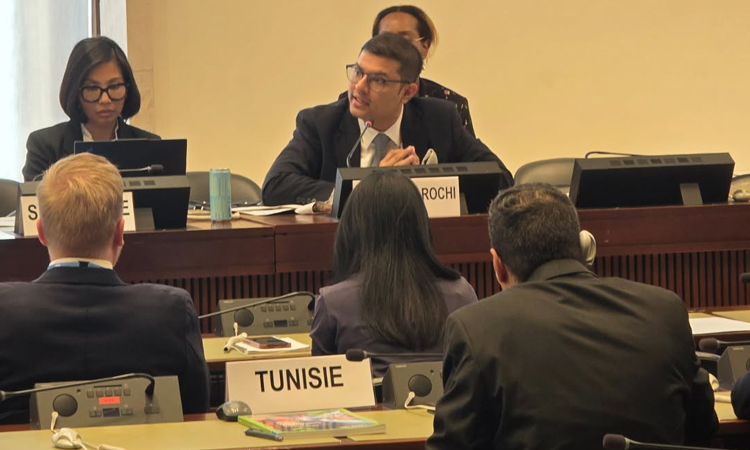
DHAKA, Aug 15, 2026 (BSS)- Prime Minister’s Adviser on Posts, Telecommunications and Information Technology Rehan Asif Asad today urged mobile operators not to be tensed over the upcoming spectrum renewal, saying the renewal involves only around 20 percent of the total spectrum currently assigned to four operators.
“Please do not be tensed. This is only 20 percent and we'll get it right InshAllah. What matters and what's critical is the signal . . .,” he said while addressing a roundtable dialogue titled “Spectrum for a connected Bangladesh: Enabling Internet for All”.
Telecom and Technology Reporters’ Network (TRNB) organized the dialogue in a city hotel with its President SM Masuduzzaman Robin in the chair. General Secretary Faruque Hosain delivered welcome address.
Rehan Asif the key issue was not spectrum alone but the future of the country, stressing that the telecommunications and technology sector would be one of the most vital sectors for the next 20 to 30 years as artificial intelligence (AI) becomes a fundamental driver of changes in life and the global economy.
Rehan said 406 MHz of spectrum is currently assigned to four operators, while 79.4 MHz is due for renewal in 2026, with the next renewal beginning in November 2026 and continuing through 2034.
He said spectrum should not be viewed merely as a means of generating government revenue, but as a national resource and a strategic enabler of connectivity, digital inclusion, productivity and long-term economic growth.
Referring to discussions on spectrum pricing, the adviser said the Bangladesh Telecommunication Regulatory Commission (BTRC), the Ministry of Posts, Telecommunications and Information Technology and the Finance Ministry would need to work through the existing process to reach a decision.
He said it was important to explain the economic and consumer benefits of any reduction in spectrum prices, noting that other countries had reduced spectrum prices while Bangladesh had not.
Rehan also called for maximising the use of existing spectrum through spectrum sharing, alongside infrastructure sharing, describing spectrum as a national resource that should be properly utilised for national benefit.
He said technological convergence between mobile and satellite services likely to happen sooner rather than later and the government should remain open to technologies that benefit end users.
The adviser particularly stressed the need to reduce the price of mobile handsets, saying around 50 percent of people were still using 2G-enabled feature phones.
He said he had held discussions with 14 local mobile phone manufacturers before the budget and asked them to find a way to reduce the price of the cheapest smartphone from Taka 10,000 to 3,000.
According to Rehan, the manufacturers later showed that a lower-end android phone could potentially be produced for around Taka 5,000 to 6,000. He said they had also explored a low-cost handset design and sought support from Bangladesh Bank.
He said all commercial banks and government banks have started offering EMI facilities on mobile phones from the previous week following discussions with the Bangladesh Bank governor.
Mobile operators could work with local manufacturers on co-branding and bundles involving voice and data to make handsets more affordable and bring more people into digital inclusion, he added.
The adviser also said there would be zero tax and duty on all raw materials for such low-cost phones, referring to a commitment from the National Board of Revenue chairman.
The adviser said the country could consider using money from the Service and Universal Fund (SoF) to bring low-income users into digital inclusion and support public Wi-Fi.
He said connectivity had a significant economic impact, noting that every 10 percent improvement in mobile or broadband connectivity was associated with a 1 percent incremental improvement in national GDP.
Rehan said spectrum was important, but devices, networks and quality of service also mattered as part of the broader industry ecosystem.
He said the mobile industry was facing global challenges, including flat revenue per user, while average data use in Bangladesh had reached 8.6 gbps compared with more than 20 in Southeast Asia.
Looking ahead, he said the convergence of telecom and AI could create new revenue opportunities, with AI-focused data centres, cloud services and tokenisation emerging as areas of future growth.
He said Bangladesh's total peak submarine capacity requirement was currently around 12.1 terabits per second and could reach around 30 terabits per second by 2030. The government was working to build at least 50 terabits per second of capacity.
Rehan said the government was also looking at building 150 to 200 percent more incremental submarine capacity within the next four years, with multiple redundancies and paths, to meet future demand and create opportunities for the telecom and IT sectors.
He assured operators that the government would support what was needed for the industry, consumers and rational spectrum pricing.
“Please don't be tensed. Think what this country needs. Think what the people need. Think about network quality, the QoS, the future business model, how we can adopt more data,” he said.