Sunday
16 August, 2026
News Flash
News Flash
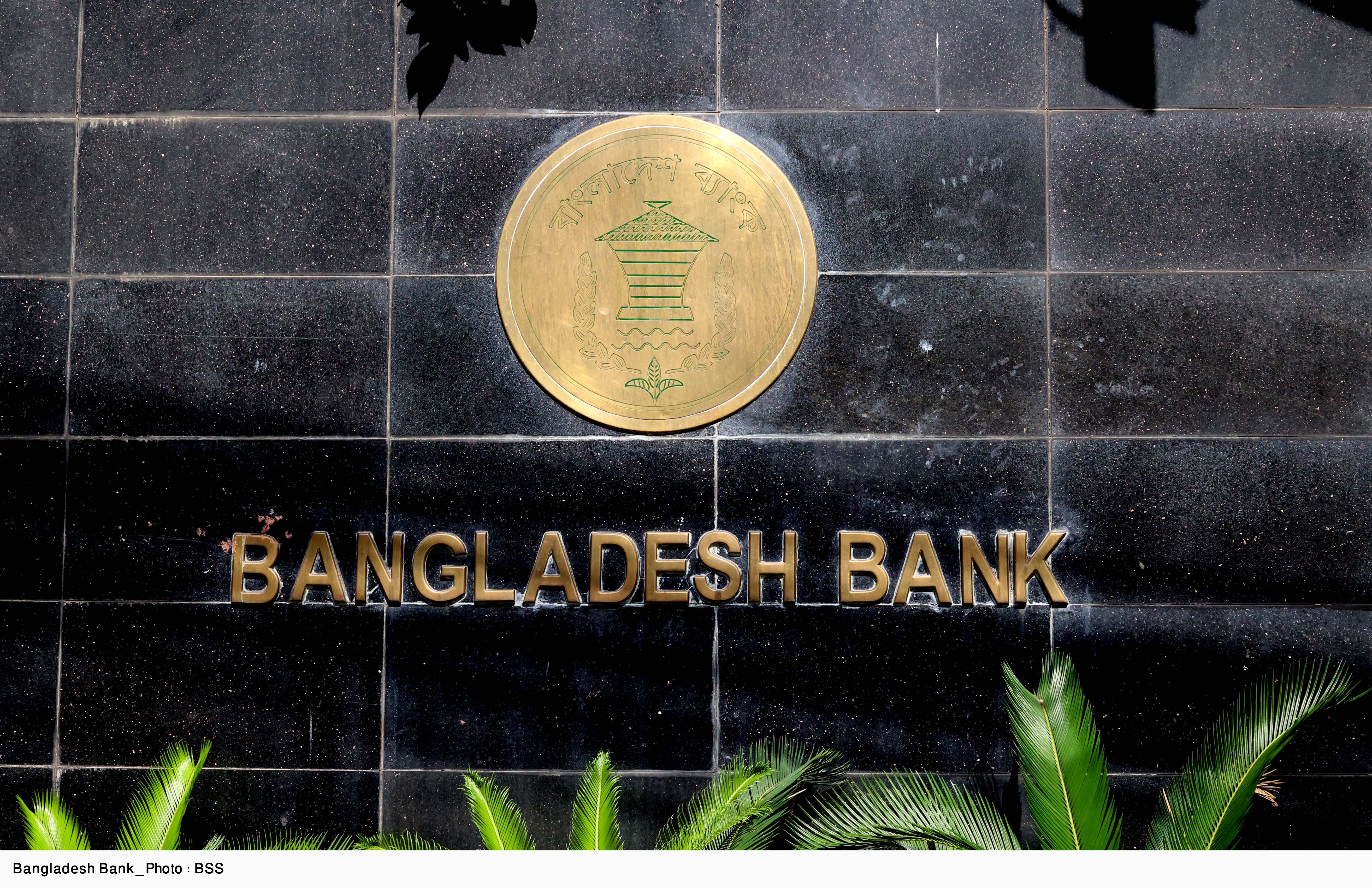
DHAKA, May 14, 2026 (BSS) — Bangladesh Bank (BB) has announced a significant relaxation of single borrower and large loan exposure limits to strengthen liquidity support for importers and exporters and ensure uninterrupted international trade financing for the country’s business and industrial sectors.
The directive introduces temporary regulatory relief measures designed to provide banks with greater lending flexibility amid evolving global trade conditions, said a BB circular issued today.
Under the revised framework, the central bank has deferred the implementation of Section 2A(i)(b) of BRPD Circular No. 01/2022, which had capped the aggregate principal amount of funded exposure to a single borrower or borrower group at 15 percent of a bank’s capital.
In place of that restriction, banks will now be permitted to maintain combined funded and non-funded exposure of up to 25 percent of their capital base.
This enhanced limit will remain effective until June 30, 2028, enabling banks to extend larger credit facilities to industrial and commercial clients.
In another major relief measure, Bangladesh Bank reduced the conversion factor applied to non-funded exposures — such as Letters of Credit (LCs) and guarantees — from the standard 0.50 to 0.25 for the general industrial sector.
The move effectively doubles banks’ capacity to provide trade finance facilities under existing capital constraints and extends benefits that were previously available mainly to the power sector.
The central bank has outlined a phased normalization roadmap for the conversion factor over the next four years. The factor will remain at 0.25 until June 30, 2027, before increasing gradually to 0.30 by December 31, 2027, 0.40 by December 31, 2028, and returning to the standard 0.50 on January 1, 2030.
Bangladesh Bank has also revised the large loan portfolio ceiling structure by replacing Section 2B(i) of the 2022 circular with a performance-based mechanism linked to banks’ non-performing loan (NPL) management.
Under the new structure, banks with classified loans of 10 percent or less of total outstanding loans will be allowed to maintain large loan portfolios equivalent to up to 50 percent of their total loans and advances.
The allowable ceiling gradually declines as NPL ratios rise, falling to 46 percent for banks with classified loans between 10 and 15 percent, 42 percent for banks between 15 and 20 percent, 38 percent for banks between 20 and 25 percent, 34 percent for banks between 25 and 30 percent, and 30 percent for banks with classified loans exceeding 30 percent.
The revised framework will remain effective until December 31, 2027.
However, the central bank has retained an overarching prudential safeguard by stipulating that aggregate large loan exposure must not exceed 600 percent of a bank’s total capital.
The policy changes were introduced under the authority granted to Bangladesh Bank through Sections 26(Kha) and 45 of the Bank Company Act, 1991 (as amended).
The central bank stated that all other provisions of BRPD Circular No. 01/2022 will remain unchanged unless specifically modified by the latest directive.