Wednesday
22 July, 2026
News Flash
News Flash
DHAKA, April 15, 2026 (BSS) - Leaders of the Bangladesh Garment Manufacturers and Exporters Association (BGMEA) have urged the government to continue strong policy support to maintain the competitiveness of the country's apparel sector amid mounting global economic challenges.
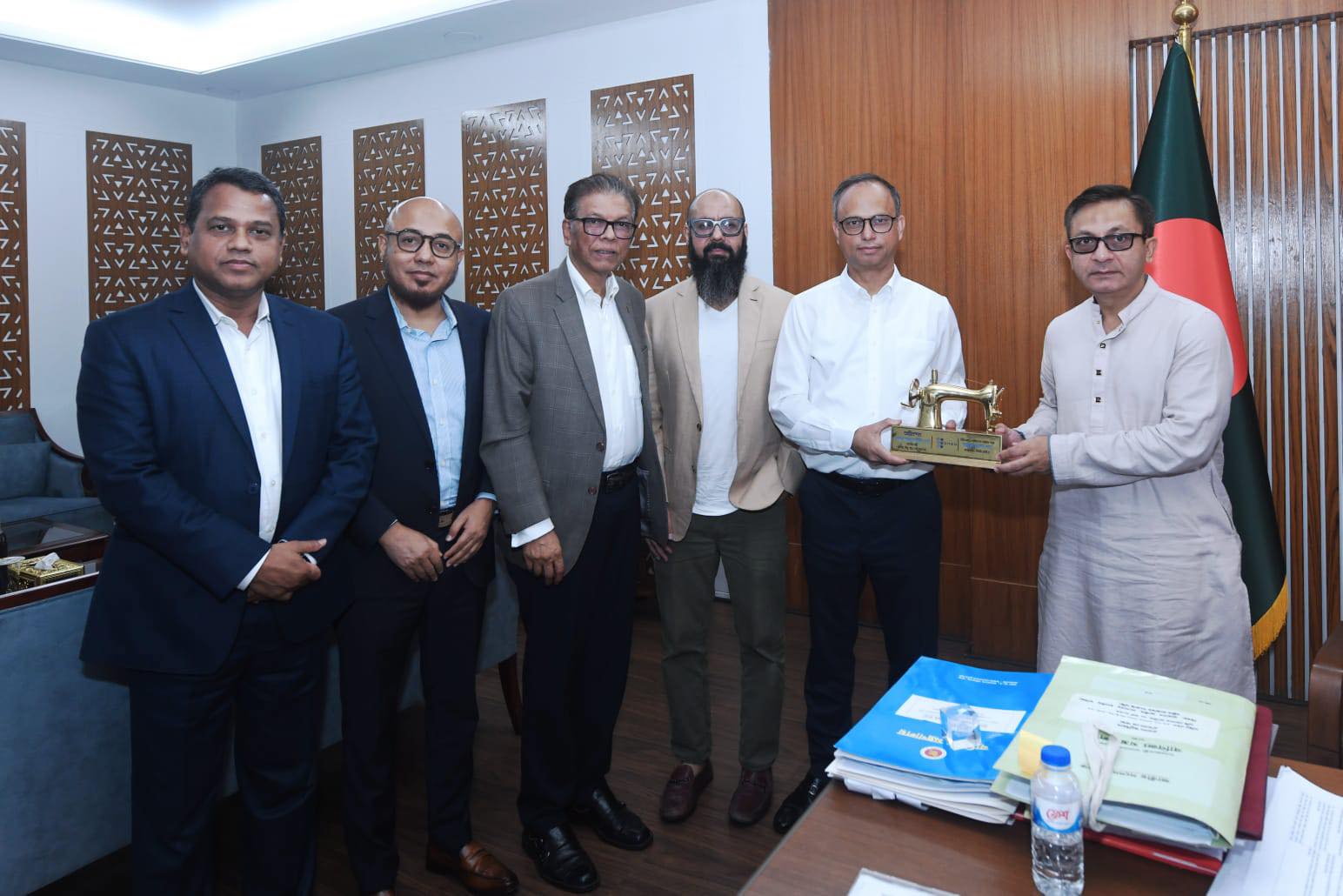
The call was made when a BGMEA delegation, led by its President Mahmud Hasan Khan, met Commerce Minister Khandakar Abdul Muktadir at his office at Bangladesh Secretariat today.
BGMEA Vice-President Md. Shehab Udduza Chowdhury and Director Md. Hasib Uddin were also present at the meeting.
During the discussion, the BGMEA leaders highlighted multiple challenges facing the ready-made garment (RMG) sector in the current economic context and stressed the need for policy support to ensure sustainable growth.
Mahmud Hasan Khan said global economic instability, the impact of the Middle East conflict, and local gas and power shortages are severely disrupting production in the apparel sector. "Rising raw material prices and increasing production costs have further exacerbated the situation," he added.
He emphasized that strong policy support and a business-friendly environment are essential for the sector to remain competitive in the global markets.
The meeting also discussed the ongoing activities of the RMG Sustainability Council (RSC) and its role in addressing future industry challenges, said a BGMEA press release.
The BGMEA president clarified the association's position regarding the RSC's mandate, stating that the council was originally established to oversee occupational safety and health (OSH), including building, fire, and electrical safety.
"Issues such as wages, leave, and trade unions fall under social compliance or "non-OSH" areas, which are beyond the RSC's core mandate. Expanding its scope into these areas would create unnecessary administrative and financial burdens on the industry, which is undesirable," he noted.
He further stressed that any decision in this regard must align with local laws and be taken in consultation with industry stakeholders.
At the meeting, BGMEA leaders placed several specific proposals to support the sector's sustainable growth.
They called for simplifying import and bonded warehouse policies, particularly to facilitate raw material imports under Free of Cost (FOC) arrangements, and urged amendments to relevant provisions of the Import Policy Order.
They also demanded withdrawal of the existing 10 percent income tax deduction on cash incentives to boost garment exports.
In addition, the BGMEA leaders urged steps to normalize trade relations with India and remove barriers to yarn imports and exports through land ports.
They further proposed amendments to the Import Policy (2024-2027) in line with BGMEA recommendations and called for automation of criteria for granting Commercially Important Person (CIP) status to industry entrepreneurs.
The commerce minister listened to the concerns attentively and acknowledged the importance of the RMG sector as the country's leading foreign exchange earner.
He assured that the government would extend all necessary policy support to help the sector overcome the current challenges and sustain Bangladesh's competitiveness in the global market.