Wednesday
22 July, 2026
News Flash
News Flash
DHAKA, Feb 7, 2026 (BSS) - The Bangladesh Garment Manufacturers and Exporters
Association (BGMEA) has said that the Japan-Bangladesh Economic Partnership
Agreement (EPA) is a landmark step in Bangladesh's trade diplomacy.
The BGMEA said the association and the entire ready-made garment family of
Bangladesh remain deeply grateful to the government of Japan for its
continued support in fostering sustainable economic growth and strengthening
bilateral relations.
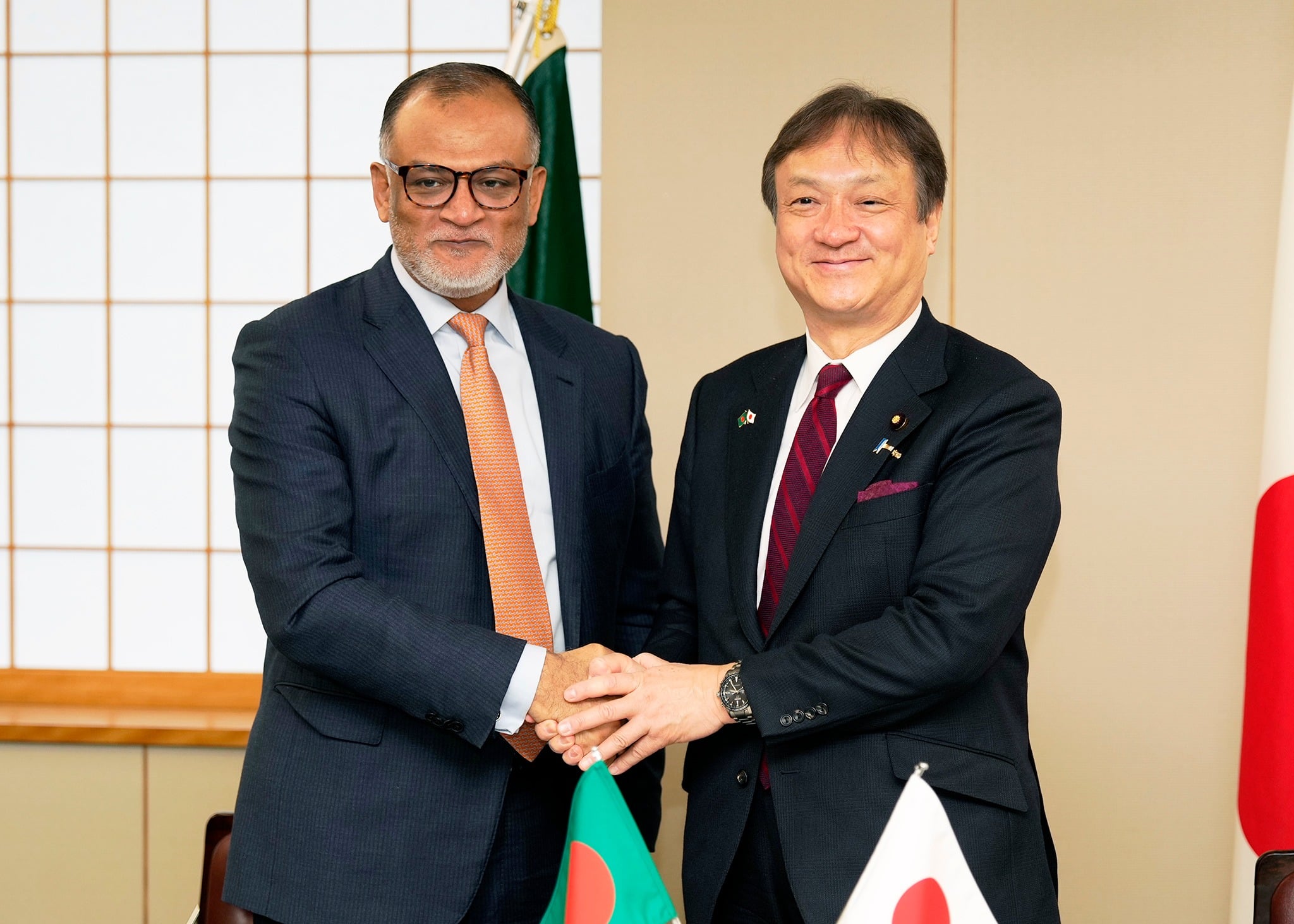
It said the Japan-Bangladesh Economic Partnership Agreement (EPA), signing on
Friday in Tokyo, Japan marks a historic milestone in Bangladesh's trade
diplomacy. This is Bangladesh's first-ever EPA, signed by Sk. Bashir Uddin,
adviser for Commerce, Textiles and Jute, and Civil Aviation and Tourism of
the government of Bangladesh, and HORII Iwao, state minister for Foreign
Affairs of Japan.
The agreement is the outcome of seven rounds of negotiations covering trade
in goods and services and reflects a shared commitment to deepen economic
engagement in a mutually beneficial manner.
Japan has long been Bangladesh's largest development partner, and as the
country's largest ODA provider, its contributions have been instrumental in
supporting Bangladesh's infrastructure development, industrial expansion, and
overall economic transformation, said a press release.
This agreement therefore represents not only a trade arrangement, but also
the natural progression of a trusted and long-standing partnership.
BGMEA also expressed its deepest appreciation to the interim government of
Bangladesh for this timely and forward-looking initiative. As Bangladesh
prepares for LDC graduation, securing stable and predictable market access
through bilateral trade agreements has become an urgent national priority. In
this context, the Japan-Bangladesh EPA is both strategic and timely.
From a trade perspective, the EPA is expected to significantly improve market
access for Bangladesh's exports, particularly ready-made garments, which
dominate Bangladesh's export basket to Japan. In FY2024-25, Bangladesh
exported US$1,411.6 million worth of garments to Japan, while Japan's total
global imports stood at approximately US$23 billion.
Japan is the world's second largest garment importing country after the
United States when considered as a single market. Despite this scale, Japan
currently accounts for only about 3 percent of Bangladesh's total garment
exports. As Bangladesh aspires to reach US$100 billion in garment exports by
2035, having the EPA in effect, increasing Japan's share to at least 10
percent should be a clear strategic objective.
An initial assessment of the EPA shows that it favors the ready-made garment
sector of Bangladesh by ensuring uninterrupted duty-free market access, and
maintaining favorable rules of origin. At present, Bangladesh enjoys duty-
free access to Japan under the GSP scheme.
However, post LDC graduation, Bangladesh would otherwise face Japan's general
MFN tariffs, which range from 8 to 15 percent for knitwear and from 10
percent to more than 15 percent for woven garments. Under the EPA, customs
duties on garment items will be eliminated entirely from the date of entry
into force.
Furthermore, Bangladesh is deeply thankful to Japan for the extraordinary
flexibility extended in the rules of origin, particularly for garment
products.
Chapter 3 and Annex 2 of the agreement specify that garments produced under a
single-stage processing will qualify for duty-free access in Japan under the
EPA. This is similar to the current Japan GSP rules of origin and is among
the most favourable arrangements for a garment-exporting country like
Bangladesh.
As the EPA creates a favourable and predictable trade environment, it is now
imperative for Bangladesh to develop a clear roadmap to fully utilise its
benefits and potential in line with the country's 100 billion dollar garment
export vision.
Bangladesh currently runs a trade deficit of approximately US$ 456 million
with Japan; while the BGMEA believe the EPA will also play a significant role
in reducing this gap. It presents an opportunity to diversify exports beyond
garments, while encouraging greater engagement from Japanese garment
importers, retailers, machinery suppliers, and long-term investors.
The Japan-Bangladesh EPA should be seen as the beginning of a broader and
much-needed shift in Bangladesh's trade policy direction.
The EPA should serve as a guiding light for further such agreements that will
be required in the post-LDC period, along with the challenges of EU GSP+.
Therefore, the EPA with Japan can be used as a negotiating guideline across
other countries for the Ministry of Commerce and the government to fast-
tracking negotiations and move forward without delay.
The BGMEA also urged the Ministry of Commerce and all parties negotiating
with the USTR to ensure that the signing is completed within this timeframe
so that Bangladesh can start preparing itself with the preferential deal of
utilizing U.S. cotton to attain zero tariff access.