Tuesday
25 August, 2026
News Flash
News Flash
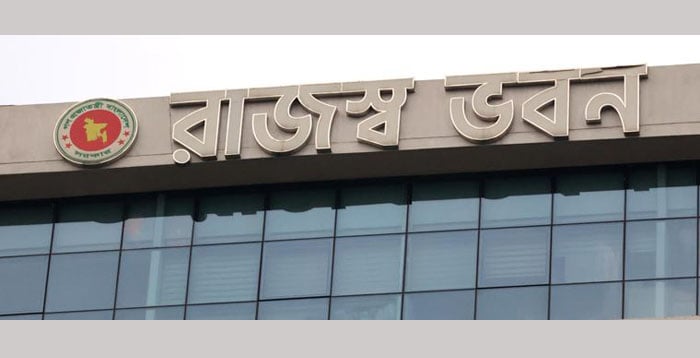
DHAKA, Jan 25, 2026 (BSS) - The National Board of Revenue (NBR) has
undertaken a series of significant epoch making reforms in revenue
management, trade facilitation, digitalization and tax base expansion during
the tenure of the interim government, aiming to make the tax system more
transparent, modern and accountable.
A major milestone was achieved with the promulgation of the Revenue Policy
and Revenue Management Ordinance, 2025, separating revenue policy formulation
from revenue administration.
The decision was approved at a meeting of the National Implementation
Committee for Administrative Reform (NICAR) chaired by the Honorable Chief
Adviser, through amendments to the Rules of Business and Allocation of
Business.
As a result of enhanced monitoring, transparency and anti-evasion measures,
revenue collection gained strong momentum. During July-December of the
current fiscal year, NBR collected Taka 1,85,229 crore, which is Tk 23,020
crore higher than the collection during the same period of the previous
fiscal year, said an NBR press release today.
In infrastructure development, an international tender has been issued for
constructing a world-class Customs House and Customs Academy in Chattogram
with World Bank financing. The tender process for a modern tax building in
Chattogram under government funding has been completed, while the newly built
Khulna Tax Building will be inaugurated on January 29.
To strengthen long-term revenue capacity, NBR has adopted a 10-year Medium
and Long-Term Revenue Strategy (MLTRS) targeting higher revenue-to-GDP ratio.
At the same time, the World Bank-funded Strengthening Domestic Revenue
Mobilization Project (SDRMP), costing around Taka 1,000 crore, is being
implemented to fully digitalize NBR operations.
To curb excessive tax exemptions, the Tax Expenditure Policy and Management
Framework (TEPMF) has been published in the gazette. Amendments to the Income
Tax Act 2023, Customs Act 2023 and VAT and Supplementary Duty Act 2012 have
withdrawn NBR's authority to grant tax exemptions without parliamentary
approval.
The Authentic English Texts of major tax and customs laws have been
published, reducing ambiguity and boosting investor confidence. To improve
taxpayer services and compliance, 13,500 Income Tax Practitioners (ITPs) have
been certified through competitive examinations.
In a major digital leap, importers and exporters can now pay duties and taxes
directly to the government treasury online through the A-Challan system,
integrated with ASYCUDA World and iBAS++. Tax payments through mobile
financial services, including bKash without charges, have also been
introduced.
Trade facilitation has been prioritized through monthly stakeholder meetings
where business representatives directly present customs, VAT and income tax
issues to NBR leadership.
To enhance cyber security, a 24/7 Security Operations Center (SOC) has been
established at NBR in line with National Cyber Security Agency guidelines.
In the public interest, excise duty on Hajj airline tickets for 2025 and 2026
has been exempted, while VAT on metro rail services has been waived until
June 30, 2026. To keep essential commodity prices affordable, duties and
taxes on items such as rice, onions, sugar, edible oil and eggs have been
reduced or exempted. Import duty on dates has been cut by 40 percent ahead of
Ramadan.
New passenger-friendly baggage rules now allow travelers to bring one mobile
phone per year duty-free, while eligible expatriates may bring two. Customs
duty on mobile phone imports has been reduced from 25 percent to 10 percent,
with parallel reductions for local assemblers to protect domestic industry.
In the VAT sector, online registration, e-returns, e-payment, e-refund and
risk-based audits have been introduced. A special VAT registration drive in
December 2025 brought 1.31 lakh new businesses under VAT, raising total
registrations to 7.75 lakh.
Online VAT refund modules now enable direct transfer of refunds to taxpayers'
bank accounts. In income tax, online return filing has been made mandatory
for most taxpayers, with over 34 lakh e-returns already submitted this fiscal
year. Special facilities have been introduced for expatriate Bangladeshis,
resulting in over 5,000 overseas taxpayers filing online.
Customs reforms include the launch of the Bangladesh Single Window (BSW),
connecting 19 agencies and enabling issuance of nearly 9 lakh certificates
and permits online. New licensing rules for shipping agents and C&F agents
have been introduced to ensure transparency and competition.
Overall, through policy reforms, digital transformation and administrative
strengthening, NBR has demonstrated visible progress in revenue management
during the interim government period, contributing to fiscal stability and
sustainable economic development.