Tuesday
28 July, 2026
News Flash
News Flash
DHAKA, Feb 06, 2026 (BSS)- Dhaka, a city pulsating with vibrant life, also holds within its heart a rich tapestry of history, woven into magnificent architectural marvels. A journey through its old quarters is a captivating experience, transporting visitors back to eras of Mughal emperors, influential Nawabs, and diverse communities that shaped the city's unique character.
Our exploration begins at the Lalbagh Fort, also known as Fort Aurangabad. This incomplete Mughal palace fortress, standing proudly on the banks of the Buriganga River, whispers tales of ambition and shifting power. Started in 1678 by Prince Muhammad Azam, it remained unfinished as destiny called him away. Though his successor, Shaista Khan, resided in Dhaka for years, the fort was never completed, leaving a poignant reminder of its grand, yet unfulfilled, vision.
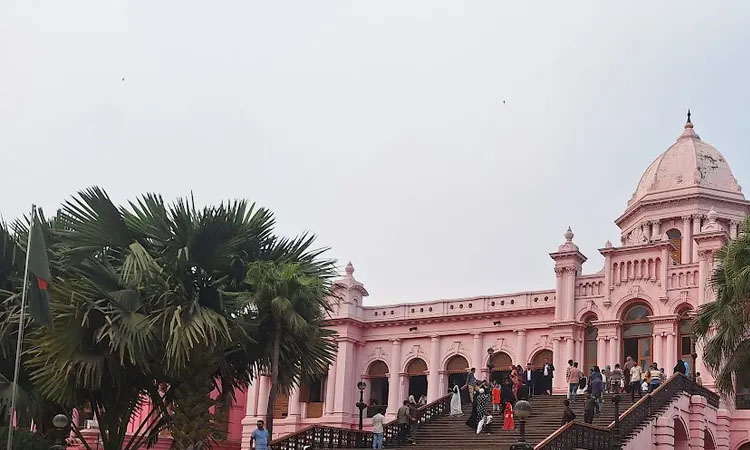
Next, we journey to the majestic Ahsan Manzil, a truly magnificent archaeological gem. This two-storied palace, perched gracefully on a raised platform overlooking the Buriganga, was once the opulent residence of the Nawabs of Bengal. Its impressive dimensions, 125.4 meters in length and 28.7 meters in width, speak of its former grandeur. Today, this robust building has been transformed into a museum, offering a fascinating glimpse into the lives of the Nawabs.
Visitors can admire a wealth of artifacts, including rare photographs, exquisite artwork, period furniture, and decorative pieces, along with the utensils used in both their homes and courts. Managed by the National Museum, Ahsan Manzil is a captivating window into a bygone era.
A visit to the Armenian Church in the Armanitola area of old Dhaka unveils another fascinating chapter in the city's past. This historically significant archaeological monument stands as a testament to the thriving Armenian community that once flourished here in the 17th and 18th centuries. The church, stretching 750 feet (230 meters) in length and featuring four doors and twenty-seven windows, possesses a serene charm. It also holds a special place in history as the site where Mother Teresa stayed during her visit to Dhaka in 1996, according to Bangladesh Tourism Board.
Finally, we encounter the imposing Curzon Hall. Originally conceived as a town hall, it was named after Lord Curzon, the Viceroy of India, who laid its foundation in 1904. This magnificent establishment, with its robust architecture blending European and Indian influences, is now an integral part of the Science Faculty of the University of Dhaka. Surrounded by lush gardens and open spaces, Curzon Hall is not just an academic building but a fabulous architectural landmark that continues to be an awe-inspiring.
Dhaka's historical sites offer a captivating journey through centuries of diverse influences and rich heritage. Each monument tells a story, inviting visitors to step back in time and experience the grandeur and complexity of this remarkable city.