Saturday
12 September, 2026
News Flash
News Flash
By Syed Shukur Ali Shuvo
DHAKA, July 20, 2026 (BSS) – Solar power appears to be a key-solution to Bangladesh’s security as the volatile Middle Eastern situation continues to severely disrupt the global petroleum supplies, prompting experts to seek an intensified government campaign for clean energy.
“Unexpected situations like this prove how much clean energy is crucial for ensuring energy security and economic resilience,” Lead Energy Analyst of Institute for Energy Economics and Financial Analysis (IEEFA) Shafiqul Alam told BSS.
He called clean or green energy a “strategic requirement” for energy security and economic resilience extending beyond decarbonization which could ensure sustainable economic growth.
Alam said countries like China, India, and Pakistan which by now made substantial investments in renewables experienced less severe economic impact from the recent geopolitical instability caused by war on Iran.
Talking to BSS energy expert and former dean of Bangladesh University of Engineering and Technology (BUET) Professor Dr Ijaz Hossain said the government’s recent budgetary allocations and declaration of a 10-year zero-tariff facility on solar panel imports was a “highly positive step”.
But he said the tax benefit should be simplified for all entrepreneurs, replicating examples of countries like Pakistan which saw massive growth of solar power.
"The tax benefits are limited only to project developers whose proposals are approved. If general people or independent buyers want to import panels, they do not get the same facility, which is an obstacle for solar power growth,” he said.
Hossain said that the government needed increased coordination with the private sector to promote renewable energy, which he said was directly related to energy security, environment, and sustainable development.
He said if the government could ensure easy loans, expansion of net metering, incentives for domestic production, and fast project approvals, then a visible change will come in the country's solar power sector within the next few years.
Power, Energy and Mineral Resources Minister Iqbal Hassan Mahmood earlier said the government set a target to meet 20 percent of the country's total electricity demand from renewable energy sources by 2030 and 30 percent by 2040.
“The target aims to ensure reliable and sustainable power supply as part of a long-term strategy,” he said.
Prime Minister Tarique Rahman on May 27 inaugurated a 1.0 MW rooftop solar power system at Sangsad Bhaban, saying Bangladesh was steadily moving toward clean energy, a green economy and a self-reliant energy system.
Bangladesh Power Development Board (BPDB) Chairman Engineer Rezaul Karim said currently, 1807.75 MW electricity is coming from renewable sources, while a target was set to enhance its stake to 10,000 MW.
“We have signed contracts with 11 independent power producers (IPPs) to install solar power plants with a combined generation capacity of 818 MW that are expected to be commissioned by January 2028. Tenders were floated for 12 solar projects having generation capacity of 290 MW,” he said.
According to BPDB, grid-connected rooftop solar systems with a capacity of 5MW are being installed at 19 locations nationwide using its own Power Sector Development Fund to be connected with the national grid by September 2026.
BPDB officials said the government has now issued directives as well to install rooftop solar panels in all public establishments throughout the country to boost green energy share in the power system.
“If the people could be encouraged about rooftop solar at their households the government investment would not be required,” Coastal Livelihood and Environmental Action Network’s (CLEAN) chief executive Hasan Mehedi said.
He said this would simultaneously fulfill the target for clean energy in line with the SDG-7 or UN’s Sustainable Development Goal 7.
Rural Power Company Limited (RPCL), meanwhile is working to install a 100 MW capacity solar park at Jamalpur’s Madarganj, expecting it to be operational in the mid 2027.
Its project director Zahangir Alam Mazumder said it initially failed to get the past interim government approval visibly because it was initiated by the previous regime.
The BPDB chairman, however, said the incumbent government actually revived six of the 27 solar power projects, cancelled during the interim government, also reducing the average tariff by an average of 2.5 US cents from 7.80 US cents per kilowatt-hour.
The government announced major tax incentives for the renewable energy sector, including zero import duties on solar equipment, expecting the initiative would cut power generation costs by 25–30 percent.
The tax benefits for environmentally friendly battery production, particularly lithium-ion, sodium-ion batteries, and battery packs, have been extended until June 2030 and a 5 percent tax rebate for consumers paying solar electricity bills.
But several experts said they expected the government to boost clean energy with some suggesting the authorities should focus on meeting the 7 percent annual growth demand of electricity through green energy sources, as renewable power capacity reached 1807.75 MW.
Officials said as part of initiatives for alternative power sources, the ongoing construction of the landmark 2,400 MW Rooppur Nuclear Power Plant was progressing fast, expecting it to add about 300 MW to the national grid by August 2026. They expected the plant to generate another 1,200 MW by January 2027.
Energy ministry officials said the government introduced the “Guidelines for Development of Renewable Energy Projects using Land Owned by Government Agencies under the public-private partnership (PPP) Modality, 2026,” on April 12.
The initiative intended to speed up renewable energy installations in unused or underutilised state-owned pieces of land under PPP model.
BPDB officials said they signed a deal with Bangladesh Economic Zones Authority (BEZA) in May to set up on pilot basis a pilot renewable plant on 412 acres of land at Feni’s Sonagazi.
Bangladesh Investment Development Authority (BIDA), the government focused on incentives for local manufacturing, battery storage integration, competitive electricity trading, and targeted fiscal and financial support for investors in the renewable sector.
BIDA officials said steps were taken to implement two waste-to-energy projects at Aminbazar and Mtuail areas in the capital to produce 42.5 MW and 221 MW power while China's CMEC Group and South Korea's B&F Company were entrusted with the tasks.
They said new calculations suggested the levelized cost of electricity (LCOE) for solar in Bangladesh appeared competitive in reference to gas and cheaper than coal and expected the solar power would cost less in future.
Currently Bangladesh produces 40 percent of its power generation from gas and the quantum is declining prompting the government to rely on importing liquefied natural gas (LNG).
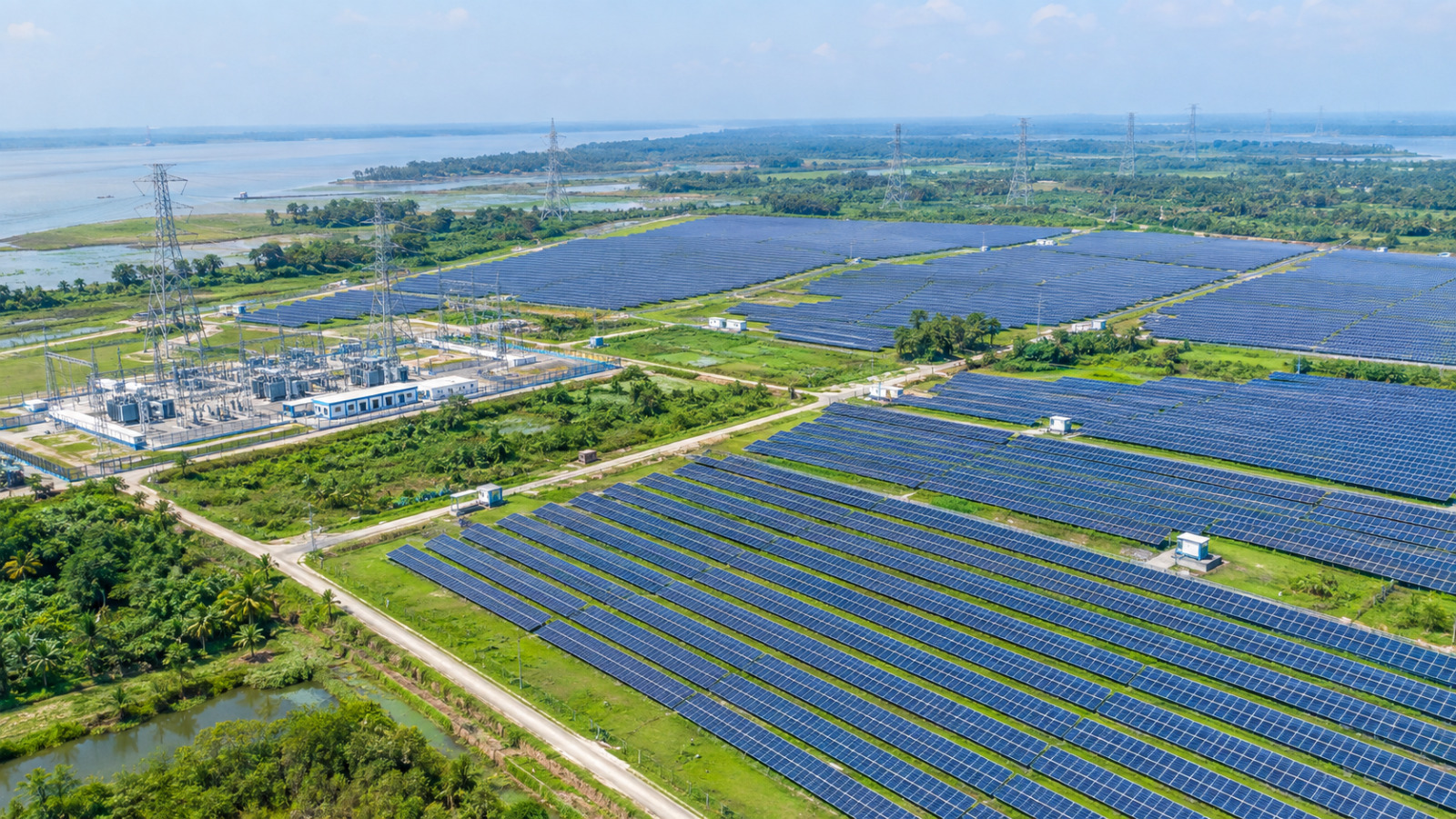
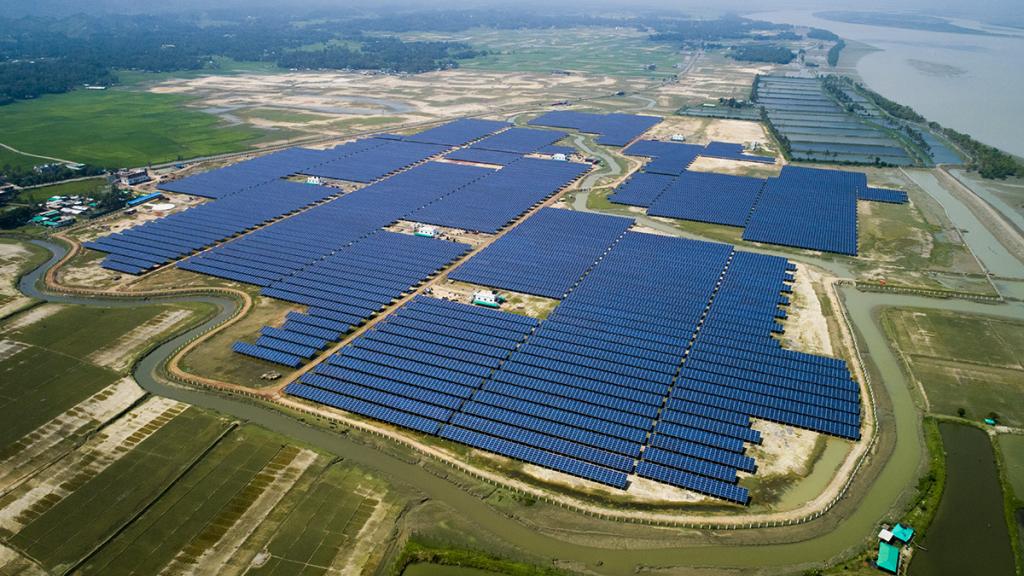
The government calculation suggested the country’s renewable energy capacity now stands at 1807.75 MW, with solar leading the mix at 1514.66 MW or 83.79 percent followed by hydropower generation of 230 MW and wind power of 62 MW.
A Sustainable and Renewable Energy Development Authority (SREDA) official said so far over 6 million units of Solar Home Systems (SHS) were installed in off-grid areas, supplying power to rural communities.
He said several solar farms were now contributing to the national grid, reducing pressure on traditional power stations.