Saturday
05 September, 2026
News Flash
News Flash
DHAKA, July 18, 2026 (BSS) - The government is moving ahead with a plan to modernise the country's public transport system by introducing around 1,400 electric buses (EVs), developing a universal charging infrastructure and exploring new mass transit options, including monorail.
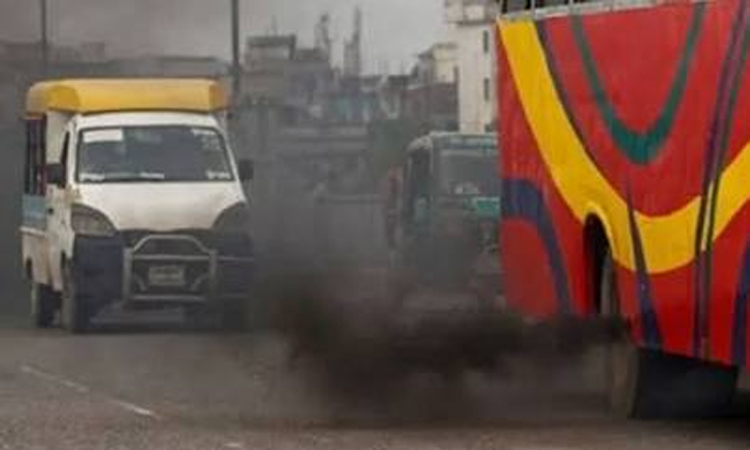
In an interview with Bangladesh Sangbad Sangstha (BSS), Roads and Highways Secretary Dr Mohammed Ziaul Haque said the initiatives are aimed at making the country's transport system cleaner, safer and more efficient while reducing dependence on fossil fuels.
He said the government has launched multiple projects to build what would be the country's largest electric bus fleet.
A proposal for procuring 500 electric buses has already been sent for financing, while the Republic of Korea is being revised to increase the number of EVs under a 300-bus programme.
Besides, a World Bank-supported project to procure 400 electric buses is awaiting approval.
The government has also included two procurement packages worth Tk 400 crore each to accelerate the purchase of additional electric buses. The programme will include a dedicated fleet for women passengers, with the number of buses expected to exceed the initial target of 100.
"Taken together, these initiatives will enable us to introduce around 1,400 electric buses into the country's public transport system," the secretary said.
He said the government expects commuters to start seeing a visible impact on selected routes by December or early next year, with an initial target of operating at least 200 electric buses.
To support the transition, he mentioned that the government is simultaneously developing a nationwide charging infrastructure based on universal technical standards.
The secretary said the charging stations would not be restricted to a single company, allowing private operators to use the facilities under a common charging system.
Bangladesh Road Transport Corporation (BRTC) plans to utilise its existing land in all 64 districts to establish charging stations. If additional capacity remains available, the facilities will also be opened to private operators for commercial use.
A technical committee comprising experts from the Bangladesh University of Engineering and Technology (BUET) and the Military Institute of Science and Technology (MIST) is preparing unified technical specifications for electric buses, including battery systems, charging technology and mechanical support to ensure compatibility among different manufacturers and operators.
Initially focused on buses, the standards will later be expanded to cover electric minibuses and trucks as part of the government's wider transport electrification programme.
Beyond electric buses, the government is also exploring monorail as an alternative mass transit system for routes where metro rail may not be the most suitable option.
The secretary said BUET has been tasked with assessing potential monorail routes and technical feasibility, while a comprehensive presentation on the Bus Rapid Transit (BRT) system is being prepared following consultations with transport experts and law enforcement agencies.
He acknowledged that Bangladesh is still at the early stage of adopting EV technology and currently lacks sufficient local expertise in the sector.
The government is encouraging private bus operators to invest in electric buses by offering fiscal incentives, including reduced taxes in certain cases.
However, many private operators are waiting to see the performance of BRTC's initial fleet before making investment decisions.
Discussions are also underway with the Finance Ministry on subsidy mechanisms and fare structures to balance the higher cost of EV technology with affordable ticket prices for passengers.
The secretary said the government would continue addressing broader transport issues, including the regulation of battery-run three-wheelers and improved highway management, as part of its long-term strategy to build a modern, environmentally sustainable and passenger-friendly public transport system.