Sunday
07 June, 2026
News Flash
News Flash
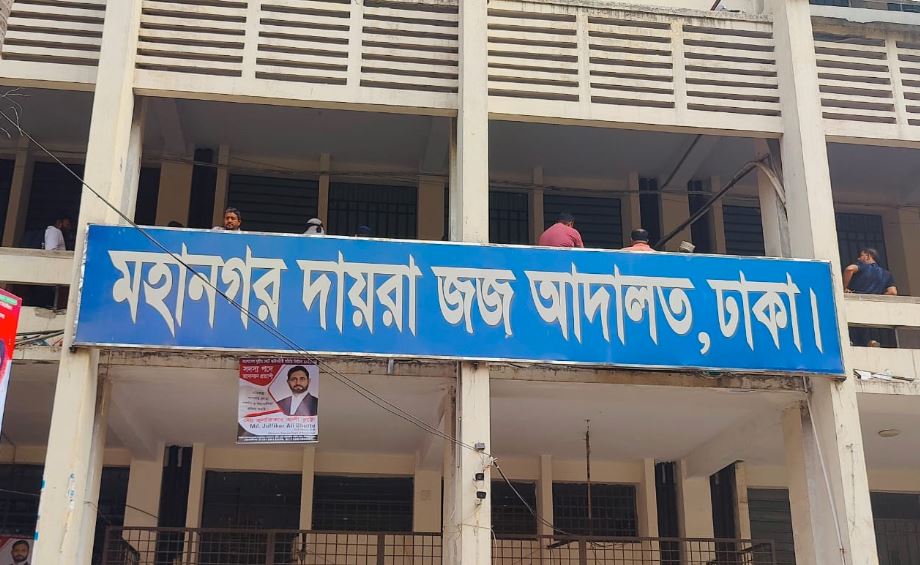
DHAKA, June 07, 2026 (BSS) - The tribunal (under the Women and Children Repression Prevention Act) handling the Ramisa rape and murder case has delivered a landmark judgment, describing the trial as a "profound and difficult test" of society's conscience, humanity, and the rule of law.
In its observations, the Dhaka Metropolitan Children's Violence Suppression Tribunal declared that the proceedings-initiated following the "brutally extinguishing the life of an innocent child"-must serve as a mandate for the future of juvenile justice in Bangladesh.
Judge Masrur Salekin in his judgment noted that the case file was permeated with "pain, anger, concern, and the expectation of justice," reflecting the gravity of the crime. The tribunal emphasized that the swift resolution of this case should act as a benchmark for protecting children across the nation.
The tribunal observed that "ensuring the safety, dignity, and protection of children is one of the fundamental responsibilities of a civilized and humane state." According to the judgment, when a child falls victim to heinous crimes such as sexual abuse or murder, the impact is not confined to the grieving family; it "deeply wounds the entire society" and raises urgent questions regarding the effectiveness of the state's justice system.
Addressing the broader systemic challenges, the court highlighted the heavy workload currently facing judicial officers dedicated to these sensitive matters.
The tribunal, formed under the Women and Children Repression Prevention Act, is currently handling more than eighteen hundred (1800+) pending cases, each involving violence against children, sexual abuse, physical abuse, or other serious offenses.
Behind every one of these cases, the court noted, lies the "unbearable suffering of a child, the sighs of a family, and the expectations of countless people awaiting justice."
The tribunal expressed high satisfaction with the speed and efficiency of the Ramisa case, noting that the investigation and evidence-taking were completed with rare celerity.
The court specifically commended the professional conduct of various stakeholders, including the Investigating Officer, the prosecution and the judicial stakeholders.
The court explicitly articulated its expectation that the "Ramisa case" will serve as a model for future litigation involving child abuse. To prevent "unnecessary delay and uncertainty" for victimized families, the tribunal called for "collective responsible participation" from investigating agencies, the prosecution, the defense, and witnesses.
"A just trial cannot be achieved by the court alone," the judgment stated, emphasizing that the objective of justice is a shared responsibility among all stakeholders in the legal system.
In reaching its conclusion, the tribunal underscored that its methodology remained rooted in objective truth rather than sentiment. The court observed that its duty is to uncover the truth "not through emotion, but in the light of law, evidence, and the eternal principles of justice."
The tribunal noted that it reached its verdict after reviewing the testimony, evidence, exhibits, medical reports, and the overall circumstances of the case with the "utmost caution, sensitivity, and judicial impartiality" in the interest of justice.
The Dhaka Metropolitan Children's Violence Suppression Tribunal today convicted Sohel Rana and his wife Swapna Akter and sentenced them to death and fined them Taka five lakh and two lakh respectively.