Tuesday
01 September, 2026
News Flash
News Flash
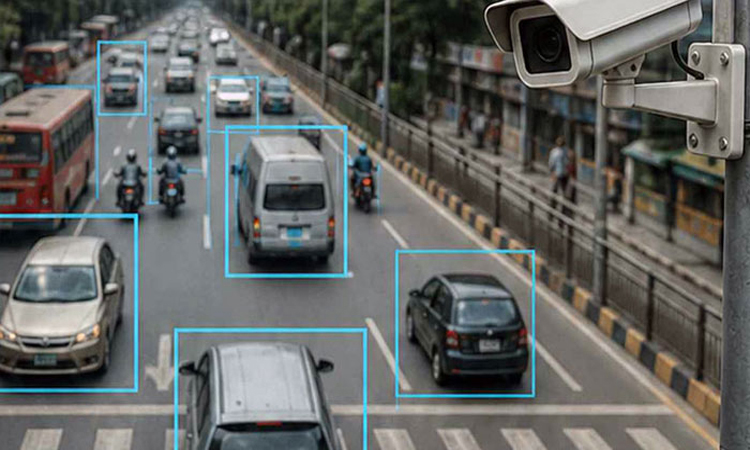
DHAKA, May 19, 2026 (BSS) – The Dhaka Metropolitan Police (DMP) has intensified technology-driven measures to restore discipline on the capital’s roads, with officials saying the newly installed AI-powered traffic cameras are creating a positive change in public mindset, encouraging drivers and commuters to follow traffic laws voluntarily.
Advanced AI-based cameras have been installed at major intersections and busy roads across Dhaka to automatically detect traffic violations, including red-light jumping, stop-line breaches, wrong-side driving, illegal lane changes, occupying zebra crossings, illegal parking, unauthorized passenger pick-up and drop-off, riding motorbike without helmets, failure to wear seatbelts, and unauthorized use of VIP lights.
DMP Spokesperson Deputy Commissioner NM Nasiruddin told BSS that 120 AI-powered traffic cameras have already been installed across different parts of the capital, while more than 20 are currently operational at key intersections.
“AI cameras are now functioning at over 20 major points in Dhaka, significantly strengthening traffic monitoring and enforcement,” he said.
He said the DMP plans to gradually bring the entire city under AI surveillance coverage. “As of Monday, a total of 502 cases have been filed through the AI camera system,” he added.
Highlighting the impact of the initiative, Nasiruddin said public response has been encouraging, with many drivers and commuters voluntarily complying with traffic laws.
“It reflects a significant positive shift in public mindset, as people are increasingly complying with traffic rules on their own,” he said.
He added that the technology-driven initiative is also helping maintain traffic discipline and reduce congestion on city roads.
However, the DMP official stressed that sustainable improvement in Dhaka’s traffic situation would require broader structural reforms, including expanding road infrastructure, phasing out unfit vehicles, preventing buses from picking up passengers in the middle of roads, and reducing the simultaneous operation of buses, trucks, rickshaws, CNG-run auto-rickshaws, and easy bikes on the same routes.
The surveillance system has already brought visible changes to traffic behaviour at intersections where AI cameras have been installed.
At Bijoy Sarani intersection, vehicles were seen stopping behind stop lines immediately after signals turned red, while no vehicles occupied zebra crossings.
Similar improvements were observed at the Sonargaon Hotel intersection in Karwan Bazar, where traffic police said drivers are now strictly following traffic signals due to fear of automatic prosecution.
A traffic police officer said drivers are no longer daring to violate signals under camera surveillance.
“Look, nobody is crossing the line. Most drivers are following the signal. We are just standing and signalling vehicles to stop or move according to the lights,” he said.
Officials said the AI-powered PTZ (Pan-Tilt-Zoom) cameras can rotate 360 degrees, zoom in on vehicles from long distances, and clearly identify number plates.
The system is integrated with software capable of automatically detecting violations under the Road Transport Act 2018 and connected to the server of the Bangladesh Road Transport Authority (BRTA), allowing instant identification of vehicle owners.
According to the DMP Traffic Technical Unit (TTU), the cameras currently operate using six “logics” to identify different traffic offences and store related images and video footage on the DMP server.
TTU officials then review the footage and issue digital prosecutions through the “e-Traffic Prosecution Software.”
However, officials said that since the system is still new, traffic police are currently ignoring minor violations. “We consider whether the violation is causing traffic congestion or obstructing normal movement,” an official added.
Police are currently sending case notices by post, but authorities plan to introduce SMS and app-based notifications within weeks.
Drivers will also receive links allowing them to directly view video footage of their violations, a move police say will improve transparency and accountability.
The AI-based enforcement initiative began experimentally on May 7 after Inspector General of Police Ali Hossain Fakir inaugurated the software at DMP headquarters on April 29.
Police officials said the expansion of AI surveillance is part of a broader nationwide effort to modernize policing through artificial intelligence and digital technology to improve urban security, traffic management, cybercrime prevention, and public service delivery.
Authorities said AI technologies are also being used in smart CCTV systems capable of detecting suspicious movement, unattended objects, weapons, violent behaviour, and potential threats in real time.
Officials added that Bangladesh is increasingly using AI tools to combat cybercrime, financial fraud, deepfake-related offences, and misinformation campaigns.