Wednesday
22 July, 2026
News Flash
News Flash
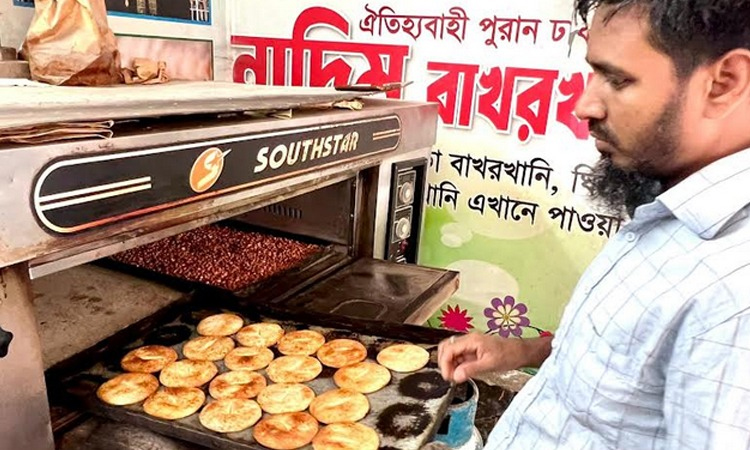
DHAKA, May 16, 2026 (BSS) - In the maze of narrow lanes and centuries-old buildings of old Dhaka, the aroma of freshly baked Bakarkhani still carry the rich legacy of the city’s culinary heritage.
From early morning, the lanes of old Dhaka fills with the sweet and crispy aroma of freshly baked hot Bakarkhani, a thick spiced flatbread that is part of the Mughlai Cuisine.
That familiar fragrance instantly transports people into the atmosphere of old Dhaka’s traditional food culture.
Times have changed, and modern foods and fast-food culture have become part of urban life. Yet, for the people of old Dhaka, Bakarkhani is not just a food item; it is a symbol of emotion, heritage, and hospitality.
Just as the name of old Dhaka brings to mind a rich array of traditional foods, Bakarkhani remains one of the most prominent symbols of that heritage. This centuries-old delicacy is deeply intertwined with the culture and daily life of old Dhaka.
Whether rich, middle-class or ordinary people, Bakarkhani still holds an important place in breakfast tables across all social classes. A cup of hot tea with crispy Bakarkhani is part of the everyday routine here.
Moreover, serving Bakarkhani with tea to guests at home remains a widely practiced custom. No matter how much times change, the popularity and appreciation of Bakarkhani continue to grow.
How Bakarkhani is made:
The process of making Bakarkhani begins with preparing dough from flour. salt, sugar, milk, and oil are mixed in measured quantities to create a special type of dough. Many bakers also add spices such as cinnamon, cardamom, or black cumin seeds to enhance the flavor and aroma.
The dough is then cut into specific sizes and shaped into round or oval forms.
The dough pieces are arranged on wooden boards or trays and repeatedly layered with oil and flour. This layering process creates Bakarkhani’s signature flaky texture. Later, they are slowly baked over charcoal heat in traditional clay ovens.
The secret behind its crispy taste:
According to bakers, the clay oven and charcoal heat are the main secrets behind Bakarkhani’s authentic taste and aroma. Baking for about 8 to 10 minutes at a special temperature makes the outer layer crispy while keeping the inside soft and layered. The charcoal fire also adds a distinctive smoky fragrance that modern ovens cannot fully replicate.
Different Varieties of Bakarkhani:
Nowadays, various types of Bakarkhani are available in the market. They are: cheese, sesame, sweet, and salty Bakarkhani are among the most popular varieties. Cheese and sesame Bakarkhani sell for around Tk 300 per kilogram, while sweet and salty varieties are comparatively cheaper.
Smaller-sized Bakarkhani has also become increasingly popular. Many shops now sell boxed Bakarkhani as gifts. In addition to various districts of the country, Bakarkhani from old Dhaka is regularly sent to relatives living abroad.
The Story Behind the Name:
According to popular belief, Bakarkhani originated during the Mughal era (17th–18th century) in the Indian subcontinent. It is believed to have first emerged in Murshidabad during Bengal’s Nawabi period. At one time, it was known as a delicacy enjoyed by Nawabs and aristocratic families.
Folklore says the name “Bakarkhani” originated from the love story of Mirza Agha Baker Khan and Khani Begum. Although historians hold differing opinions about this story, it continues to be widely circulated among people.
Beyond Old Dhaka:
Once, Bakarkhani shops could only be found in areas such as Nazirabazar, Chawkbazar, Narinda, Banglabazar, and Lakshmibazar in Old Dhaka. Now it is easily available in different parts of the capital, including Tejgaon, Mirpur, and Khilgaon.
Although traditional Bakarkhani is still made in clay ovens, many factories are now using modern ovens to meet growing demand.
Old Dhaka resident Solaiman Hossain told BSS, “Bakarkhani has become a part of our lives. It tastes wonderful with tea in the morning or with sweets in the evening. In childhood, I used to buy Bakarkhani for four annas. Prices have increased now, but its popularity has grown even more.”
Another customer, Mohammad Shahjahan, said, “Bakarkhani is not just food; it is the heritage of old Dhaka. Previously, people used to visit old Dhaka to eat it. Though it is now available in many places across Dhaka, the taste of old Dhaka’s Bakarkhani is unique.”
Mohammad Sohel, a Bakarkhani baker from Nazirabazar, said, “This is our family profession. We learned this craft from our ancestors. Even today, we follow the traditional methods of making Bakarkhani. We always take care to preserve its taste and quality.”