Saturday
09 May, 2026
News Flash
News Flash

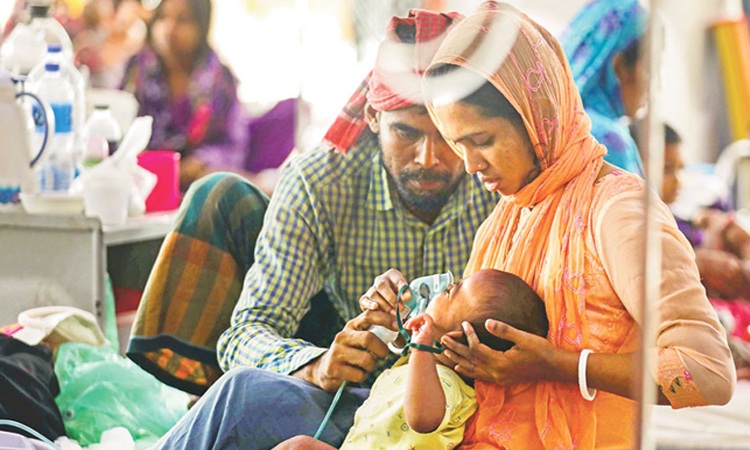
DHAKA, May 09, 2026 (BSS) - Seven-year-old Rafsan and his sibling ten-year-old Jisan, hailing from Matuail in the capital, are in a constant fight for survival as the duo are patients of Thalassemia. Their parents struggle every day to meet the high cost of their treatment.
Thalassemia major is a condition in which the body cannot produce enough haemoglobin to meet its needs, making patients dependent on regular blood transfusions from donors.
Experts said Thalassemia is a blood disorder caused by the weakening and destruction of red blood cells. It also results in defective or missing genes that severely impair the production of haemoglobin—an essential protein that enables red blood cells to carry oxygen.
They said that if both parents are thalassemia carriers, there is a 25 percent chance that their child will also have the disorder.
Experts warned that around two crore people in the country carry the gene responsible for the hereditary blood disorder.
The symptoms of thalassaemia usually appear within one to two years of birth and include paleness, weakness, frequent infections, poor weight gain, jaundice and irritability.
The World Thalassaemia Day was observed on May 8 in Bangladesh as elsewhere in the world to raise awareness about thalassaemia and its prevention.
The theme of this year’s is: 'Hidden No More: Finding the Undiagnosed. Supporting the Unseen'.
Health specialists said that Bangladesh is among the thalassemia-prone countries in the region, and the disease is gradually turning into a “silent public health threat”.
According to estimates, about 6,000 to 8,000 children are born with thalassemia every year in the country, while the total number of patients currently stands at around 60,000 to 70,000.
They stressed that the disease is not contagious but inherited from parents, making it largely preventable through awareness and screening.
Citing global data, the World Health Organization (WHO) estimates that around 250 million people worldwide carry the thalassemia gene. In Bangladesh, the carrier rate is about 10 to 12 percent of the population.
A review published in the Orphanet Journal of Rare Diseases by the Biomedical Research Foundation (BRF) shows that around 10.9 to 13.3 percent of people in Bangladesh are carriers, meaning nearly 1.7 to 2.2 crore people are carrying the gene.
According to ‘National Thalassemia Survey 2024’ reports conducted by The Bangladesh Bureau of Statistics (BBS), the highest prevalence was found in Rangpur (27.7 percent), followed by Rajshahi (11.3 percent), Chattogram (11.2 percent), Mymensingh (9.8 percent), Khulna and Dhaka (8.6 percent each), Barishal (7.3 percent) and Sylhet (4.8 percent).
Bangladesh Thalassemia Foundation Vice Chairman Professor Dr Syeda Masuma Rahman said thalassemia is a hereditary disease caused by defective genes responsible for haemoglobin formation. If both parents are carriers, their child is at risk of being born with thalassemia.
She said symptoms usually appear within one to two years of birth, including poor growth, pale appearance, weakness, frequent infections, loss of appetite, weight loss, jaundice, irritability and abdominal swelling.
Social Welfare and Women and Children Affairs Minister AZM Zahid Hossain said it is essential to diagnose before the marriage whether the male and female are the carrier of thalassemia.
He said Thalassemia, an inherited blood disorder that affects your body's ability to produce hemoglobin and healthy red blood cells, if both husband and wife would be a carrier of the disease then the children likely to be infected with it.
He said the government is committed to ensure the healthcare services of the people, and in view of this the social welfare ministry is implementing many social safety net programmes.
Highlighting the role of mass media in making people aware about the disease, the minister said the mass media can play active role in this area.