Tuesday
11 August, 2026
News Flash
News Flash
By Mahamudur Rahman Najid
DHAKA, May 07, 2026 (BSS)- Soft-shell crabs farmed in Shyamnagar upazila of Satkhira near the Sundarbans, are rapidly emerging as a high-value export, drawing strong demand in international markets.
The surge in global interest is not only reshaping local agriculture but also improving livelihood, as more farmers shift to crab cultivation and new farms expand across the region, boosting both the district’s economy and national export earnings.
According to Export Promotion Bureau, crab exports reached $13.74 million from July to June in the 2024–2025 fiscal year. In the same period of the previous fiscal year (2023–2024), exports were $9.24 million, marking a growth of 48.70 percent.
In June alone of the current year, exports amounted to $ 1.57 million.
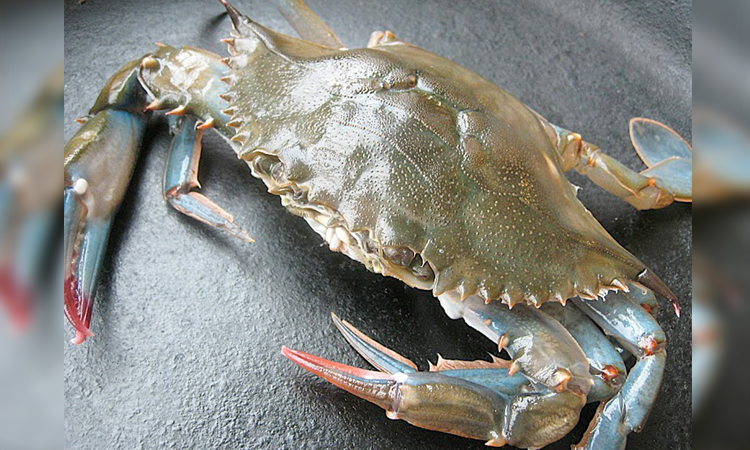
Sources said that among commercially farmed crabs in Bangladesh, the mud crab (locally known as shila crab) is one of the most important species.
During molting, the crab remains without a hard shell for about three hours, covered only by a soft layer—this is when it becomes suitable for sale as soft-shell crab.
Soft-shell crabs fetch high prices in international markets, prompting many farmers to shift from shrimp farming to crab cultivation. Due to higher profitability, interest in crab farming is increasing rapidly.
Currently, soft-shell crab farming is not only limited to Shyamnagar but has also spread to Satkhira Sadar, Kaliganj, and other areas of the district.
In crab farming, only the upper layer of pond water is used, leaving the lower layer available. To maximize pond utilization, farmers are also cultivating freshwater fish such as ruhi, catla, and tilapia alongside crabs, increasing their overall profits.
Soft-shell crabs are typically farmed using cage systems. Crabs are raised in cages floating on the water surface, while fish are cultivated in the lower layers.
Due to their quick processing and easiness to cook, the soft-shell crabs are in high demand internationally. Currently, they are exported to countries such as China, South Korea, Malaysia, and Vietnam.
Crab farming is not only a source of income for Satkhira residents but it’s also helping reduce unemployment in the region. Both men and women are actively involved, with many women becoming financially independent through this occupation.
Field visits to several farms in Shyamnagar showed both men and women working actively, some cutting tilapia fish into small pieces for feed, while others regularly monitoring whether the crabs are molting.
According to the Fish Inspection and Quality Control Office, Khulna, soft-shell crab exports have seen significant growth over the past two fiscal years.
In the 2025–2026 fiscal year (July to April), Bangladesh exported 1,207.76 metric tons of soft-shell crabs, valued at $16.48 million. In the previous fiscal year, 2024–25, exports increased to 1,166.88 metric tons, with a market value of $ 14.2 million.
Mohammad Shamim, a farmer from Shyamnagar, said, “In our region, we frequently suffer various losses due to natural disasters. At times, crab larvae also die from viral infections, which create major risks. Even so, soft-shell crab farming is more profitable compared to other types of crab farming, so we continue with it. At the same time, we also cultivate white fish in our ponds to earn some additional income.”
Another farmer, Abdullah Al Kaiyum, said, “Nowadays, almost everyone in our area is involved in soft-shell crab farming. These crabs have to be cultivated in special boxes. Each box costs around Taka 110 to make. I have about 12,000 boxes on my farm. Currently, market demand for soft-shell crabs is very high, but supply is comparatively low.”
Satkhira District Fisheries Officer G.M. Selim told BSS, “We have undertaken various initiatives to increase soft-shell crab production. Farmers are being given regular training so that they can adopt modern and sustainable crab farming methods.”