Tuesday
08 September, 2026
News Flash
News Flash
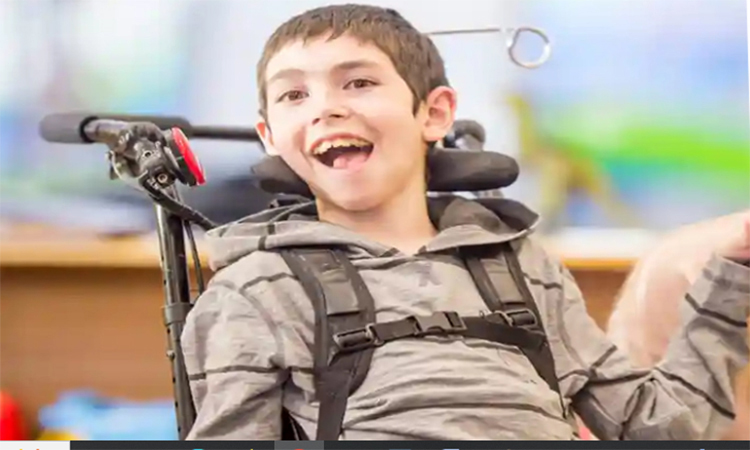
DHAKA, May 19, 2026 (BSS) - When Maliha Islam takes her 15-year-old son Rafin to family gatherings, she often senses an invisible distance around them. Some relatives avoid interacting with the boy, while others respond with pity instead of warmth.
Like many parents of autistic children, Maliha worries constantly about her son's future.
Yet, like thousands of autistic children across Bangladesh, Rafin has abilities and potential that often go unnoticed because society focuses more on limitations than possibilities.
Parents of autistic children regularly gather at the Swed Bangladesh Vocational Training Center near Moghbazar railway area in Dhaka to share experiences. Many say their children display remarkable talents in specific areas. Some excel in mathematics, others have extraordinary memory skills, while many show creativity in art, music or technology.
Experts say autism is not a disease but a neurodevelopmental condition that affects communication, behavior and social interaction. Children with autism often experience the world differently. Some may struggle to communicate verbally, become sensitive to changes in routine or prefer isolation. But these challenges do not mean they are incapable.
Doctors and specialists observed that autistic children are not a burden on society. With proper support, education and understanding, they can become productive and respected members of the community.
Research worldwide suggests that many autistic individuals possess exceptional abilities. Studies indicate that nearly one in 10 autistic children demonstrates special skills in areas such as drawing, music, mathematics or computers. Historians have even speculated that renowned scientists like Isaac Newton and Albert Einstein may have shown autistic traits.
Despite this potential, social acceptance remains one of the greatest barriers for autistic people in Bangladesh. Many families still face judgment and misunderstanding from relatives, neighbors and educational institutions. Some parents hesitate to send their children to school fearing rejection or bullying. In many cases, schools remain unwilling to admit autistic children because of misconceptions that they may negatively affect other students.
Specialists negate such beliefs, arguing that inclusive education benefits both autistic and non-autistic children. When autistic children learn alongside their peers, they often develop communication and social skills more quickly. At the same time, other children learn empathy, patience and compassion.
"Special schools alone are not enough," child development experts said. "Children with autism improve significantly when they are given opportunities to study and play with mainstream students."
According to the National Institute of Mental Health, approximately one in every 125 children in Bangladesh shows symptoms of autism. The Neurodevelopmental Disability Protection Trust (NDD Trust) reports that more than 98,000 autistic people are officially registered in the country, though experts believe the actual number is much higher.
Researchers say autism develops through a complex interaction of genetic and environmental factors during early childhood development. Low birth weight, maternal malnutrition during pregnancy and certain environmental conditions may increase the risk. Awareness about autism has improved in recent years, but support services remain limited.
Mahmuda Khanam Kana, head teacher of Swed Bangladesh Vocational School, said that since 2022, 12 students from the school have started working in different departments of Swed. She said the students perform their duties efficiently when they maintain regular routines, though disruptions often create setbacks.
Still, their success demonstrates that autistic individuals can work productively when provided with training, patience and structured environments.
The government has also taken initiatives under the NDD Trust Act to improve facilities for autistic individuals, including accessible housing, trained caregivers and support services.
Abu Tayyab Khan, assistant director of the NDD Trust, said plans are underway to establish eight specialized centers across the country at an estimated cost of Tk 950 crore. Currently, 14 centers, including two in Dhaka, provide counselling and support services, although opportunities for skill development and employment remain limited. Advocates say much more needs to be done.
Marufa Hossain, director of Tori Foundation and School for Gifted Children, believes society must build a humane and inclusive system where autistic people can live with dignity.
"Not everyone will be able to work in the same way," she said. "But everyone deserves respect, care and a meaningful life."
Similarly, Salma Mahbub, executive director of NGO B-Scan, said Bangladesh still lacks adequate treatment systems, educational facilities and employment opportunities for autistic individuals despite years of awareness campaigns.
Experts and parents agree on one message: autistic children do not need sympathy alone - they need opportunity.
With acceptance, proper education, supportive families and inclusive policies, many autistic individuals can flourish. Their abilities, creativity and determination can enrich society in countless ways.
For mothers like Maliha Islam that hope matters deeply. She dreams of a future where her son is not judged for being different, but valued for who he is.