Sunday
23 August, 2026
News Flash
News Flash
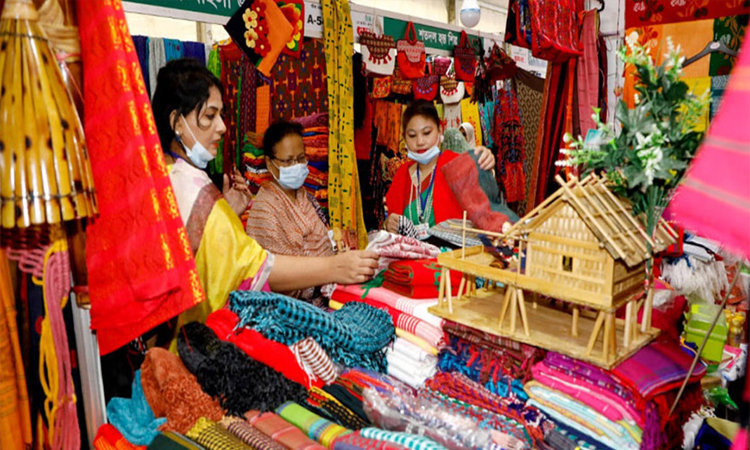
DHAKA, May 13, 2026 (BSS) - Women entrepreneurs are increasingly emerging as a dynamic force in Bangladesh's small and medium enterprise (SME) sector, playing a growing role in job creation, innovation, and inclusive economic development despite persistent barriers to finance, skills, and market access.
Officials said women-led enterprises are gradually gaining stronger footing as targeted refinance schemes and policy interventions improve access to credit.
Banks have been directed to allocate a dedicated portion of SME lending specifically for women entrepreneurs to promote financial inclusion and reduce gender gaps in business ownership.
The Bangladesh SME Foundation has expanded its focus on women entrepreneurship through training, mentorship, and capacity-building programmes, enabling many women to enter sectors such as agro-processing, boutique and handicrafts, online retail, and service-based businesses.
Talking to BSS, SME Foundation Deputy Managing Director Farzana Khan said the government, alongside the Bangladesh Bank, has introduced refinance schemes, low-interest loans, and targeted credit facilities to support women entrepreneurs in cottage, micro, small and medium enterprises.
She said special emphasis has been placed on empowering women through skill development and business support services to increase their participation in economic activities.
According to her, the foundation works closely with government agencies and financial institutions to ensure women entrepreneurs receive structured assistance in accessing finance, training, and markets.
Despite these initiatives, stakeholders noted that women entrepreneurs still face challenges including limited access to collateral-free loans, low financial literacy, and social constraints, particularly in rural areas.
Restricted market linkages and limited digital access also continue to hinder business expansion.
A notable example is Rokeya Akther from Feni, who transformed a small tailoring activity into a thriving boutique business employing 12 workers, most of them women.
Starting in 2018 with minimal savings and a single sewing machine, she initially served local demand for customised clothing.
With training support from the SME Foundation, she gained skills in business management, product design, and digital marketing.
Later, she secured financing under a women entrepreneur loan scheme supported by Bangladesh Bank guidelines through a local bank, enabling her to expand production, purchase equipment, and hire workers.
"I never imagined my small effort would become a business employing other women," Rokeya said, adding that access to training and credit changed her life.
Her business now supplies local markets and sells through social media platforms, significantly increasing her income while creating employment opportunities for other women.
Experts said such success stories highlight the transformative potential of women-led SMEs in Bangladesh.
The growth of e-commerce and mobile financial services is further helping women entrepreneurs overcome traditional barriers and reach broader markets.
Development partners, including the International Finance Corporation, are supporting initiatives aimed at improving access to finance and advisory services for women entrepreneurs.
Policy analysts stressed the need to expand collateral-free financing, simplify banking procedures, and enhance digital literacy among women. They also emphasized the importance of strengthening mentorship networks and improving market access to sustain women's entrepreneurial growth.
Chairman of the Department of Organization Strategy and Leadership at Dhaka University Md Rashedur Rahman said strengthening SME clusters, improving access to technology, and enhancing export readiness are essential for sustaining women-led enterprise growth.
He also called for coordinated efforts between public and private sectors to create a more enabling environment for women entrepreneurs.
Deputy Managing Director of Dutch-Bangla Bank Limited Mohammed Shahid Ullah said women entrepreneurs are a key segment in SME financing, with tailored products supporting working capital, term loans, and startup expansion.
He noted that while challenges remain-such as lack of documentation and reliance on collateral-women-led SMEs continue to show strong repayment behaviour and growth potential when supported with proper financial systems.
He added that expanding digital banking, improving financial literacy, and introducing women-focused financial products will be crucial for strengthening their participation in the economy.
As Bangladesh advances toward inclusive growth, women entrepreneurs are expected to play an increasingly central role in shaping a more diversified and resilient SME sector.