Tuesday
08 September, 2026
News Flash
News Flash
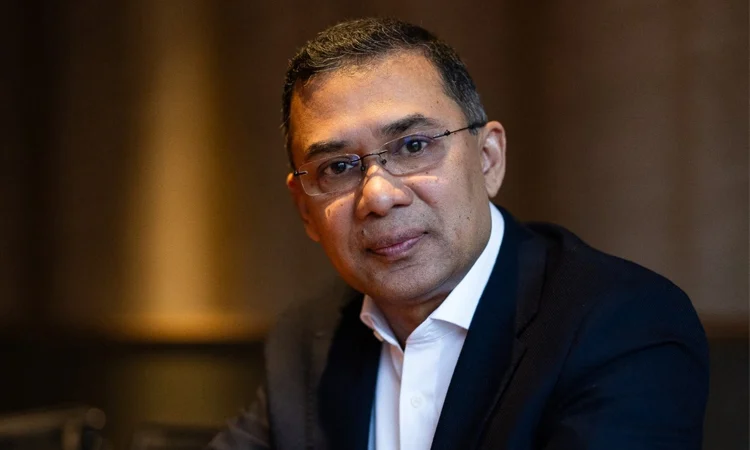
DHAKA, Feb 17, 2026 (BSS) - In poetry, home is rarely just a building. It can be a place, a memory, a feeling of belonging, a cultural root, or even a state of mind. American poet Robert Frost gives one of the most quoted definitions of home:
“Home is the place where, when you have to go there,
They have to take you in.”
For him, home is unconditional acceptance—a place of emotional security, even if it feels restrictive or complex.
Some lives are shaped by a single hometown. Others are shaped by a country.
For Tarique Rahman, there was never just one address. It was many places, many courtyards, many journeys—each leaving a mark on his mind and his sense of belonging in Bangladesh.
He was born in Dhaka, into a family that would become inseparable from the country’s political destiny. He is the son of Ziaur Rahman, a freedom fighter, proclaimer of independence and later president, and Begum Khaleda Zia, who became Bangladesh’s first female prime minister.
But his childhood was not confined to privilege or power alone. It was shaped by movement—by history itself.
Cantonment Childhoods: Discipline and Simplicity:
Tarique Rahman grew up largely in Dhaka Cantonment, particularly in the red-brick house on Shaheed Moinul Road. It was not a palace. It was simple, restrained, almost austere—reflecting the values of a soldier’s family.
During the Liberation War period, at a very young age, he lived with his family for a time in Chattogram Cantonment. Those early years—marked by uncertainty, movement, and national struggle—instilled in him awareness that personal life and national history are often intertwined.
The House That No Longer Exists:
The house on Shaheed Moinul Road was more than a residence. It was a witness to Bangladesh’s modern history. Yet that history was deliberately erased under the authoritarian rule of Sheikh Hasina, whose regime treated memory itself as a political threat.
Ziaur Rahman moved into the house in 1972, after being appointed deputy chief of army staff. Even after becoming army chief and later president, he chose this modest residence—eschewing luxury for simplicity and discipline.
Following his assassination in 1981, the house was officially allotted to Khaleda Zia by a decision of the National Parliament.
For 38 years, it remained the family’s primary home:
During Sheikh Hasina’s regime in November 2010, Khaleda Zia was forcibly evicted through a dramatic state-backed operation. Law enforcement broke doors, restricted access, and humiliated a former prime minister in full public view. She was not even allowed to collect her personal belongings.
The eviction was not merely administrative—it was political. It was part of a broader effort by a vindictive regime to erase the legacy of its principal rival, to punish an entire family by uprooting its most intimate space.
Soon after, the house was demolished:
What followed was not preservation, nor reconciliation, but replacement. A multi-storied residential building where history once stood. The courtyard where children once played, where Tarique Rahman grew up with his younger brother, the late Arafat Rahman Koko, was wiped clean—rendered unrecognizable.
This was where Tarique Rahman played football, spent quiet hours thinking, and slowly transitioned from a son into a political figure. This was where personal life and national history quietly overlapped.
The destruction of the house was not just the loss of bricks and walls. It was the destruction of memory. An attempt to rewrite history by bulldozing it. But while regimes can demolish buildings, they cannot demolish belonging. The house is gone. What it represented remains.
A Man of Many Districts:
Beyond Dhaka, Tarique Rahman’s identity was shaped by multiple regions of Bangladesh.His maternal grandparents lived in Dinajpur. Begum Khaleda was born in Jalpaiguri and brought up in Dinajpur. But Begum Zia’s ancestral roots trace back to Feni. From these places, Tarique Rahman came up with stories of rural life, family bonds, and deep social ties.
On his father’s side, his roots lie in Bogura—the home district of Ziaur Rahman. Bogura symbolized humility, grassroots connection, and resilience. From here Tarique Rahman learned what it meant to be rooted in the soil, not just the state.
Marriage and New Belonging:
His marriage to Dr. Zubaida Rahman connected Sylhet to Tarique Rahman’s emotional geography, adding a bond not forged by politics, but by family.
Sylhet—long known for its diaspora, education, and strong cultural identity—did not receive him merely as a national leader. It embraced him as one of its own.
During Tarique Rahman’s electoral campaign visits to Sylhet, crowds did not chant political slogans alone. Instead, voices rose calling him “dula bhai, dula bhai”—brother-in-law. In Sylheti culture, this is not a casual term. It is a word of affection, familiarity, and trust.
Even more telling is how many Sylhetis refer to him as “daman”—the Sylheti word for son-in-law. To be called “daman” is to be symbolically welcomed into the family. It signifies acceptance that goes beyond party lines, beyond ballots and banners.
For the people of Sylhet, Tarique Rahman is not just a visiting politician or a distant authority figure. He is someone connected through marriage, through shared customs, through emotional proximity. This relationship reflects something deeper than electoral support—it reflects intimacy, recognition, and belonging.
In a country where politics is often defined by division, this bond stands out. It shows how personal ties, cultural respect, and human connection can shape political identity in ways no campaign slogan ever could.
For Sylhet, Tarique Rahman is not only a leader.
He is their dula bhai.
He is their daman.
And in Bangladesh, that kind of acceptance carries a meaning no title can replace.
Each place added something:
* Dhaka gave him history and responsibility
* Chattogram gave him early awareness of struggle
* Dinajpur and Feni gave him family roots
* Bogura gave him humility and connection
* Sylhet gave him continuity and partnership
Together, these places shaped his worldview.
Exile, Eviction and Loss:
In 2008, Tarique Rahman left Bangladesh under the weight of political persecution. Two years later, in November 2010, his mother was forcibly evicted from the house on Shaheed Moinul Road.
Police broke down doors. Khaleda Zia was harassed. She could not even take her personal belongings. The nation watched as a former prime minister broke down in tears.
The courtyard where Tarique Rahman once played football is unrecognisable. But memory does not need walls to survive.
The Return:
Seventeen years after leaving as a young politician, Tarique Rahman returned as a seasoned leader—carrying the weight of exile, loss, and expectation.
As leader of the Bangladesh Nationalist Party, he returned not just to reclaim political space, but to reconnect with a country that had shaped him in fragments.
Why These Places Matter:
For Tarique Rahman, home is not one building.
It is a mosaic of places, people, and memories.
Bangladesh accepted him again—not because it forgot the past, but because it remembered everything.
And now, the country that shaped him waits to see whether the man shaped by so many homes can, in return, shape a future worthy of them all.