Tuesday
14 July, 2026
News Flash
News Flash
KHULNA, Jan 25, 2026 (BSS) - Experts at a conference today stressed the urgent need for the rapid implementation of an effective water management policy, warning that failure to do so could render Bangladesh's southern region uninhabitable.
They said coastal water resources and ecosystems in the country are under severe threat due to climate change and other factors, putting biodiversity as well as the livelihoods of millions of people at increasing risk. Alongside agriculture, fisheries resources are also facing serious challenges.
In this context, experts emphasized that immediate and people-oriented implementation of effective water management policies is essential. Otherwise, they warned, the country's southern coastal belt may soon become unfit for human habitation.
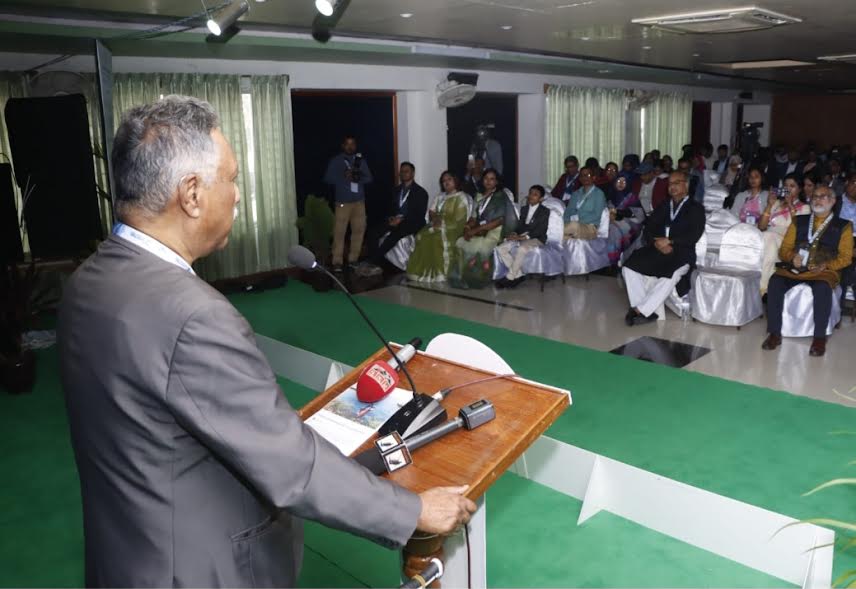
The remarks were made during the second-day session of the three-day Third Coastal Water Conference, held at the city's CSS Ava Centre under the theme "Water and Ecosystem Protection for Sustainable Development." The conference is jointly organised by more than 60 non-governmental organisations and institutions across the country.
Presenting the keynote paper, eminent environment, climate, and water expert Professor Dr Ainun Nishat said the coastal region is facing grave danger, yet there has been little state-level focus on coastal issues. Although a global agreement was reached in 2023, Bangladesh has not taken effective action so far, he noted.
He said six cyclones occurred last year, all of which passed through the Myanmar-India coast, sparing Bangladesh. "Had a 17-foot storm surge like the one experienced in Florida occurred here, areas as far as Faridpur would have been submerged," he warned.
He further cautioned that within the next 50 years, water in Khulna and the south-western region could become as saline as seawater.
Professor Anwarul Qadir, Executive Director of the Sundarbans Academy, said Bangladesh must establish cooperative relations with neighbouring countries, particularly through engagement in water projects in India and Nepal, to secure its rightful share of water in the national interest.
"Even after so many years, we have not been able to properly define water," he remarked.
Emphasising the importance of rivers, Dhaka University Professor Dr Maruful Islam said rivers do not only carry water, but also sediment such as stones, sand, mud and floating materials. If the current situation continues, salinity in the south-western coastal region will increase, turning it into a marine environment and destroying the Sundarbans. As a result, fisheries and agricultural production could be reduced by half, he warned.
He also noted that while embankments have been constructed to control floods, their maintenance has been neglected. "When plans are formulated, the opinions of affected communities are often ignored," he said, stressing the need for effective water management initiatives to protect the coast and the country for future generations.
The session was presided over by ActionAid Country Director Dr Md Khairul Islam, while Shamim Arefin, Member Secretary of the Coastal Water Conference Committee, conducted the proceedings.
ActionAid Bangladesh official Abul Kalam Azad and Manusher Jonno Foundation Programme Manager Soma Dutta also spoke at the conference. Several foreign representatives presented their views virtually.
A total of 20 side events were held across two sessions of the conference. The event will conclude on Monday at the same venue with further side events and the adoption of the 'Khulna Declaration'.