Thursday
27 August, 2026
News Flash
News Flash
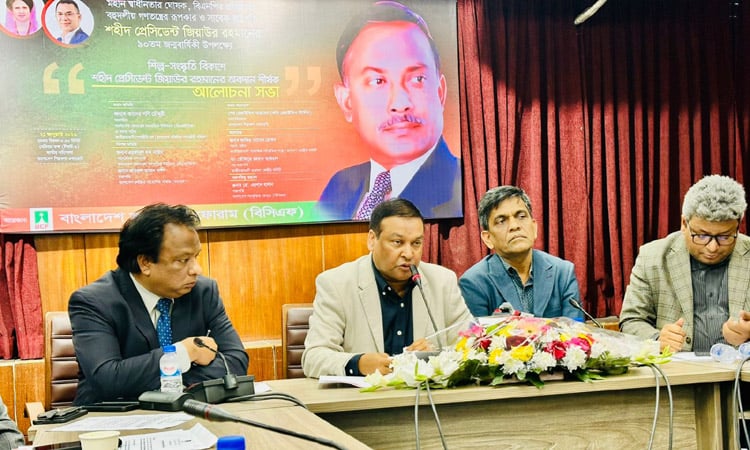
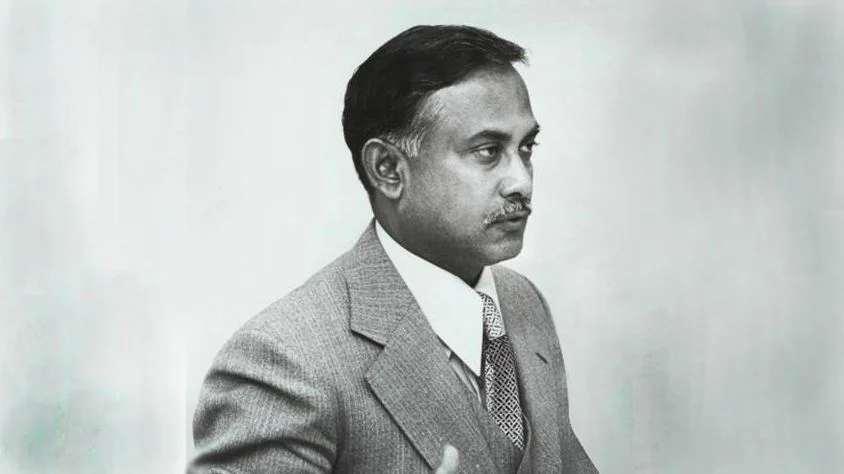
DHAKA, Jan 21, 2026 (BSS) - Bangladesh Federal Union of Journalists (BFUJ) Secretary General Kader Gani Chowdhury today said Shaheed President Ziaur Rahman was a key patron of flourishing Bangladesh’s culture and heritage.
“Shaheed President Ziaur Rahman wanted to create a cultural awakening to remove darkness from society,” he told a discussion at National Theatre Hall of Shilpakala Academy.
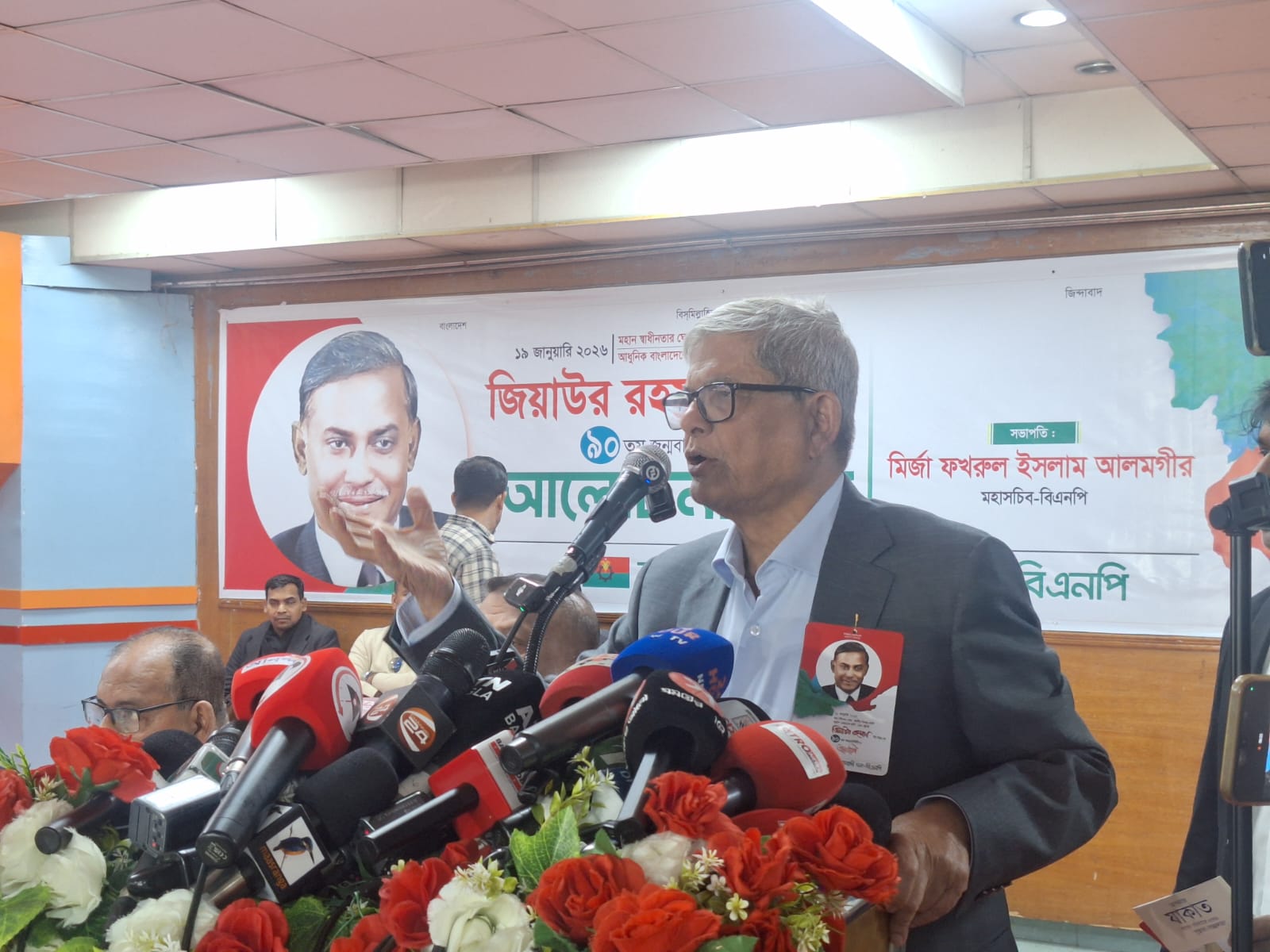
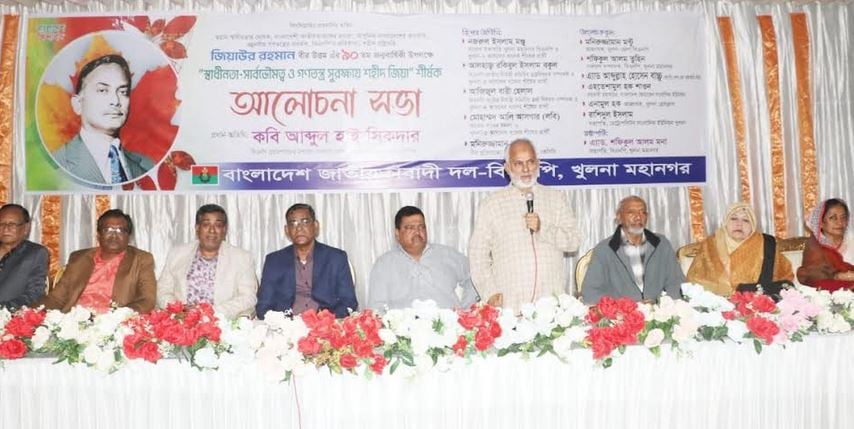
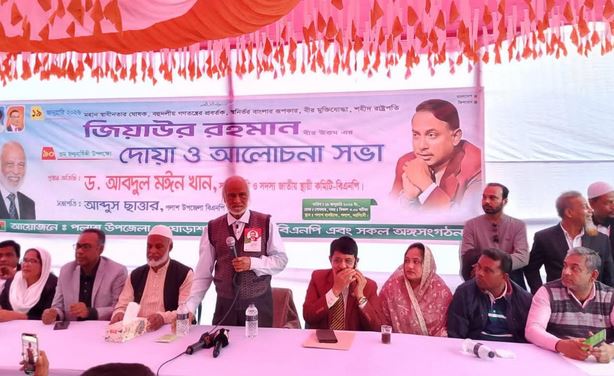
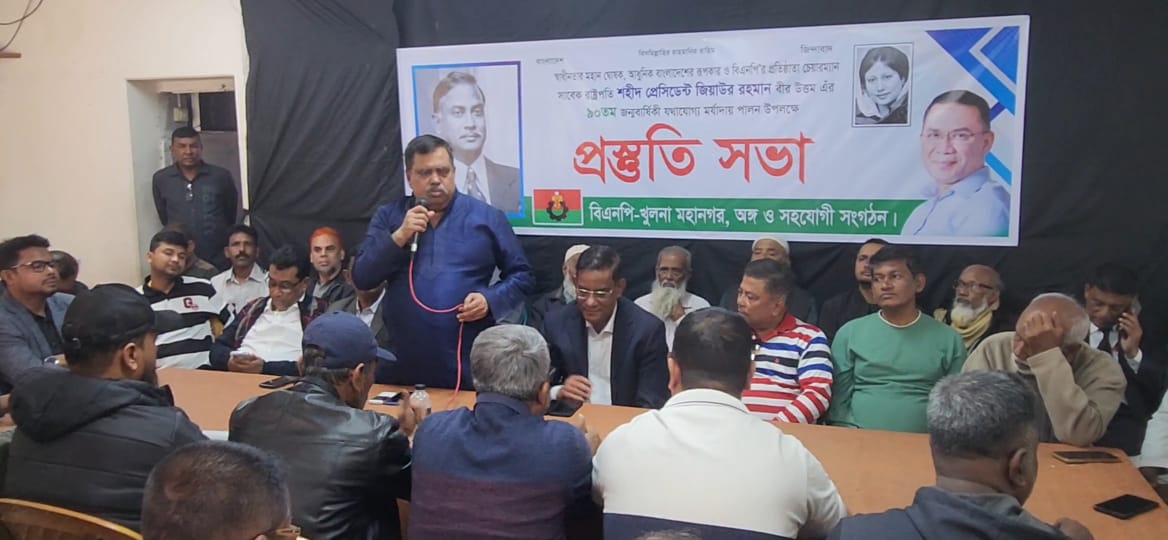
Bangladesh Cultural Forum organized the discussion titled “President Ziaur Rahman in the Development of Art and Culture” marking the 90th birth anniversary of Shaheed President Ziaur Rahman.
Bangladesh Cultural Forum President Ershad Hasan chaired the programme which was moderated by Moinul Islam.
Jatiyatabadi Samajik Sangskritik Sangstha (JASAS) General Secretary Zakir Hossain Rokon, BFUJ Organizing Secretary Irfanul Haque Nahid, Bangladesh Film Journalists’ Association President Kamrul Hasan Darpan, actors Kabir Ahmed, Dr. Touhidur Rahman Awal, Khandaker Atik, Rabiul Ahmed, theatre directors Sazzad Hossain Dodul and Mujibur Rahman Mujib also spoke on the occasion.
Kader Gani Chowdhury said culture is the lifeblood of a society; it gives meaning to human life.
“The level of a nation’s civilization and progress is measured by its culture. Shaheed President Ziaur Rahman realized that to remove darkness from society and eradicate injustice and crime, a cultural awakening was essential,” he said.
Through this awakening, he sought to permanently resist irregularities, injustice, and anarchy, said BFUJ secretary general.
Ziaur Rahman understood that such an awakening would bring undiscovered elements of civilization into recognition as national assets and create immense potential for the national economy, especially in tourism, he said adding therefore, upon assuming responsibility for running the state, and he initiated a cultural renaissance.
“As the first step, he introduced the new political philosophy of Bangladeshi Nationalism. This nationalism emphasized unity and solidarity among all citizens regardless of religion, race, gender, or culture. He believed that our culture is the bearer and carrier of our indigenous traditions and possesses a unique heritage,” he said.
“President Ziaur Rahman introduced the concept of Bangladeshi nationalism based on the coexistence of people of all religions, languages, and ethnicities living within the state’s boundaries as a nation-state. As a result, no one was excluded on the basis of religion, language, or ethnicity; everyone found a common platform,” he said.
As a statesman, Ziaur Rahman observed that no country in the world consists of people of a single religion, language, or race, he said.
“Hitler’s attempt to build Germany on racial grounds led to some of the most horrific barbarities in history. Israel, by attempting to build a state on religious grounds, is carrying out some of the most brutal aggressions in the contemporary world,” said Kader Gani.
On the other hand, despite being multilingual, multi religious, and multiethnic, the United States has established territory-based nationalism and has become one of the best states for its citizens, he said.
“While singular identity-based nationalism creates division and discrimination, only territory-based nationalism can bring everyone under one roof,” he said.
He said Ziaur Rahman presented a liberal ideology. “His Bangladeshi nationalism was a centrist political philosophy—neither religiously fanatic nor secular to the point of denying religion,” he said.
To create a cultural awakening, Ziaur Rahman established Jatiyatabadi Samajik Sangskritik Sangstha (JASAS), he said.
Kader Goni, said that alongside education, Ziaur Rahman had deep interest and fascination for literature and culture. In 1976, in honour of the Language Martyrs of 1952, he introduced the Ekushey Padak for special contributions in various fields, he said.
In 1977, he introduced the country’s highest state award, the Independence Award. On January 9, 1979, the National Film Awards 1977 were presented for the first time, he said adding at his initiative, the Dhaka International Film Festival was held in March–April 1981.
During his tenure, the Bangla Academy Ordinance 1978 was promulgated to develop the Bangla Academy, the foremost research institution on the Bangla language and literature and a symbol of the Bangladeshi national entity, he said.