Monday
07 September, 2026
News Flash
News Flash
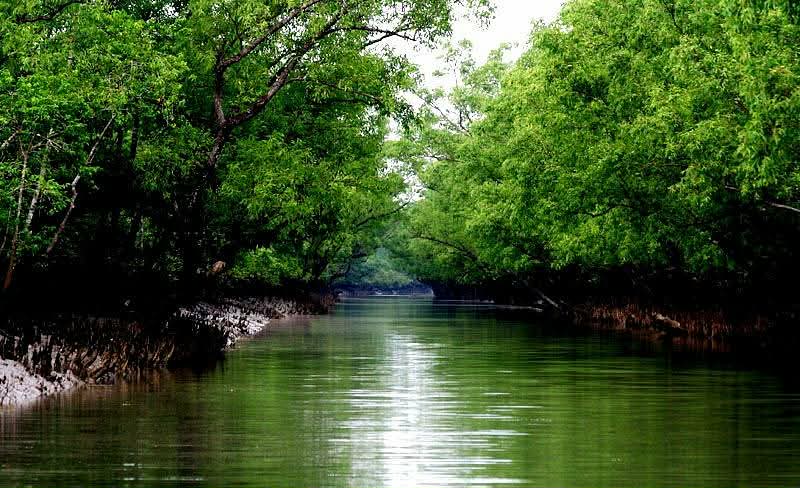
KHULNA, Jan 1, 2025 (BSS) - The Forest Department has imposed a two-month ban
on crab catching in the Sundarbans from January 1(today) to February 28 to
ensure the natural breeding of the species during its peak spawning season.
January and February are considered the prime breeding months for crabs in
the rivers and canals of the Sundarbans.
To protect this aquatic resource during its most sensitive period, the Forest
Department has suspended the issuance of permits for crab catching for 59
days, officials said.
Khulna Circle Conservator of Forests Imran Ahmed said the initiative aims to
protect crabs during their breeding season.
"Every year during January and February, crabs lay eggs in the rivers and
canals of the Sundarbans. During this time, they remain extremely vulnerable.
The ban has been imposed to ensure uninterrupted breeding," he said.
He added that the Sundarbans is home to 14 species of crabs, including mud
crabs.
"If crabs are caught during the breeding season, it may disrupt the entire
ecosystem. That is why, like previous years, the ban has been enforced
again," he said, noting that fishermen staying deep inside the forest have
already returned to localities as permits are not being issued.
However, residents of areas adjacent to the Sundarbans alleged that some
syndicates continue crab catching during the breeding season by using various
tactics.
They claimed that with the support of a section of dishonest forest guards
and officials, such groups manage to operate illegally, while ordinary
fishermen suffer financial hardship.
Environmentalists fear that this illegal practice threatens crab reproduction
and the overall aquatic biodiversity of the Sundarbans.
Environmentalists also said the economic importance of the Sundarbans is
immense, but not at the cost of ecological destruction. They alleged that
corruption among some forest officials and guards has recently become
rampant.
Member Secretary of Khulna Civil Society Advocate Babul Howlader said, "If
crabs are not protected during the breeding season, their population will
decline, causing long-term adverse impacts on the entire biodiversity of the
Sundarbans. This will also affect the export potential of this economically
valuable natural resource."
According to Forest Department data, the Bangladesh portion of the Sundarbans
covers 6,017 square kilometres, of which 1,874.1 square kilometres or 31.15
percent-- is water area. The water bodies of the Sundarbans host 210 species
of finfish, 24 species of shrimp and 14 species of crabs.
As January and February are the breeding months for crabs, entry of fishermen
into the Sundarbans for crab catching remains suspended for 59 days.
Residents of coastal areas said that due to geographical location, most
people of Koyra -- the southernmost coastal upazila of Khulna district
surrounded by the Sundarbans -- depend heavily on forest resources.
Dakop is another Sundarbans-influenced upazila in the district. People living
in forest-adjacent villages of these two upazilas earn their livelihoods
through fishing, crab catching, golpata collection and honey harvesting.
Several forest-dependent fishermen said crab trading is highly profitable,
which is why crab catching continues even during the breeding season. "Every
year, some fishermen enter the forest with fishing permits and catch egg-
bearing crabs in search of higher profits," they alleged.
Crabs caught inside the Sundarbans are transported by boat to localities and
sold at depots in markets including Gharilal, Golkhali, Angtihara, Katakata
and Deuliya in Koyra upazila, and Nalian, Kalinagar, Kailashganj, Ramnagar,
Bajua, Chalna and Paikgachha in Dakop upazila.
When contacted, West Sundarbans Divisional Forest Officer A Z M Hasanur
Rahman said crabs lay eggs during January and February.
"Egg-bearing crabs remain hungry and are easily caught. If hunting is stopped
during this period, higher crab production will be possible next year," he
said, adding that patrols have been intensified and legal action will be
taken against anyone violating the ban.
Hasanur Rahman said crabs are not only economically important but also play a
vital role in maintaining the Sundarbans' food chain.
"Local people, fishermen and traders have been urged to comply with the ban,"
he added.
Forest Department sources said permits are issued for around 12,000 boats to
extract resources from the Sundarbans, one-third of which are allocated for
crab catching.
Although crab catching remains banned during the breeding season, fishing
activities are allowed to continue.