Sunday
23 August, 2026
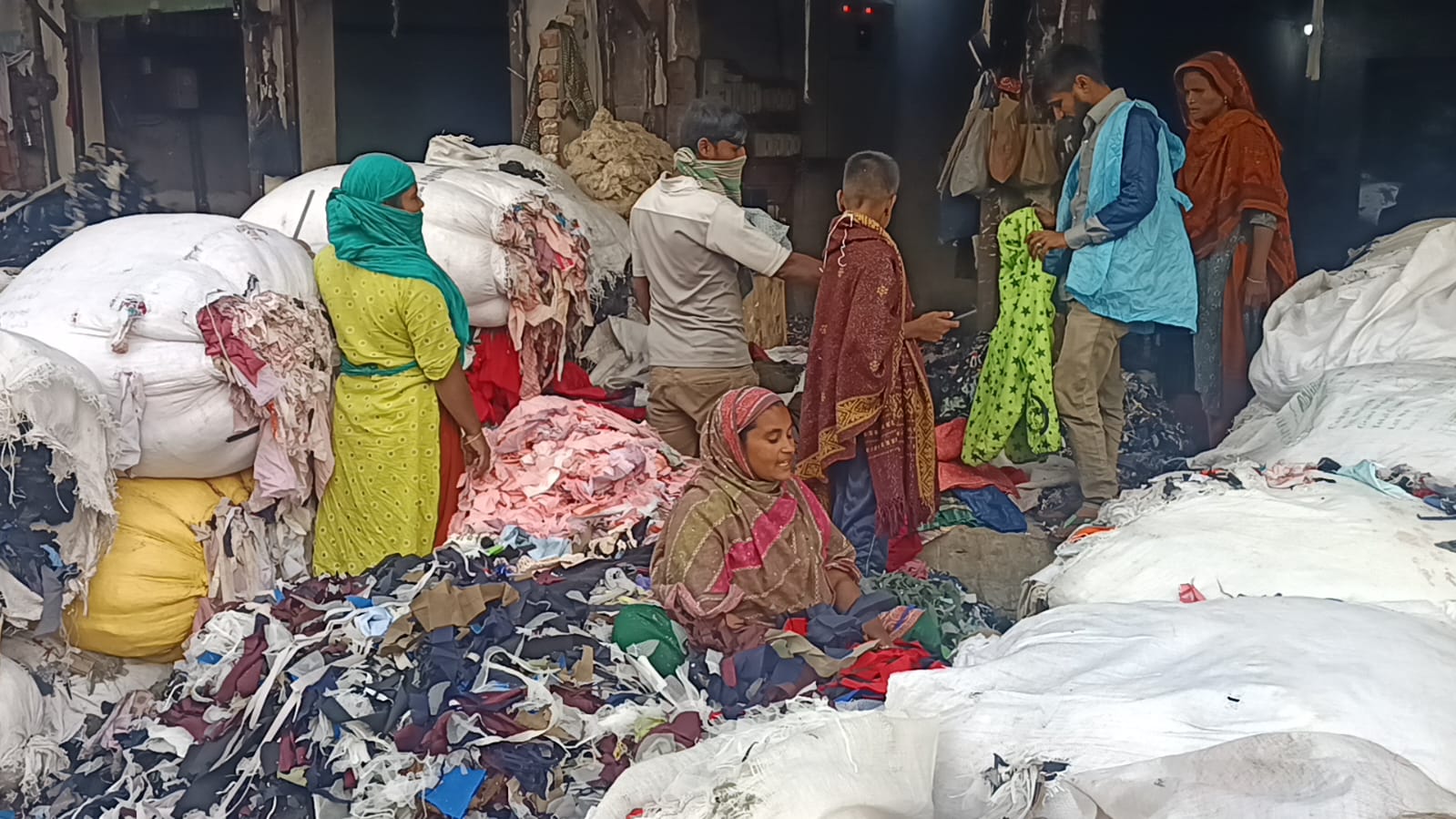
GAZIPUR, Dec 23, 2025 (BSS) - A market worth hundreds of crores of taka has developed in Gazipur centering on abandoned jhute and cotton generated by the ready-made garment (RMG) industry, creating employment for thousands and contributing significantly to domestic industries and exports.
According to relevant sources, more than 10,000 to 12,000 tonnes of discarded jhute and cotton are produced daily from over a thousand garment factories in Gazipur city and its surrounding areas. These materials, once considered waste, are now widely used as raw materials in various industries at home and abroad.
Hundreds of traders and thousands of workers are directly involved in the collection, processing and marketing of the discarded jute and cotton. Major trading hubs have emerged in Tongi Millgate, Majhukhan in Gazipur, Purba Chandra in Kaliakoir, Ambagh, and Mauna in Sreepur.
Smaller markets, locally known as “jhute palli,” are also scattered across different parts of the district.
Mohammad Abu Saker, president of the Tongi Millgate Jhute and Cotton Market Traders Association, told BSS that around 2,000 to 3,000 tonnes of jute and cotton are traded daily at the Tongi Mill Market alone.
He said the waste materials from garment factories are supplied to local spinning mills as well as small and medium-sized industries in various districts.
In addition to meeting domestic demand, a significant portion of discarded jhute and cotton is exported to countries including India, China, Turkey, Hong Kong and the United States.
Factories in Dhaka, Gazipur, Narayanganj and Savar are producing mattresses, car seats, pillows, cushions, dolls, mops, dusters, carpet backings, shopping bags and floor mats using recycled cotton and yarn.
Meanwhile, comparatively low-priced bed sheets, towels and lungis are being produced in Narsingdi, Kishoreganj and Mymensingh.
In Noakhali and Chattogram, shipyards and industrial factories are manufacturing wiping rags and operating export-oriented jhute processing units.
According to the Export Promotion Bureau (EPB), exports of discarded garment jhute and cotton from Bangladesh have been rising steadily over the past few years.
The EPB reported that export earnings from this sector stood at approximately Taka 411.12 million in the 2022–23 fiscal year, with major destinations including India, China, Turkey, Hong Kong, the United States and European Union countries.
Abu Saker said Gazipur, being one of the largest hubs of the garment industry in Bangladesh, generates a substantial volume of garment waste. He added that with the introduction of modern recycling systems and better infrastructure, export earnings from this sector could increase to Taka 4–5 billion or more.
Industry insiders, however, expressed concern over several challenges facing the sector. Unplanned warehousing has led to frequent fire incidents in jhute and cotton storage facilities, posing a major risk. Additionally, unethical interference by influential groups has reportedly caused financial losses to genuine traders.
Experts believe that with proper planning, improved safety measures and effective market management, the abandoned jhute and cotton sector could the country’s ready-made garment industry and boosting export earnings.
Experts said If proper planning, improved safety measures and effective market management are ensured, the abandoned jhute and cottons of ready-made garment would boost export earnings in the country.