Sunday
23 August, 2026
CHATTOGRAM, Dec 21, 2025 (BSS)- A recent research study found that mosquito-borne Chikungunya disease has rapidly emerged as a expanding public health threat in Bangladesh, particularly in grater Chattogram region.
The findings also pointed out that the disease is no longer limited to short-term febrile illness; rather it has been increasingly associated with chronic joint pain, reduced work capacity, and substantial economic loss.
The research titled “Overall situation of Dengue, Zika, and Chikungunya Infections in Chattogram: Public Health Impact, Treatment Approaches, and Genomic Characterization of the Viruses” was jointly conducted by Chattogram City Corporation and Asperia Health Research and Development Foundation (ARF).
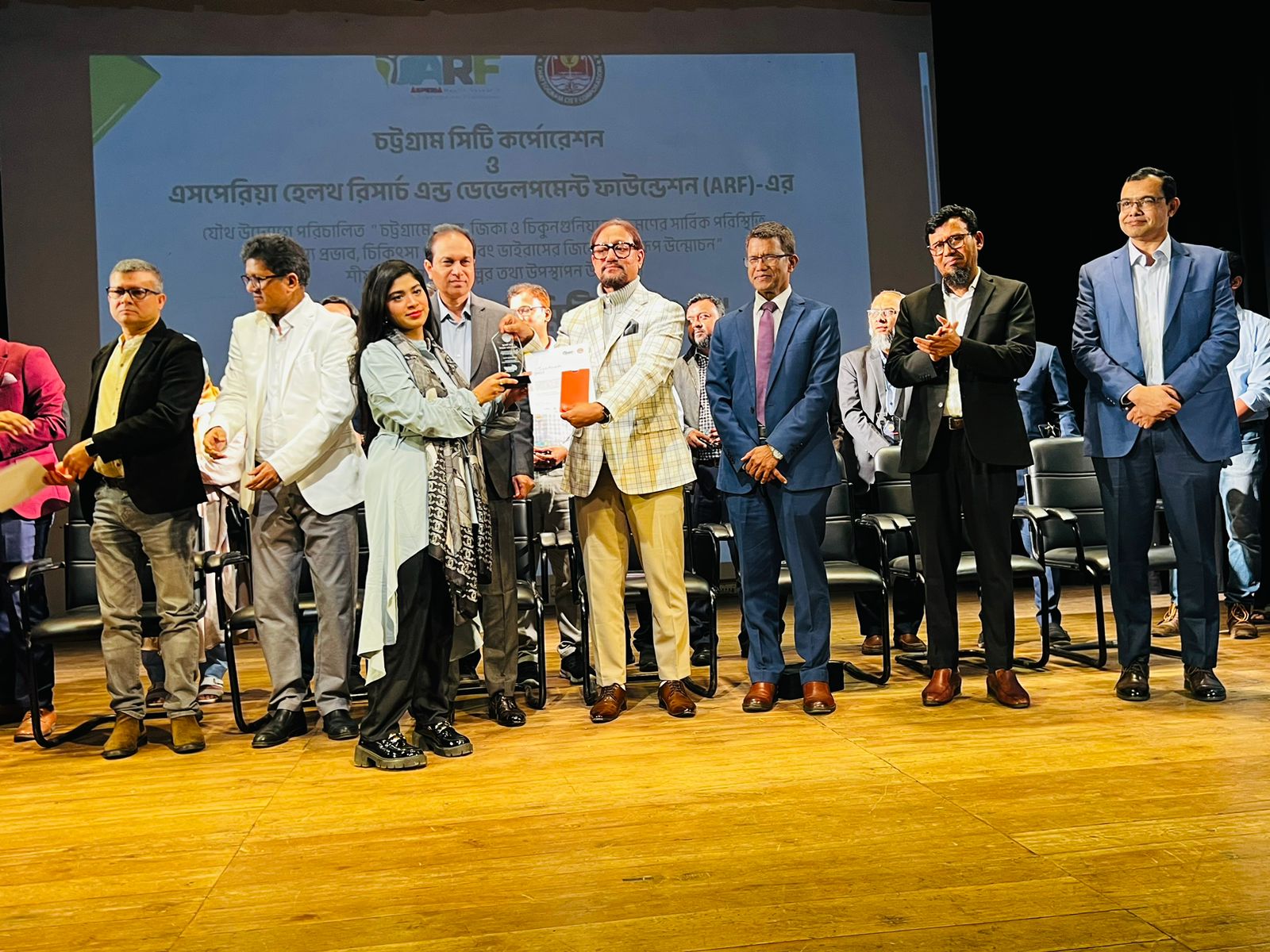
Findings of the research were published today, followed by views sharing session at Theatre Institute Chattogram (TIC) in the city.
The study was conducted between June and November 2025 with the objective of accurately assessing the burden of Dengue, Zika, and Chikungunya in the Chattogram region and formulating effective strategies to mitigate future public health risks.
Dr. H M Hamidullah Mehedi of Chattogram General Hospital, Dr. Abu Foysal Md Nuruddin and Prof. Dr. Adnan Mannan, a teacher of Genetic Engineering and Biotechnology Department of Chattogram University jointly led the study.
Mayor of Chattogram City Corporation (CCC) Dr. Shahadat Hossain attended the presentation session as chief guest.
CMCH Principal Dr. Jasim Uddin, Dr. M A Satter of CMCH Department of Medicine, Dr. Md Ibrahim Chowdhury of Cardiac Department and Dr. Md Ekram Hossain of Cardiology Department of CGH spoke at the event as special guests while Chairman of Asperia Health Care Ltd Dr. Goam Baki Masud made welcome speech.
The multidisciplinary study conducted a detailed and multi-dimensional analysis of clinical, public health, epidemiological, and genetic characteristics of the patients from Chattogram City Corporation areas and surrounding upazilas, researchers said.
Researchers viewed that misdiagnosis and inadequate reporting systems have been concealing the true disease burden, side by side limited public awareness and treatment costs averaging Taka 10,000-15,000 further exacerbate disease management challenges.
The study largest of its kind in Bangladesh involving 1,100 chikungunya patients with genomic analysis uncovered significant viral genetic diversity.
The study revealed that while circulating strain have similarities with the variants previously identified in Pakistan, India, and Thailand, the Chattogram variants contain more than 50 distinct genetic mutations.
A total of 1,797 dengue patients brought under study from across the Chattogram region showed that fever was nearly universal accompanied by high prevalence of nausea, headache, muscle pain, retro-orbital pain, abdominal pain, and diarrhea.
Demographic findings indicated that individuals aged between 18 to 35 years were mostly affected with male patients outnumbering females. Urban residents were found to be at greater risk compared to rural population.
CCC Mayor Dr. Shahadat Hossain appreciated the research work and laid emphasis on adopting science-driven and coordinated efforts to combat dengue and chikungunya effectively.
Terming the current dengue control measures are inadequate the lead researchers underscored the urgent need to recognize chikungunya as a long-term public health issue, calling for integrated disease control strategies and public awareness campaigns.
Beximco Pharmaceuticals Ltd., Chattogram District Council, and Chattogram City Corporation have provided institutional support to conduct the study, the organizers said.