Monday
07 September, 2026
News Flash
News Flash
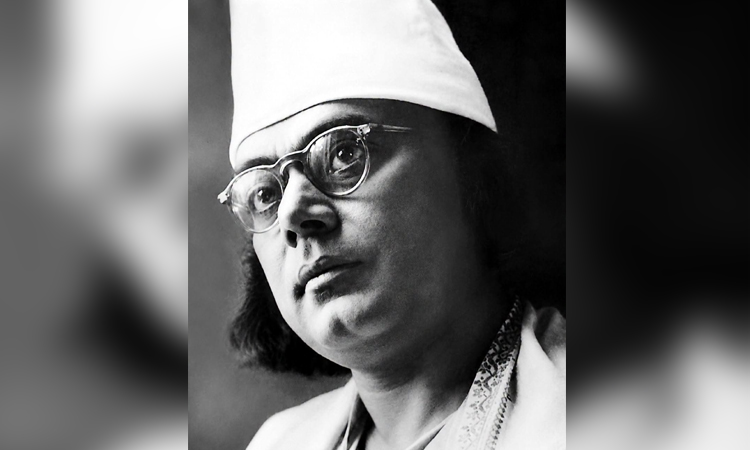
DHAKA, Sept 07, 2026 (BSS)- National poet Kazi Nazrul Islam visited Barishal during Durga Puja celebration in 1920 at the invitation of Yusuf Ali, nephew of Sher-e-Bangla AK Fazlul Huq.
Kazi Nazrul stayed in Barishal for two days. During his stay, he was fascinated by two special features of Barishal. The first one was city’s similarity with Venice in Italy surrounded by canals, and other was the prominence of Christian missionary activities.
Nazrul's journalistic career began with writing in Sher-e-Bangla AK Fazlul Huq's magazine 'Nabajug'. He has a close relation with Fazlul Huq.
Sher-e-Bangla accompanied Nazrul on various occasions, particularly at the time of the poet’s visit to Sylhet and reception in Kolkata. He also stood beside the poet for his treatment.
In the eyes of poet, Fazlul Huq was Bengal’s Saad Zaghloul Pasha (1857-1927), an Egyptian revolutionary and statesman.
Begum Faizun Nahar Shelly, a Nazrul researcher from Barishal told BSS that Sher-e-Bangla's contribution to nurturing Nazrul's literature, life and talent was undeniable.
There was a similarity of mentality and mutual dependence between the duo as both were people-oriented, non-communal, and advocates of independent and undivided Bengal, she said.
The quarterly Bangiya Muslim Sahitya Patrika published Nazrul's first poem 'Mukti' in its Shravan issue in 1326 Bengali year (July-August 1919), she said.
Poet Mozammel Haque, who was born in Bhola district of greater Barishal and author of the poem 'Jatiya Mangal', was the founding editor of the Bangiya Muslim Sahitya Patrika.
Initially, the title of the poem was 'Khama'. On the advice of Nazrul, poet Mozammel Haque, the poem was later renamed 'Mukti', said Shelly.
In addition, Nazrul's book 'Puber Hawa' was published by poet Mozammel Haque's family institution Oriental Printers and Publishers Limited,” she added.
Azad Alauddin, a writer on Nazrul and local journalist from Barishal, said it is a matter of regret that there is no establishment or memorial in the name of Nazrul in Barishal and evidence of his various creations and writings.
“The government has declared Nazrul Year from May 25, 2026, to May 25, 2027. We want Nazrul's books to be available in schools, colleges, and libraries in this year,” he hoped saying Nazrul's centenary will be meaningful if Nazrul's works are spread everywhere.
He also said a monument of national poet Nazrul should be built in Barishal.
At the same time, he proposed preservation of Nazrul's works in all educational institutions and conducting regular study cycles on Nazrul. He hoped that the incumbent government would take necessary steps in this regard.
Nazrul featured the beauty of Barishal in his novel 'Mrityukhuda', terming the city as the Venice of Bengal.
Poet Kazi Nazrul wrote several songs during his two-day stay in Barishal. These songs have been published in various newspapers with their notations.
Besides, in Nazrul's Geeti Shatadal's 'Palli Nritye', Barishal was mentioned in his several songs and poems.
The poet's second novel ' Mrityukhhuda ', written in 1337 Bengali year (1930 AD) was based on the memories of Barishal. It was first published in book form. Earlier, this novel was published serially in the monthly magazine 'Sawgat' from the Agrahayan issue of 1334 to the Falgun issue of 1336.
On 2 January in 1926, the poet left Hooghly and went to Krishnanagar. There, Nazrul stayed at the house of a Christian woman in the Chand-Sarak area, inhabited by working-class Christians and Muslims.
The poet wrote the novel 'Mrityukshuda ' by immersing the tragic story of the fateful lives of these extremely poor families. Barishal occupies an important place in this novel.
Kazi Nazrul's first visit in Barishal was at the time of holiday on the occasion of Durga Puja. Nazrul had a close relationship with Wazir Ali and Yusuf Ali, nephews of AK Fazlul Huq and that was why Nazrul was invited to Barishal.
At that time Kazi Nazrul wrote several songs named ‘Durer Bandhu’, ‘Asha’ and ‘Marami’ and a poem named ‘Pather Smriti’.
In his poem 'Ashwinikumar' written in Hooghly in 1925, he referred to Barishal as 'Birbhumi' and in his novel ‘Mrityukshuda' written in Krishnanagar, Kolkata in 1925-1927, Barishal was referred to as 'the Venice of Bengal'.
In the Central Legislative Assembly elections held in November 1926, Nazrul contested as a candidate of the Swarajya Dal (December 1922) from Dhaka Division (Dhaka, Faridpur, Barishal and Mymensingh). During that time, he visited Barishal for election campaigning. 'Nazrul Pathagaar and Club' is carrying the memories of his visit in Barishal.