Sunday
06 September, 2026
News Flash
News Flash
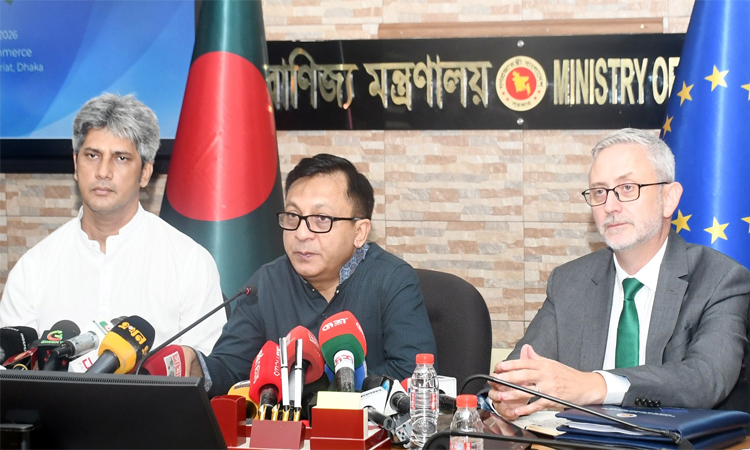
DHAKA, Sept 6, 2026 (BSS) — Bangladesh has resolved 48 of 61 non-tariff barriers and procedural bottlenecks identified by the European Union (EU), while seeking EU support for a three-year extension of the country’s LDC graduation timeline.
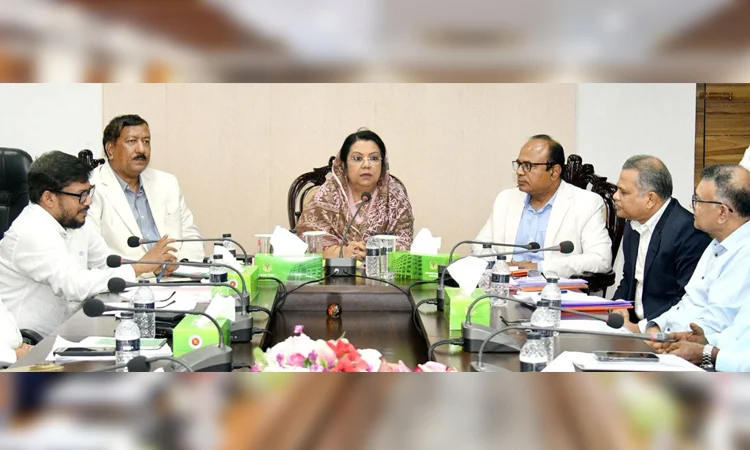
Commerce Minister Khandakar Abdul Muktadir disclosed this today at a press briefing after a meeting with the ambassadors of the EU member states and the EU Ambassador and Head of Delegation in Dhaka.
The meeting was held at the conference room of the Ministry of Commerce to brief the EU representatives on Bangladesh’s progress in resolving trade barriers and to discuss measures to accelerate bilateral trade and investment.
Adviser to the Prime Minister on Finance and Planning Prof Dr Rashed Al Mahmud Titumir, State Minister for foreign affairs Shama Obaed, State Minister for Planning Zonayed Abdur Rahim Saki and Invest Bangladesh Authority Chairman Chowdhury Ashik Mahmud Bin Harun also attended the meeting.
Muktadir said coordinated efforts by the Ministry of Commerce, National Board of Revenue (NBR), and the ministries concerned with agriculture, fisheries and livestock and shipping had helped address the EU-raised trade barriers.
Following discussions that began in March, the government took various measures to resolve the 61 specific non-tariff barriers and procedural bottlenecks.
Of these, 48 have already been resolved, while work on the remaining issues is underway, he said.
The minister said the government had also introduced regulatory measures to simplify trade procedures and reduce the cost of doing business.
As part of the measures, he said, barriers to licence renewal for 100-percent foreign-owned companies in the logistics sector have been removed.
The annual limit for importing commercial samples has also been increased from US$10,000 to US$20,000 through amendments to the Export Policy Order, he added.
He said that duties on smart cards related to traceability technology have also been restructured from a flat rate to segmented rates, ranging from 66 cents to 70-80 cents, with a view to reducing the cost of wider use of traceability systems.
The minister, however, identified the Flag Vessel Protection Act as a major structural challenge to Bangladesh’s maritime trade.
Under the existing provision, 50 percent of the country’s trade volume is required to be carried by Bangladeshi-flagged vessels.
Bangladesh currently has only 122 ships in its domestic fleet, including seven public-sector and 115 privately owned vessels.
Muktadir said the existing fleet was inadequate to meet the requirement given Bangladesh’s annual trade volume of around $130 billion.
He stressed the need for a long-term national strategy to expand the country’s merchant fleet, saying there was no clear five-, 10- or 15-year plan to match fleet capacity with the growth of international trade.
The requirement to obtain a No Objection Certificate (NOC) 15 days before shipment was also identified as a non-tariff barrier affecting shipping efficiency.
The commerce minister said the government would pursue necessary legislative amendments so that maritime regulations do not hinder the smooth movement of international trade.
Meanwhile, Bangladesh has intensified diplomatic efforts to secure a three-year extension of its LDC graduation timeline, with EU support considered particularly important.
Muktadir said the UN Committee for Development Policy (CDP) had recommended the extension, while Bangladesh had also secured support from the UN Economic and Social Council (ECOSOC).
The final decision is expected to be taken by the UN General Assembly during its 81st session, where support from the EU would be crucial, he said.
Bangladesh is currently scheduled to graduate from the LDC category on November 24, 2026.
The minister said the proposed three-year extension would give Bangladesh additional time to prepare for the challenges of graduation and ensure a smoother and more sustainable economic transition.
He said Bangladesh ultimately wants to transform its trade relations with the EU into a reciprocal and comprehensive partnership through a Free Trade Agreement (FTA).
As the EU is Bangladesh’s largest export destination, an FTA would be important for maintaining market access and strengthening the country’s long-term trade competitiveness, he added.
The minister said the resolution of 48 trade barriers demonstrates Bangladesh’s commitment to regulatory reform helping build greater confidence among European trade and investment partners.