Tuesday
01 September, 2026
News Flash
News Flash
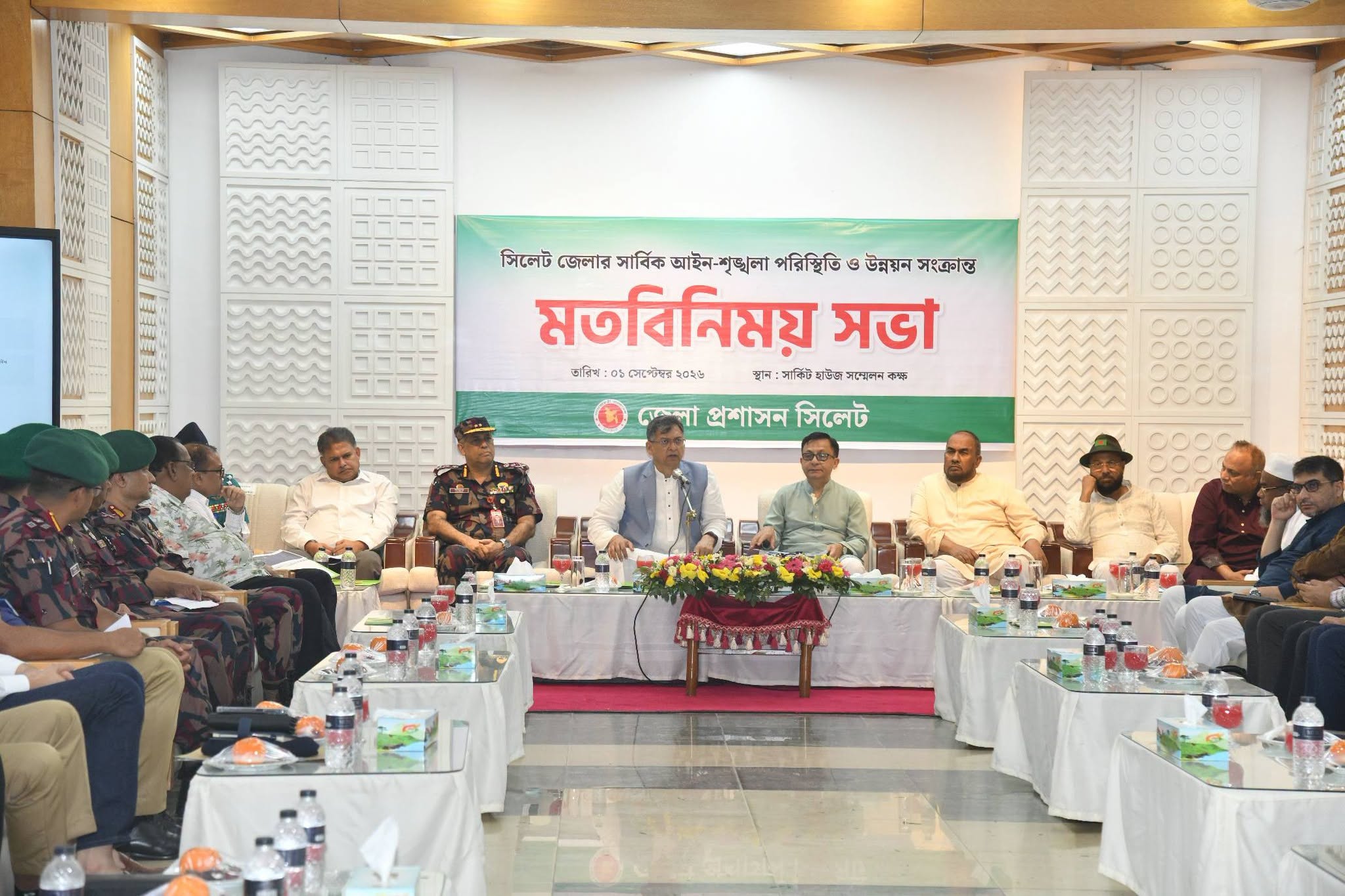
SYLHET, Sept 1, 2026 (BSS) - Home Minister Salahuddin Ahmed has warned that criminals will receive no protection or leniency based on political affiliation, reaffirming the government’s “zero tolerance” policy toward crime and disorder.
“A criminal is a criminal. There is no scope to spare anyone based on political identity or party affiliation,” the minister said while speaking at a meeting on Sylhet’s overall law and order and development issues at the Sylhet Circuit House here.
"Offenders would face strict legal action regardless of their political background," he said at the meeting organised by the Sylhet district administration.
Ahmed ordered authorities to prepare “completely impartial” lists of terrorists, extortionists, drug traffickers and smugglers operating in the region, stressing that neither innocent people should be targeted for political reasons nor genuine criminals shielded because of their affiliations.
He directed the authorities to demonstrate tangible progress within a month and instructed both the Sylhet Range Police and Sylhet Metropolitan Police (SMP) to strictly enforce the “reward and punishment” policy introduced in the police force.
The Home Minister also ordered a review of cases filed following the anti-discrimination movement, saying many First Information Reports (FIRs) had named hundreds or even thousands of people without proper scrutiny.
In some cases, he said, third parties had filed complaints instead of victims’ families, allegedly using the cases to pursue personal interests, harass businesspeople or extort money.
Such practices, he noted, could deny genuine victims and families of those killed in the movement access to justice.
Referring to the killing of Chattogram’s first martyr, Wasim Akram, the minister said the victim’s family had been unable to file the case, while another political figure filed a complaint naming around 1,500 people as accused.
He said video footage and other circumstantial evidence could have been used to identify the actual perpetrators.
The minister therefore instructed authorities to scrutinise relevant cases in the Sylhet Range and metropolitan areas and remove innocent and unnecessarily harassed individuals from the accused lists in accordance with Section 173 of the Code of Criminal Procedure.
At the same time, he warned against any lobbying, financial transactions or other unethical practices during the review, stressing that the actual perpetrators and those who ordered the crimes must not escape justice.
On the prolonged closure of sand and stone quarries in Sylhet, Ahmed said a national committee headed by him was working to balance environmental protection with employment opportunities for local communities.
Ahmed said the government was moving forward based on decisions reached in coordination with the Ministry of Environment, Forest and Climate Change, the Ministry of Power, Energy and Mineral Resources and relevant court directives.
The minister instructed officials to coordinate with the Attorney General’s Office to resolve legal complications and reduce delays in court proceedings related to the quarries.
He also called for stronger monitoring along the border to prevent environmental degradation and changes in river courses caused by hill torrents.
The minister said the government would not tolerate the growing culture of mob action or anarchy.
People seeking to press their demands should use democratic channels, including submitting memorandums and holding press conferences, rather than blocking roads or laying siege to establishments, he said.
Ahmed claimed that incidents of mob violence had fallen by more than 50 percent in 2026 compared with 2025 and urged authorities to make Sylhet completely free of such incidents.
Commerce Minister Khandakar Abdul Muktadir, speaking as a special guest, called for stronger police action to make Sylhet drug-free and improve law and order.
Rather than focusing primarily on drug users, he urged police to identify and target the region’s top traffickers, calling for a list of at least 50 major drug dealers and visible results within one to one-and-a-half months.
He also called for addressing logistical shortages in the SMP, establishing additional police outposts and providing adequate vehicles.
The meeting was attended by Sylhet City Corporation Administrator Abdul Quiyum Choudhury, Sylhet-3 MP Abdul Malek, Sylhet-6 MP Emran Ahmed Chowdhury, Sylhet-5 MP Mufti Mohammad Abul Hasan, BGB Director General Major General Major General Mohammad Ashrafuzzaman Siddiqui, and senior administrative and police officials.
The Home Minister also directed the law enforcement agencies to strengthen preventive policing, rapidly collect intelligence on criminal activities and take timely action against offenders.