Friday
21 August, 2026
News Flash
News Flash
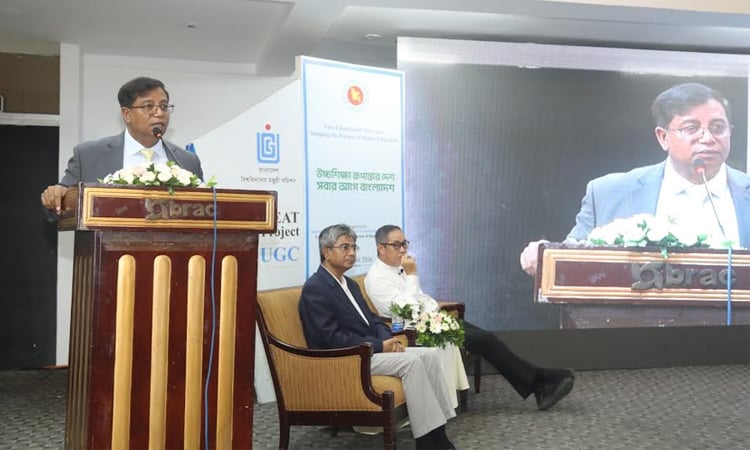
SAVAR, August 21, 2026 (BSS) - Dhaka Central University (DCU) Vice-Chancellor Professor Dr Md Nurul Islam today said structural and policy-level reforms in the education system are essential for ensuring quality higher education, as budgetary allocation alone cannot build quality universities.
He said quality teachers, research capacity and an enabling environment for generating new knowledge must be ensured to provide quality university-level education.
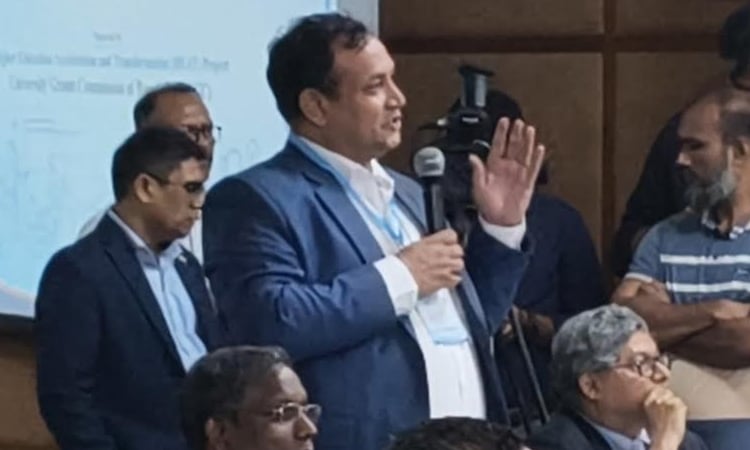
He was speaking at a question-and-answer session moderated by UGC Chairman Professor Dr Mamun Ahmed at the ‘Vice-Chancellors' Dialogue: Shaping the Future of Higher Education’, a two-day national policy dialogue organised by the University Grants Commission (UGC) at BRAC CDM in Savar on the outskirts of Dhaka.
Professor Nurul Islam said Dhaka Central University is one of the country's largest universities in terms of student numbers. Although the university was established by separating the seven colleges affiliated with Dhaka University, structural problems must be addressed to prevent the creation of new problems in place of existing ones.
He said a large portion of the teachers working at the seven colleges belong to the Bangladesh Civil Service (BCS) Education Cadre, and their capacity for university-level teaching, research and knowledge generation needs to be given due consideration.
“We have to ensure that university teachers have the mindset and research capacity required for teaching at the university level,” he said.
The Vice-Chancellor said research must be given the highest priority to improve the quality of higher education. Clear policy decisions are needed regarding who should be appointed as university teachers, the quality of their research and how they will contribute to generating new knowledge, he said.
He urged the Finance Minister to expedite the approval and implementation of universities' proposals for their justified resource requirements.
In response, Finance and Planning Minister Amir Khosru Mahmud Chowdhury said although a significant amount of the budget is allocated to the education sector, the government has limited resources. Therefore, priorities must be set when undertaking projects to ensure the optimum use of limited resources, he added.
“We have to have priorities, there must be returns on investment, employment must be created and environmental issues must be taken into consideration,” he said.
The Finance Minister said making the education system suitable for university-level education does not depend solely on budgetary allocation. Necessary changes must be brought to the education system, and consideration must be given to where investment would generate the highest value, he said.
“Universities do not have to be established everywhere. I have to have priorities, there must be value, there must be returns on investment, employment must be created and environmental issues must also be taken into consideration,” he said.
He said there are many project proposals in the country, but it is not possible to invest in all of them. Projects offering the highest value, returns on investment and employment opportunities would be prioritised for implementation, he said.
Education and Primary and Mass Education Adviser to the Prime Minister Dr Mahdi Amin, Secondary and Higher Education Division Secretary Abdul Khalek, former UGC Chairman Professor Dr S M A Faiz, and vice-chancellors of public and private universities, among others, attended the programme.
The two-day dialogue brings together vice-chancellors of around 65 public and private universities, policymakers, academics and experts to discuss strategic leadership and governance, quality teaching and assessment, research and innovation, university-industry collaboration, artificial intelligence and digital transformation.