Thursday
20 August, 2026
News Flash
News Flash
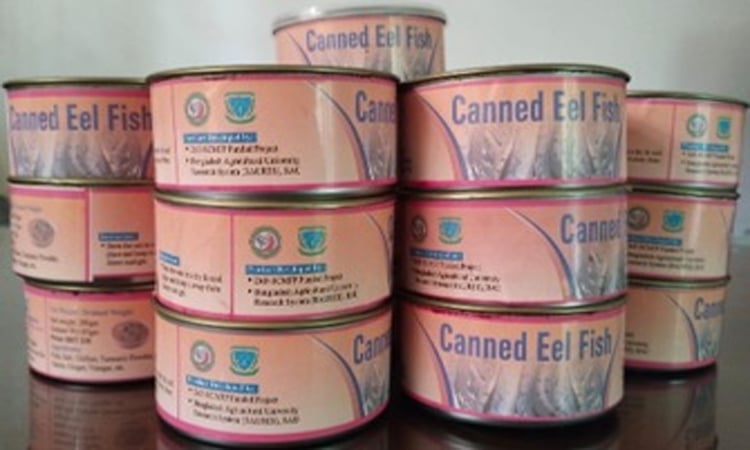
MYMENSINGH, Aug 20, 2026 (BSS) - Bangladesh Agricultural University (BAU) researchers have developed a modern canning technology to produce safe, nutritious and long-shelf-life canned kuchia fish, opening up new prospects for value-added exports of the locally available eel fish.
Dr Parash Kumar Sharma, head of the research team, confirmed the development to BSS recently.
The researchers said the technology uses controlled temperature, hygienic processing, standardized packaging and modern preservation techniques to maintain the taste, nutritional quality and safety of the product.
Kuchia, locally known as eel fish, is rich in protein, calcium, phosphorus, iron, B-complex vitamins and other essential nutrients. It also contains omega-3 fatty acids and is considered easily digestible, making it potentially attractive to international consumers.
The research team sent samples of the canned product to Shiva Analytical Private Limited in India for testing against international standards. The laboratory is an associate of the internationally recognized Techna Group.
Laboratory analysis found satisfactory results in key areas, including microbiological safety, nutritional quality, moisture content, shelf stability and food safety indicators, according to the researchers.
Dr Sharma said the findings demonstrated significant potential for exporting canned kuchia as global markets increasingly seek safe, nutritious and value-added seafood products.
Commercial kuchia farming and exports have already emerged as a growing segment of Bangladesh's fisheries industry. Bangladesh currently exports kuchia to around 15 countries, including Japan, China, Mongolia, Thailand, Malaysia and South Korea.
According to figures cited by the researchers, Bangladesh produced 15,790 metric tonnes of kuchia in the 2023-24 fiscal year, of which 9,947 tonnes were exported, earning around Tk 752 crore in foreign exchange.
However, the sector faces considerable post-harvest losses due to inadequate cold-chain facilities, weak transport infrastructure, limited preservation technology and a lack of modern processing facilities. Such losses reduce both the economic value and nutritional quality of the fish.
The researchers said improved post-harvest management, safe processing, modern drying and canning technologies, and the development of value-added products could help reduce losses while increasing export earnings.
"We have developed a canned product from kuchia through the canning process for the first time," the research team said, stressing the importance of controlled temperatures, hygienic processing and standardized packaging in preserving the product's quality and safety.
The research project began in 2025 and continued until March 2026. The researchers, however, said further studies are needed to assess production costs, market demand, consumer acceptance, export capacity, supply-chain management and potential domestic and international markets.
They also stressed the need for coordinated initiatives involving entrepreneurs, fish farmers, research institutions, government agencies, private-sector organizations, development partners and investors to take the innovation from the laboratory to commercial production.
A BAU fisheries expert described kuchia as a potentially "game-changing" resource for Bangladesh's fisheries sector, saying modern canning technology and international-standard quality assurance could turn the once-neglected fish into a major source of value-added exports and foreign exchange.
The fisheries sector plays an important role in Bangladesh's economy, nutrition security and rural livelihoods. More than 60 percent of the country's animal protein intake comes from fish, while Bangladeshi fish and fishery products are exported to more than 50 countries.
Researchers said the growing demand for value-added fish products in international markets creates further opportunities for Bangladesh to diversify its fisheries exports.
The successful development of canned kuchia, they added, could create new avenues for entrepreneurship, rural employment and foreign-exchange earnings while reducing post-harvest losses.