Monday
17 August, 2026
News Flash
News Flash
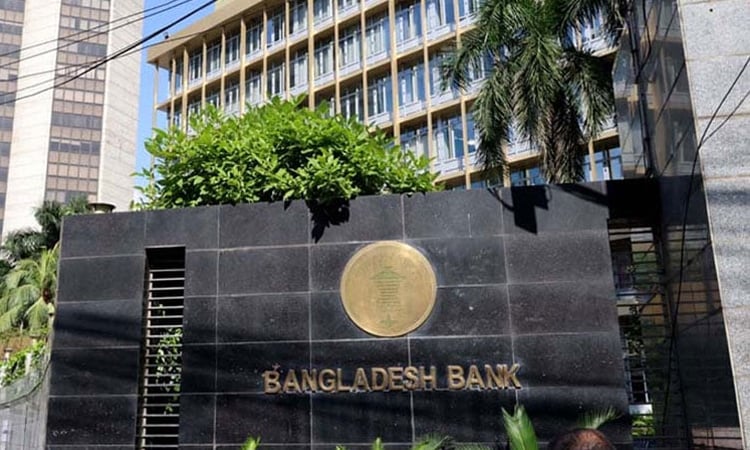
DHAKA, Aug 17, 2026 (BSS) - Bangladesh Bank (BB) has set a target of disbursing Tk 60,000 crore in agricultural and rural credit in the 2026-27 fiscal year, marking a 53.85 percent increase from the Tk 39,000 crore target fixed for the previous fiscal year.
The central bank announced the Agricultural and Rural Credit Policy and Programme for FY2026-27 at a programme held at its headquarters in the city today, with a view to increasing agricultural production, employment and rural incomes while ensuring adequate credit flow to the sector.
Of the total target, Tk 20,495 crore has been allocated for state-owned commercial and specialised banks, while Tk 39,505 crore has been set for private and foreign commercial banks.
BB Governor Md Mostaqur Rahman highlighted the key aspects of the new policy at the programme, which was also attended by senior officials of the central bank, including executive directors, deputy executive directors and directors, as well as representatives of scheduled banks.
The policy has incorporated a number of new measures to make agricultural credit more inclusive and responsive to the needs of farmers and rural communities.
Under the new policy, local agricultural extension officers, sub-assistant agricultural officers, fisheries officers and livestock officers may provide information from their records or government-issued farmer cards to help identify genuine farmers.
The policy also directs banks to provide agricultural loans alongside fisheries and livestock loans in crop and crop-related areas and sets limits on the number of members in farmer groups eligible for such credit.
For fisheries and livestock sectors, banks have been instructed to provide loans of up to Tk 5 lakh without collateral.
Banks have also been advised to explore alternative forms of security, including personal, social and group guarantees, particularly to facilitate financing for women and marginal farmers.
The mandatory requirement for maintaining passbooks or similar records for agricultural borrowers has been relaxed.
The policy also simplifies the process of obtaining Bangladesh Bank's prior approval for lending under contract farming arrangements.
The policy has revised operational guidelines for the Bangladesh Bank Agricultural Development Common Fund (BBADCF), allowing greater flexibility in agricultural financing.
It also allows banks to provide loans to farmers or entrepreneurs engaged in fish farming and livestock activities, either individually or through groups, subject to applicable conditions.
Measures have also been incorporated to support honey production, mushroom cultivation, salt-tolerant crop production and other emerging agricultural activities.
The policy includes provisions for re-financing schemes involving Tk 10,000 crore and Tk 3,000 crore, with corresponding policy provisions incorporated into the policy summary.
In response to climate change, Bangladesh Bank has included provisions to bring insurance facilities to agricultural borrowers based on the relationship between banks and farmers/customers and the terms of lending.
The new policy also includes financing provisions for organic fertiliser produced from materials such as neem leaves, ash, mixed grains, rice bran, jute sticks, tree leaves, banana peels and eggshells, along with provisions for crop production, documentation and loan repayment.
For crops such as chilli, vegetables, banana, papaya, mango, lemon, guava and lychee, the policy provides for determining loan disbursement and crop-cutting periods and fixing repayment periods based on the harvesting period.
At the programme, Bangladesh Bank also formally launched its Web Based Agri-Credit MIS Software to strengthen monitoring of agricultural and rural credit programmes and improve policy implementation.
The central bank said the new policy has been formulated in line with the government's objective of ensuring sustainable development of rural areas, creating employment and increasing the incomes of marginal and poor people.
It expects timely and adequate credit flow to the agricultural and rural sectors to help boost domestic agricultural production and supply, contain inflationary pressure and contribute to sustainable economic development.