Sunday
23 August, 2026
News Flash
News Flash
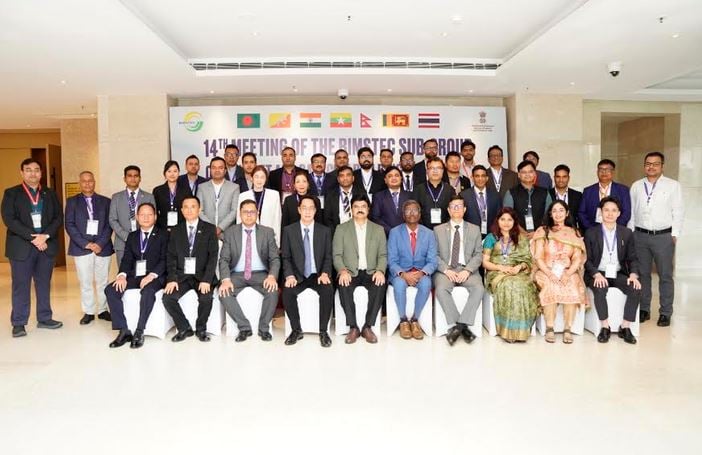
DHAKA, July 22, 2026 (BSS) – BIMSTEC today concluded a programme in northeastern Indian state of Meghalaya to strengthen member countries enhanced capacity to prevent financial crimes and terror financing.
The seven-nation forum of south and southeast Asian nations in a statement said event titled Regional Capacity Building Programme on Anti-Money Laundering and Combating the Financing of Terrorism (AML/CFT) was staged in collaboration with Indian finance ministry’s revenue department.
The Bay of Bengal Initiative for Multi-Sectoral Technical and Economic Cooperation (BIMSTEC) staged the two-day event in Shillong, the capital of Meghalaya, focusing on international standards to combat emerging financial crimes and preparedness for mutual evaluations.
The statement said experts from India's Department of Revenue, Reserve Bank of India, Central Board of Direct Taxes, Financial Intelligence Unit-India, National Investigation Agency, Intelligence Bureau, Indian Cyber Crime Coordination Centre and Enforcement Directorate shared their expertise with participants.
It said the programmme was designed to strengthen technical knowledge and institutional capacity, deepen regional cooperation in tackling evolving financial crimes and help member countries to prepare for mutual evaluations under the Financial Action Task Force (FATF) and Asia/Pacific Group on Money Laundering (APG).
The programme covered technical compliance, effectiveness, risk-based approaches, financial intelligence, supervision and national risk assessments while international cooperation and private sector’s engagement was also featured prominently in the discussions.
According to the BIMSTEC secretariat statement representatives from the private sector also contributed “practical insights” during the programme while panel discussions examined emerging trends in cyber-enabled financial crimes and terrorist financing, regulatory responses and growing importance of cross-border cooperation in tackling such threats.
The BIMSTEC grouping comprises Bangladesh, Bhutan, India, Myanmar, Nepal, Sri Lanka and Thailand while it pursues cooperation in areas including security, trade and investment, connectivity, energy, tourism, disaster management, climate change, blue economy, science and technology and human resource development.