Sunday
23 August, 2026
News Flash
News Flash
By Borun Kumar Dash
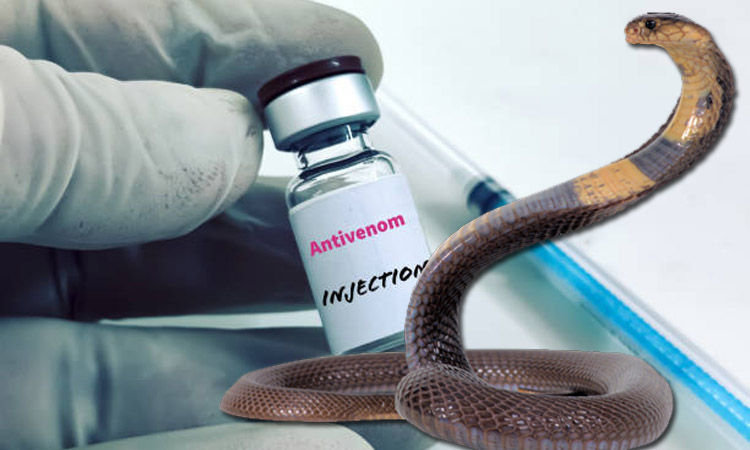
DHAKA, July 13, 2026 (BSS) - Snakebite patients will now receive antivenom injections at all upazila health complexes across the country, as the Directorate General of Health Services (DGHS) has supplied adequate stocks of the medicine to all district hospitals and upazila health complexes ahead of the monsoon season, when snakebite incidents increase significantly.
Speaking to the state-owned news agency BSS, Directorate General of Health Services (DGHS) Line Director (CDC) Md. Halimur Rashid said the DGHS provides antivenom injections to every district and upazila hospital apart from imparting trainings to doctors regularly.
He said snake activity increases during the monsoon season, particularly during periods of heavy rainfall and flooding. Therefore, ahead of the monsoon, the Ministry of Health and the Directorate General of Health Services (DGHS) supply antivenom injections to upazila health complexes across the country to ensure timely and scientifically appropriate treatment for snakebite patients.
Nilphamari's Dimla Upazila Health and Family Planning Officer, Dr. Rasheduzzaman, said the Dimla Upazila Health Complex has an adequate stock of antivenom.
Sylhet Deputy Civil Surgeon Dr. Janmejoy Dutta told BSS, "Adequate stocks of antivenom are available at the district sadar hospital as well as all upazila health complexes. As snakebite cases increase during the monsoon season, antivenom injections were supplied in advance."
He added that doctors at the upazila level have been trained to provide proper treatment for snakebite patients.
Rangamati Civil Surgeon Dr. Nuyen Khisao shared the same information.
He said, "There is a sufficient stock of antivenom at the district sadar hospital as well as all upazila health complexes. I urge everyone not to take snakebite victims to traditional healers or quacks. Instead, take them immediately to the nearest upazila health complex, where they will receive antivenom injections free of charge."
According to a World Health Organization (WHO) report, around five million people worldwide suffer snakebites each year. Of them, between 2.5 million and 2.7 million are envenomed. Around 150,000 people die annually, while nearly 500,000 suffer blindness or permanent disability due to snakebites. Snakebite incidents are most common in densely populated parts of Africa and South and Southeast Asia.
Researchers say snakes are more likely to bite during the morning and evening in the monsoon season, particularly in flood-prone areas. During winter, cobra bites are more common. In many cases, snakebite victims from remote areas die on their way to hospitals during the monsoon.
According to a study by the DGHS Non-Communicable Disease Control Unit, an estimated 403,000 people are bitten by snakes in Bangladesh each year, resulting in 7,511 deaths. About one in four snakebite cases involves venomous snakes. Among the victims, 10.6 percent are left with physical disabilities, while 1.9 percent suffer mental disabilities. The study also found that around 95 percent of snakebite victims are from rural areas and that men are 1.4 times more likely than women to be bitten by snakes.
The discovery of antivenom by French physician Albert Calmette in 1895 has saved millions of lives. However, due to superstition, many families in Bangladesh still take snakebite victims to traditional healers instead of hospitals.
Another WHO report says Bangladesh is home to 94 species of snakes, of which 26 are venomous. The remaining 68 species are non-venomous and their bites do not cause envenomation. Of the venomous species, 12 are marine snakes, while the others inhabit forests and human settlements.