Sunday
23 August, 2026
News Flash
News Flash
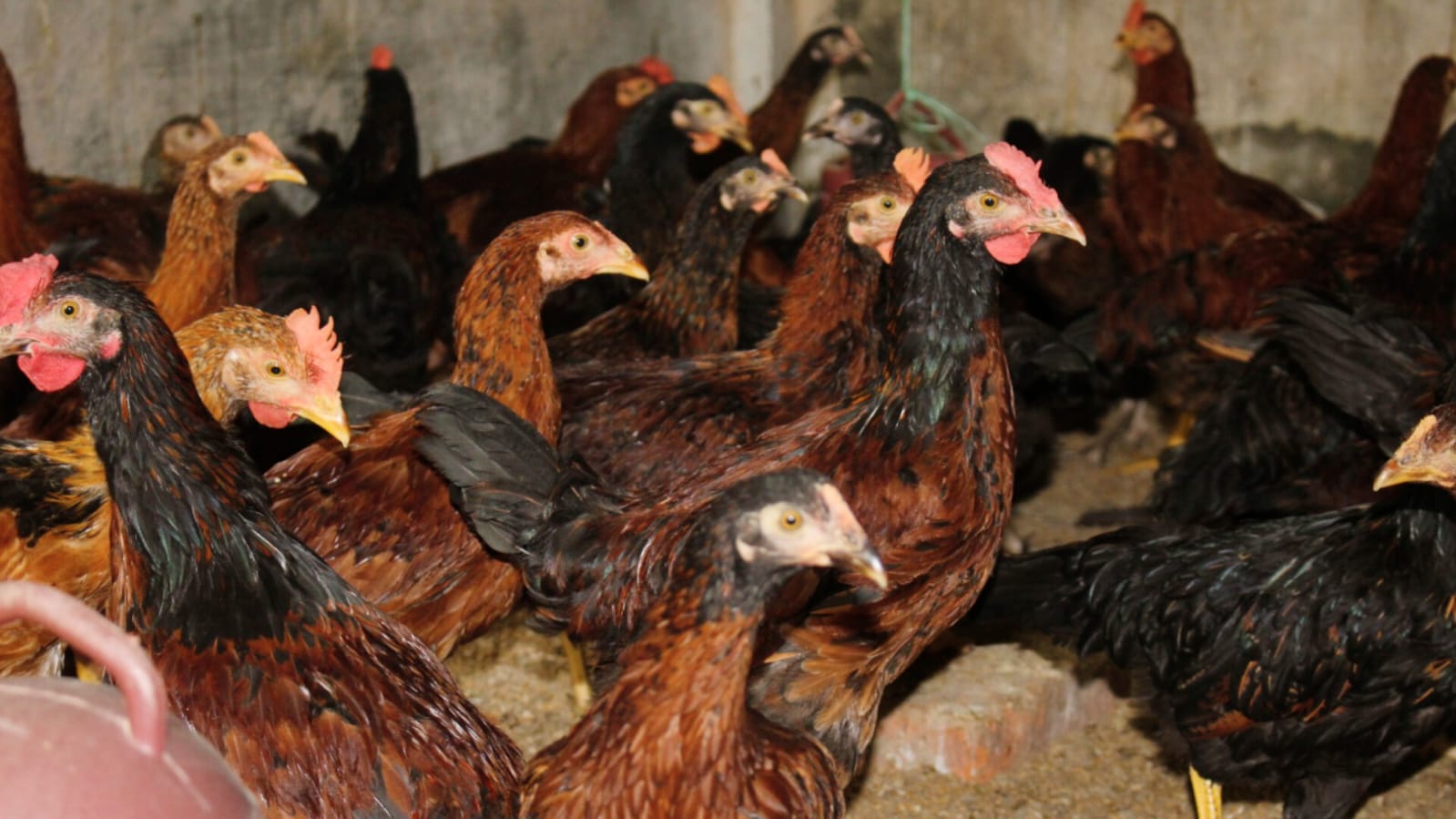
MYMENSINGH, July 01, 2026 (BSS)- Researchers at Bangladesh Agricultural University (BAU) have successfully developed a new chicken subtype that produces colored meat after 15 years of continuous research, officials said.
The research was conducted by the Poultry Science Department under the Livestock and Dairy Development Project (LDDP).
The newly developed subtype is fast-growing, with meat that is firm like native chicken but has a reddish coloration.
Professor Dr. Bazlur Rahman Mollah of the Poultry Science Department, who led the research team, disclosed the development today.
Earlier on Tuesday, the final results of the research were formally presented at a seminar. Vice-Chancellor Professor Dr. A K Fazlul Haque Bhuiyan, Poultry Science Department Head Professor Dr. Md. Shawkat Ali and other officials were present.
Dr. Mollah said the new line was developed over nearly one and a half decades through preservation, selection and crossbreeding of different parent lines, keeping consumer demand and farmers’ economic benefits in mind.
He said the domestically developed subtype would help save foreign currency if produced locally.
He added that the research primarily focused on a sex-linked white line with homozygosity improved to between 89 and 93.11 percent, which is considered highly important for establishing a stable commercial line.
The team also developed a simple PCR method to detect deletion in the SOX-10 gene, which determines feather colour, a breakthrough expected to play a key role in future breeding programmes.
Scientists said some parent lines of the subtype produced up to 205 eggs in 62 weeks. In comparison, while the day-old chick weight of conventional Sonali chickens is typically 26–28 grams, the newly developed hybrid line recorded about 38 grams.
They added that each one-gram increase in day-old chick weight can translate into around 50 grams additional final market weight, potentially increasing farmers’ profits.
The birds are also capable of reaching around 950 grams within 45 days.
The researchers highlighted that one of the key features of the project was direct field-level technology transfer.
To overcome limitations of conventional training centres, the research team provided hands-on training directly in villages to cluster-based groups of 15 to 25 women farmers.
Field results showed significant improvements in growth rate, feed conversion efficiency and reduced mortality among flocks where farmers received chicks along with regular technical support, timely vaccination and health monitoring.
Due to market demand, many farmers are now raising the birds for 10 to 12 weeks instead of the planned 50 days, selling them at prices up to Tk 700 per kilogram and earning higher profits.
On consumer safety and health concerns, Dr. Mollah said laboratory tests at a well-equipped facility in Dhaka found no antibiotic residues in the meat.
Responding to concerns about possible misrepresentation as native chicken, he clarified that the goal was not to use the label of native chicken but to establish a distinct branded colored-meat product with superior taste, nutrition and safety assurance.
Vice-Chancellor Professor Dr. Fazlul Haque emphasized the importance of field-level expansion of the innovation, saying that developing technologies in laboratories alone is not enough.
He said ensuring that the benefits reach farmers’ doorsteps is the core philosophy of the project, which would help increase farmers’ income and boost safe animal protein production in the country.
He also instructed the early reopening of the university’s closed livestock faculty sales centre, saying that all dairy, meat and poultry products produced through university research should be made available directly to the public at affordable prices through the outlet.
Faculty members, researchers and poultry sector entrepreneurs were present at the concluding programme where the final results were presented.
Various dishes prepared from the newly developed chicken were also served.