News Flash

DHAKA, June 13, 2026 (BSS) - Prime Minister's Adviser and Prime Minister's Office Spokesperson Mahdi Amin today said the government wants to transform the historically persistent phenomenon of "brain drain" into "brain circulation" by utilizing the talent, expertise and knowledge of Bangladeshis living abroad.
"We want to ensure that expatriate Bangladeshis residing in different countries can play a more active role in the country's development, invest in Bangladesh and transfer their knowledge and technical expertise to the domestic ecosystem," he said.
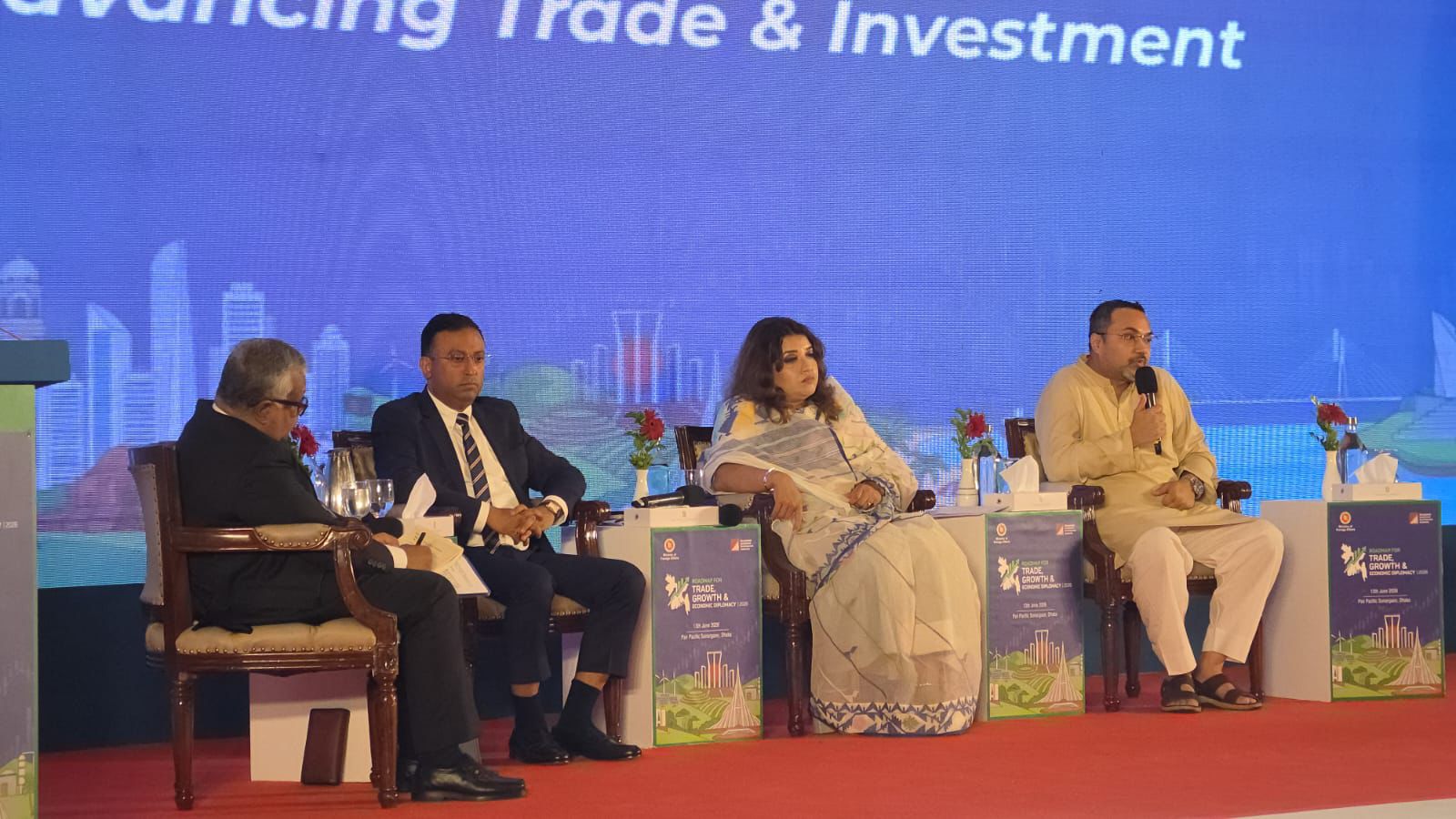
Mahdi Amin was addressing a conference titled "Trade, Economic Growth and Economic Diplomacy Action Plan", jointly organized by the Ministry of Foreign Affairs and the Bangladesh Investment Development Authority (BIDA) at a hotel in the capital.
Amin said Prime Minister Tarique Rahman had repeatedly outlined a clear vision for overseas employment during the election campaign, emphasizing a well-organized, transparent and effective migration policy that would gradually reduce the influence of middlemen.
Recalling the historical background of Bangladesh's overseas employment sector, the adviser said, "Foreign employment and labour migration began under the initiative of BNP founder Shaheed President Ziaur Rahman.
The Ministry of Expatriates' Welfare and Overseas Employment, which is dedicated to the welfare of expatriates, was established by former Prime Minister Begum Khaleda Zia. Therefore, the development of overseas employment and migration is embedded in the political DNA of the BNP."
Highlighting the government's focus on skills development, he said the administration is moving beyond the traditional approach of sending unskilled workers abroad and is placing the highest priority on enhancing skills and capabilities.
"We not only want diversification of labour markets, but also diversification in the nature of employment and workforce demographics," he said.
Noting that more than half of the country's population are women, he said the government aims to significantly increase women's participation in the global labour market from the current level of around 5-7 percent.
To make the migration process more organized, the adviser said the government is giving special emphasis to the introduction of a "Probashi Card" or "Expatriate Card".
Once introduced, the card will enable authorities to identify and maintain records of every Bangladeshi residing abroad through a government-managed infrastructure, he added.
He also said that, to simplify the visa application process, applicants' financial documents and educational certificates are now being made traceable through QR codes.
Amin said the government launched a special programme two months ago to help fulfill the global aspirations of the younger generation.
Under the programme, any student wishing to travel abroad to learn a third language or undertake a short-term course will be eligible for loans of up to Taka 10 lakh, he added.
The adviser further said the Ministry of Foreign Affairs has begun assessing the types of technical skills and competencies demanded in different countries around the world.
Young people will be trained through the country's education system and Technical and Vocational Education and Training (TVET) institutions in line with those global demands, he said.
At the same time, he added, the government is maintaining effective engagement with international partners to ensure that certificates earned by Bangladeshi workers receive direct recognition in destination countries.