Tuesday
25 August, 2026
News Flash
News Flash

By Obaidur Rahman
DHAKA, April 4, 2026 (BSS) - The government has taken multiple measures to maintain a steady and uninterrupted energy supply across the country, insulating the sector from global uncertainties and preventing any fuel crisis.
To minimize risks associated with disruptions in the Strait of Hormuz, fuel imports are being sourced through alternative routes and suppliers. Strong government oversight, adequate stock levels, and diversified import channels have eliminated concerns over shortages.
Energy Division sources reported that as of last Thursday, the country held a total of 255,018 tonnes of fuel oil. Diesel accounted for the largest share at 122,660 tonnes, representing around 63 percent of total consumption. Stocks of octane, petrol, and jet fuel are also sufficient.
The Bangladesh Shipping Corporation (BSC) announced that 100,000 tonnes of crude oil will be loaded from Saudi Arabia's Yanbu Commercial Port on April 20.
Another 100,000 tonnes aboard the vessel "MT Nordic Pollux" is currently in the Strait of Hormuz. Both shipments are expected to arrive at Chattogram Port by the first week of May.
Diesel imports via the Bangladesh-India Friendship Pipeline have also been stepped up as part of alternative supply arrangements.
On April 1, 7,000 tonnes of diesel were transported from Numaligarh Refinery in Assam to the Parbatipur depot in Dinajpur. Earlier, two consignments totaling 10,000 tonnes were imported on March 11 and March 23, bringing the total pipeline import to 17,000 tonnes in three shipments.
Additionally, the vessel "PVT Solana" carrying 27,300 tonnes of refined diesel from Malaysia reached Chattogram Port on April 1 under the supervision of the Bangladesh Petroleum Corporation (BPC).
Two more vessels from Singapore, "Yuan Jing He" with 30,000 tonnes of diesel and "Central Star" with 25,000 tonnes of octane, are expected to arrive in the first week of April.
The government continues to secure fuel through government-to-government agreements with state-owned companies abroad as well as international tender processes.
To prevent artificial shortages, authorities are cracking down on illegal stockpiling.
Measures include assigning tag officers at petrol pumps, conducting mobile court drives, forming vigilance teams, deploying Border Guard Bangladesh (BGB) personnel at depots, and offering rewards for information on hoarding.
Between March 3 and April 1, 372,388 litres of illegally stored fuel-mostly diesel-were recovered, according to Energy Division sources.
Despite global pressures, fuel prices have remained unchanged, easing the burden on consumers. As per a gazette issued on March 31, diesel is Tk 100 per litre, kerosene Tk 112, octane Tk 120, and petrol Tk 116.
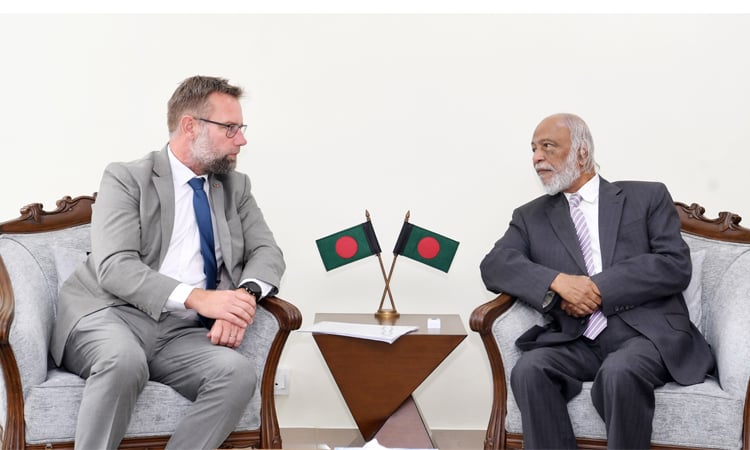
Joint Secretary (Spokesperson) of the Energy and Mineral Resources Division Monir Hossain Chowdhury said the government initially planned to import fuel mainly from the Middle East, with some from Southeast Asia.
"In the current global context, we are seeking new sources and importing oil wherever it is available at reasonable prices," he said.
He added that there is no fuel shortage in the country and urged consumers to purchase fuel as needed while promoting efficient use.