Tuesday
25 August, 2026
News Flash
News Flash
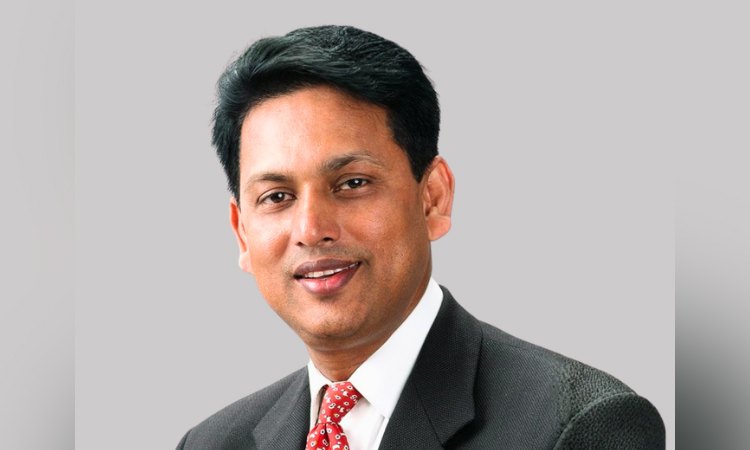
DHAKA, March 14, 2026 (BSS) - Education Minister Dr ANM Ehsanul Hoque Milon today said the government has taken a zero-tolerance policy to prevent question paper leaks and adoption of unfair means in the upcoming Secondary School Certificate (SSC) and equivalent examinations.
He said strict monitoring would be ensured at the field level to ensure smooth holding of the examinations scheduled to begin on April 21 across the country.
The minister made the remarks at a post-iftar views-exchange meeting with members of the Education Reporters Association of Bangladesh (ERAB) at his official residence on Minto Road in the capital this evening.
He said meetings with officials of all education boards and other stakeholders related to the examinations will be held soon to ensure effective supervision.
Referring to exams security, Milon said conducting the examinations in a cheating-free environment remains a major challenge.
“We succeeded in the past and we will maintain that continuity this time as well. Anyone attempting to leak question papers using information technology will be dealt with strictly,” he said, adding that he would personally visit the field to oversee overall security during the examinations.
The education minister also hinted at the possibility of introducing a unified question paper system for students across the country instead of separate sets.
“All students in the country should have the same standard. If major competitive examinations worldwide can be held with uniform question papers, it is also possible in our country. We are considering how such a system could be introduced from next year,” he added.
Describing the ministry as his “place of devotion,” Milon said he aims to lay a foundation through a 180-day programme that could create an impact equivalent to 180 years.
“My goal is to move forward steadily without making any wrong decisions,” he said.
The minister also spoke about introducing a three-tier screening process to ensure transparency in appointing managing committee chairpersons of educational institutions.
Under the plan, the screening would involve Deputy Commissioner (DC), the Upazila Nirbahi Officer (UNO) and the relevant education board.
Addressing debate over the requirement of 18 years of experience for appointments, he said the revision was made to provide opportunities to teachers who had been deprived for political reasons over the past 15–17 years. He also mentioned that revising the new curriculum and textbooks for 2027 would be one of his key missions.
ERAB President Faruk Hossain, General Secretary Solaiman Salman, Vice-President Shahed Matiur Rahman, Joint Secretary Asif Hasan Kajol and Treasurer Naziur Rahman Sohel, along with journalists from different media outlets, were present at the event.