Tuesday
25 August, 2026
News Flash
News Flash

DHAKA, Mar 9, 2026 (BSS)– Dr Rashed Al Mahmud Titumir, Prime Minister's Adviser on the Ministry of Finance and Planning, today described the government’s newly announced ‘Family Card’ programme as a landmark and epoch making initiative aimed at reforming Bangladesh’s social safety net system, reducing wastage and ensuring benefits reach the intended recipients.
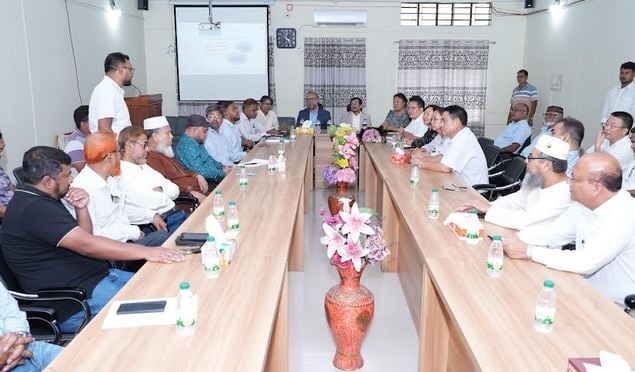
Addressing a press conference today on the eve of launching of the programme at the Multipurpose Hall of the Ministry of Finance, the Adviser said the initiative should be viewed in the context of the economic challenges the government inherited.
“If you consider the circumstances and the legacy of economic pressures we received, this programme is a groundbreaking step,” he said.
Titumir noted that Bangladesh has made progress towards achieving several Sustainable Development Goals (SDGs) that had previously remained unmet.
According to him, the new programme will further strengthen the government’s efforts to ensure inclusive development and social protection.
Referring to the current geopolitical and economic uncertainties, he said the government is closely monitoring global developments, including the evolving situation in the broader Middle East, which could have implications for Bangladesh’s economy. At the same time, he acknowledged reports indicating a rise in poverty and weaknesses in existing social protection schemes.
“Various studies and media reports have pointed out that many of our social safety net programmes suffer from significant inclusion and exclusion errors—people who should receive support are often left out, while those who should not receive it sometimes remain on the list,” he said.
The Adviser emphasized that the ‘Family Card’ programme aims to address these longstanding issues. “This is the first programme in Bangladesh designed to rise above those structural problems,” he added.
He said the programme will eventually be universal in coverage, implemented in phases to reach all four crore families across the country.
Titumir also clarified concerns about financing the initiative. He explained that a substantial portion of funding would come from improving efficiency within existing social safety net programmes.
“If you look at current programmes, statistics consistently show that wastage is very high,” he said. “By shifting to a digital system, we will be able to significantly reduce that wastage and ensure benefits reach the right people more quickly.”
The Adviser further said the government has a clear plan to gradually increase the tax-to-GDP ratio in order to strengthen fiscal capacity and support social protection programmes sustainably.
“Reducing waste and adopting digital systems is the most effective way to reform social safety nets,” Titumir said, adding that the government is committed to ensuring transparency, efficiency and fairness in the distribution of public support.