Wednesday
27 May, 2026
RANGPUR, Dec 23, 2021 (BSS) - Adoption of the Alternate Wetting and Drying
(AWD) irrigation technology during Boro rice farming saves up to 30 percent
irrigation water alongside increasing rice output.
Talking to BSS, Agriculturist Dr. Md. Abdul Mazid, who got Independence
Award 2018 (food security), said adoption of the simplest irrigation
technology helps farmers in cultivating Boro rice overcoming water scarcity
under changed climatic conditions.
Adoption of the AWD technology reduces five numbers of irrigation saving
minimum 30 percent underground water, 30 litres diesel and also electricity
for irrigation to produce 500 kilograms more Boro paddy per hectare of land.
Farmers have already started reaping enormous benefits from adoption of
the AWD irrigation technology following motivational activities being
conducted by different agricultural departments and institutions.
Dr Mazid, a former chief scientific officer of Bangladesh Rice Research
Institute, favoured for crop zoning to cultivate more irrigation water
consuming crops in the southern zones and less water consuming crops in
drought-prone northern zones.
"As the agriculture sector is facing ruthless threat due to changing
climate, lifting of underground water must be reduced gradually to the zero
level to maintain the increasing rate of food production saving water," he
said.
Adoption of the lowest-cost AWD irrigation technology for Boro rice
cultivation on around 48 lakh hectares of land in the country might produce
some 24 lakh tonnes of additional paddy annually.
"Adoption of the AWD irrigation technology will also save Taka 800 crore
for less use of diesel and electricity bringing uncountable benefits to the
soil health, environment and biodiversity alongside producing additional Boro
rice," he said.
Senior Coordinator (Agriculture and Environment) of RDRS Bangladesh
Agriculturist Mamunur Rashid told BSS that the future of agriculture depends
on the availability of natural water as cultivation of no crop is possible
without water.
Farmers generally use 3,000 to 4,000 litres of irrigated underground
waters adopting traditional irrigation methods to produce only one kilogram
(Kg) of clean Boro rice, whereas it needs only 1,500 to 2,000 litres when the
AWD irrigation technology was adopted.
'To maintain the increasing trend in food production, expanded adoption of
the AWD irrigation technology has become crucial to reduce lifting of
underground water for irrigation purposes under adverse impacts of climate
change," he said.
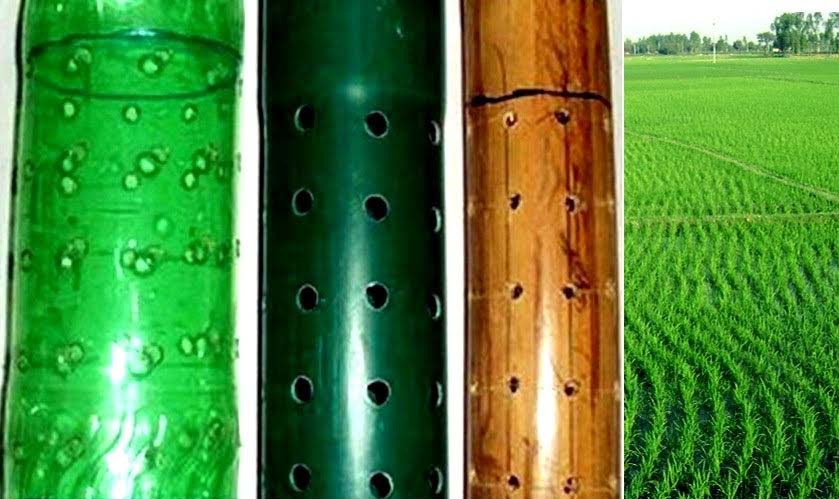
The AWD irrigation technology properly determines irrigation times in
growing fields of Boro rice and requires only a 7 to 10-cm diameter and 25-cm
perforated PVC pipe or hollow bamboo piece or waste bottle of cold drinks to
be installed vertically.
"Farmers should irrigate Boro rice fields in such a way that water does
not overtop the imperforated portion, watch leaching down of water through
the pipe and irrigate when soil at the bottom of the pipe is visible," he
added.
Additional Director of the Department of Agricultural Extension (DAE) at
its Rangpur regional office Agriculturist Md. Tauhidul Ikbal said training
programmes have been taken to popularise the AWD irrigation technology among
the farmers in the region.
"Farmers are getting benefits from adoption of the AWD irrigation
technology reducing irrigation frequencies and use of diesel and electricity
improving efficiency of irrigation water also to enhance Boro rice production
at reduced costs in recent years," Ikbal added.