Saturday
22 August, 2026
News Flash
News Flash
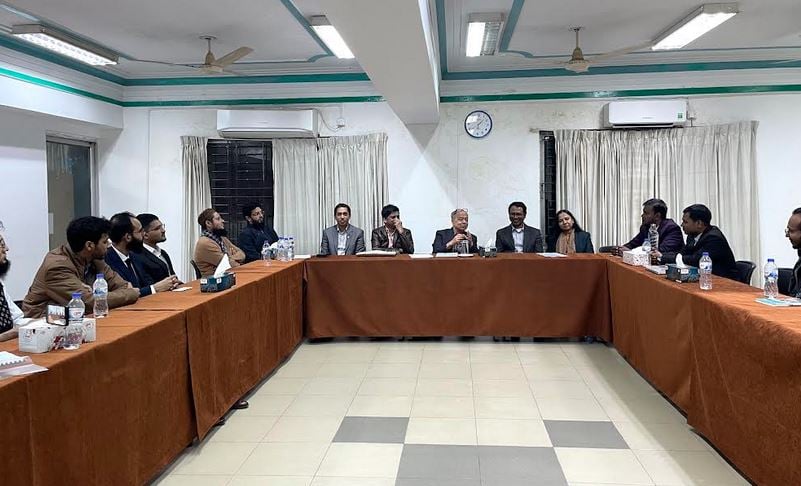
ISLAMIC UNIVERSITY, Kushtia, Jan 4, 2026 (BSS) - The Molecular Biology Research Group under the Biotechnology and Genetic Engineering department of Islamic University (IU) in Kushtia hosted the Biology Think Tank Meeting-2025 in Sylhet. The 3 day-long meeting, from January 1 to January 3, brought renowned biologists, biotechnologists and young researchers under one roof.
The meeting took place at the conference hall of BRAC Learning Centre in Sylhet, with the motto, "Solving the complex problem through collaborative science and community actions."
Prominent geneticist Dr Abed Chowdhury attended the programme as the keynote speaker. Other discussants included Professor Dr Md Jahangir Alam from Islamic University, National Institute of Biotechnology scientists Dr Iftekhar Alam, Dr Shamima Akhter Sharmin and Dr Hafizur Rahman, Sylhet Agricultural University Professor Dr Basir Uddin, Dr Ferdous Mohammad Altaf Hossain and Dr Kazi Mohammad Ali Jinnah.
The programme featured in-depth and constructive discussions on modern biotechnology research, development of agriculture and eco-friendly technologies, improvement of the healthcare sector, and the application of biological science in biodiversity conservation.
The speakers said, "Biotechnology research has no alternative in ensuring sustainable development, food security, tackling the impacts of climate change, and improving public health in Bangladesh. They noted that such think tank meetings help build effective linkages among researchers, policymakers and society, playing a vital role in innovation-driven research and the development of practical solutions."
In his keynote speech, Dr Abed Chowdhury said, "Scientific research should not remain confined to publications only. Rather, it must contribute effectively to solving real-life societal problems."
He observed that unnecessary regulatory complexities hinder scientists' free thinking and obstruct the delivery of research outcomes to the general public. He urged policymakers to identify existing barriers in the research sector and take prompt and effective measures to address them.