Wednesday
17 June, 2026
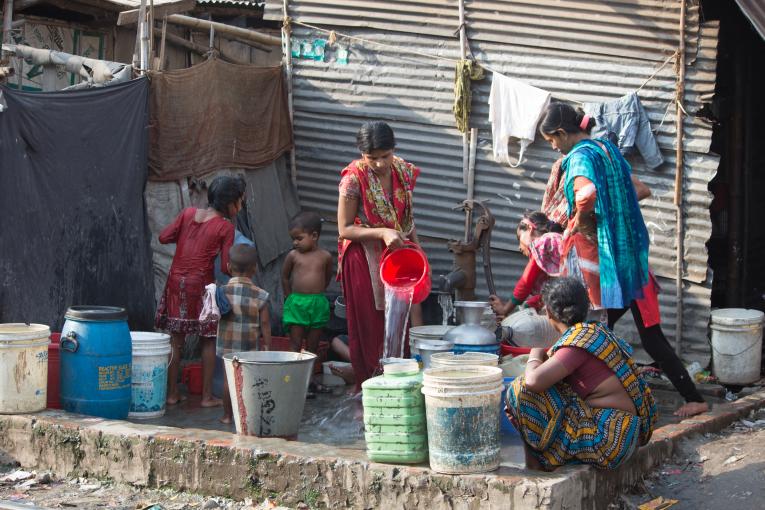
DHAKA, July 1, 2021 (BSS) - Billions of people around the world will be unable to access safely managed household drinking water, sanitation and hygiene services in 2030 unless the rate of progress quadruples, according to a new report from WHO and UNICEF.
The Joint Monitoring Programme (JMP) report – Progress on household drinking water, sanitation and hygiene 2000 – presented estimates on household access to safely managed drinking water, sanitation and hygiene services over the past five years, and assesses progress toward achieving the sixth sustainable development goal (SDG) to ‘Ensure availability and sustainable management of water and sanitation for all by 2030’.
For the first time, the report also presented emerging national data on menstrual health, a press release said.
In 2020, around one in four people lacked safely managed drinking water in their homes and nearly half the world’s population lacked safely managed sanitation.
In Bangladesh, 68.3 million people lack safely managed drinking water, while 103 million people lack safely managed sanitation facilities. COVID-19 has highlighted the urgent need to ensure everyone can access good hand hygiene. At the onset of the pandemic, 3 in 10 people worldwide could not wash their hands with soap and water within their homes.
“Handwashing is one of the most effective ways to prevent the spread of COVID-19 and other infectious diseases, yet millions of people across the world lack access to a reliable, safe supply of water,” said Dr Tedros Adhanom Ghebreyesus, WHO Director-General.
The WHO chief said: “Investment in water, sanitation and hygiene must be a global priority if we are to end this pandemic and build more resilient health systems.”
The report notes some progress towards achieving universal access to basic water, sanitation and hygiene (WASH) services.
Between 2016 and 2020, the global population with safely managed drinking water at home increased from 70 percent to 74 percent; safely managed sanitation services grew from 47 percent to 54 percent; and handwashing facilities with soap and water increased from 67 percent to 71 percent.
In 2020, for the first time, more people used improved on-site sanitation, such as pit latrines and septic tanks, which can effectively contain and treat waste, rather than sewer connections.
There is need for governments to ensure adequate support for safely managed on-site sanitation, including faecal sludge management.
The report said if current trends persist, billions of children and families will be left without critical, life-saving WASH services by 2030.
Only 81 percent of the world’s population will have access to safe drinking water at home, leaving 1.6 billion without.
Only 67 percent will have safe sanitation services, leaving 2.8 billion without; while 78 percent will have basic handwashing facilities and 1.9 billion will not have access to it.
The report also notes vast inequalities with vulnerable children and families suffering the most. To achieve universal access to safely managed drinking water by 2030, the current rate of progress in the Least Developed Countries would need to increase ten-fold.
In fragile contexts, where people were twice as likely to lack safe drinking water, it would need to accelerate by a factor of 23.
“Even before the pandemic, millions of children and families were suffering without clean water, safe sanitation, and a place to wash their hands,” said UNICEF Executive Director Henrietta Fore.
Fore added: “Despite our impressive progress to date to scale-up these lifesaving services, the alarming and growing needs continue to outstrip our ability to respond.
The time has come to dramatically accelerate our efforts to provide every child and family with the most basic needs for their health and well-being, including fighting off infectious diseases like COVID-19.”