Thursday
10 September, 2026
News Flash
News Flash
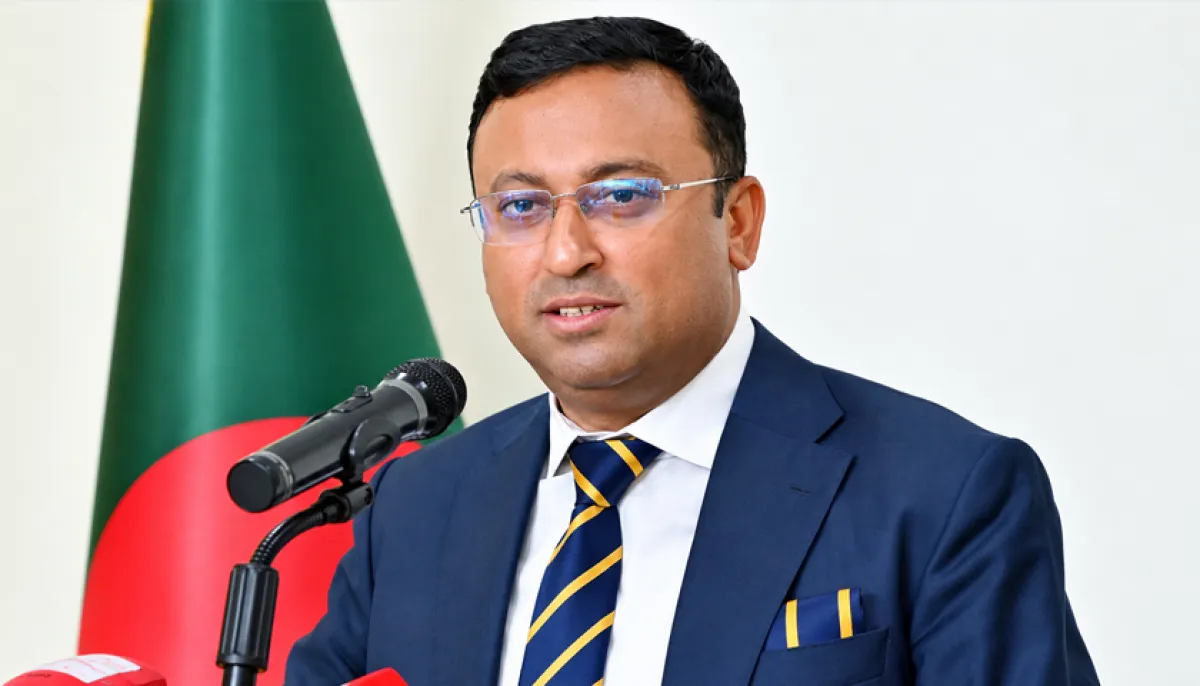
DHAKA, Sept 10, 2026 (BSS) – State Minister for Foreign Affairs Humaiun Kobir today said Bangladesh believes accountability for atrocities in Rakhine and the Rohingyas’ sustainable return to their homeland must advance simultaneously.
“We fully support the accountability proceedings before the ICJ and the ICC…because Bangladesh believes justice for Rakhine and return to Rakhine must move together,” he said.
The state minister made the remarks while speaking as chief guest at the closing session of an international conference titled “Protracted Rohingya Crisis: The Search for a Comprehensive Approach” at the Foreign Service Academy auditorium here.
Kobir said Bangladesh remains committed to safe, voluntary, dignified and sustainable repatriation of the forcibly displaced Rohingyas, while seeking stronger regional diplomacy alongside multilateral efforts to create conditions conducive to their return.
“Bangladesh remains ready to work with China, ASEAN, the United Nations and other partners in pursuing a practical and sustainable way forward,” he said.
Acknowledging the complex situation on the ground, he said most of Rakhine is currently outside the Myanmar state administration and under the control of the Arakan Army, while continuing conflict between the Tatmadaw and the Arakan Army has turned the region into a battlefield rather than a place suitable for return.
“These are not footnotes to our strategy, they are its central obstacle,” he said, adding that the challenges, though formidable, are not impossible to overcome.
Kobir said Bangladesh possesses the patience and generations of diplomatic experience needed to pursue a solution to the prolonged crisis.
Referring to Bangladesh’s experience of Rohingya repatriation in 1978 under Shaheed President Ziaur Rahman and again in 1992 under Begum Khaleda Zia, he said history had already demonstrated that repatriation was possible.
“It is not a question of ‘if.’ It is a question of ‘how,’ and ‘how soon’,” he said.
The state minister said the government led by Prime Minister Tarique Rahman has taken a decisive step by establishing the National Strategy Formulation Committee on Rohingya Affairs to bring the country’s diplomatic, humanitarian and security institutions under a coordinated framework.
He said Bangladesh would continue to remain both a humane and secure nation, noting that the presence of more than one million displaced people in congested camps has implications for humanitarian concerns as well as national security.
“We owe the Rohingya protection. We owe the people of Cox’s Bazar security and opportunity. We will not choose between the two,” he said.
Kobir said the government’s policy is to accelerate a transition from open-ended humanitarian management towards return-linked programming so that prolonged displacement does not become permanent.
On humanitarian response and burden-sharing, he said Bangladesh would continue coordinating with international partners, including the United Nations, to address the funding gap while pressing for structured and predictable international responsibility-sharing.
“No single country should carry what is, in truth, an international responsibility,” he said.
The state minister said Bangladesh wants to expedite verification of Rohingyas strictly under the existing bilateral Memorandum of Arrangement with Myanmar while simultaneously preparing operational modalities for conditions conducive to return.
He said Dhaka wants stronger regional diplomatic engagement to complement multilateral efforts and would continue pursuing cooperation with relevant regional and international stakeholders.
Regarding future scenarios, Kobir said Bangladesh intends to keep all necessary options open- diplomatic, humanitarian and, where required, security-related- so that the country is prepared to respond effectively to evolving circumstances.
He urged the international community to approach the protracted crisis with renewed resolve rather than despair, recalling Bangladesh’s previous successes in facilitating Rohingya repatriation.
Foreign Secretary Asad Alam Siam, Professor Dr ASM Ali Ashraf, convener of the conference, delegates, academics, students of international relations, trainee officers of the Foreign Service Academy and Rohingya representatives, among others, attended the conference.