Monday
07 September, 2026
News Flash
News Flash
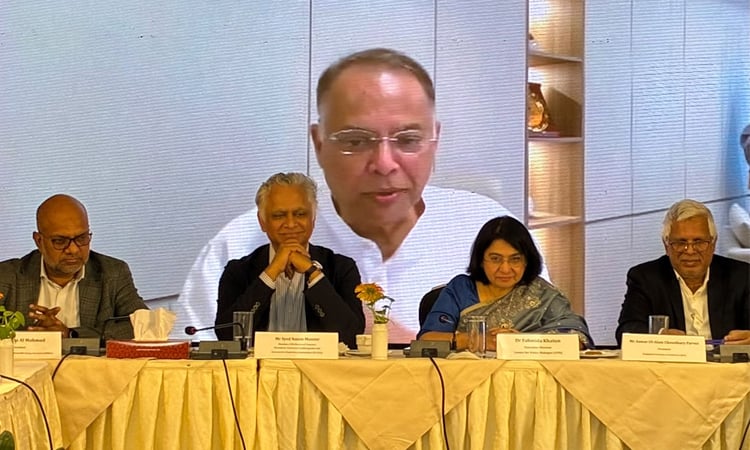
DHAKA, Aug 13, 2026 (BSS) - The Centre for Policy Dialogue (CPD) has recommended a combination of immediate, medium- and long-term measures to address Bangladesh's growing energy crisis, including optimising LNG procurement, accelerating domestic gas exploration and scaling up renewable energy.
The recommendations were made at a discussion titled "Navigating Bangladesh's Energy Crisis: Immediate Priorities and the Path to a Sustainable Energy Future" held in the city today.
CPD Senior Research Associate Foqoruddin Al Kabir presented the keynote paper at the event. Power, Energy and Mineral Resources Minister Iqbal Hassan Mahmood attended the event as the chief guest.
For immediate action, CPD recommended optimising LNG procurement to reduce exposure to international price volatility, introducing pricing and regulatory reforms to ensure efficient use of energy resources, expanding social protection for vulnerable people and reviewing existing policies on private investment in the energy sector.
For the medium term, it suggested expanding LNG terminal and storage facilities, strengthening transmission and distribution networks through targeted investment, adopting time-bound policies to diversify the energy mix and scaling up renewable energy through proactive policy frameworks.
In the long term, the CPD called for stronger institutional coordination among relevant ministries and divisions, building strategic fuel reserves to protect against future supply shocks and treating domestic gas exploration as a strategic national emergency.
The CPD said Bangladesh's energy crisis is both immediate and structural, noting that enduring energy security would require accelerating domestic exploration, expanding renewable energy, improving transmission and distribution infrastructure and reducing dependence on imported fossil fuels.
The presentation noted that imported LNG accounted for 28.82 percent of national gas consumption in FY2024-25, while domestic gas production has been declining.
It said the country currently faces a structural gas supply shortfall of around 1,200-1,400 million cubic feet per day.
The CPD also highlighted Bangladesh's heavy dependence on fossil fuels, with natural gas, coal and furnace oil together accounting for more than 84 percent of the electricity generation capacity mix. Renewable energy and hydropower account for only a marginal share.
The presentation warned that remaining domestic gas reserves could approach depletion by 2031 at the current rate of consumption, underscoring the need for immediate conservation measures and exploration for new gas reserves.
It identified exploration failures, infrastructure constraints, the widening demand-supply imbalance and growing dependence on imported LNG as the major causes of the current gas shortages.
The CPD said the shortages have already affected industrial production, household energy affordability and transportation costs, with industries including garments and fertiliser plants reducing or suspending production.
The discussion was attended by energy experts, business leaders, academics and representatives of relevant sectors.