Sunday
23 August, 2026
News Flash
News Flash
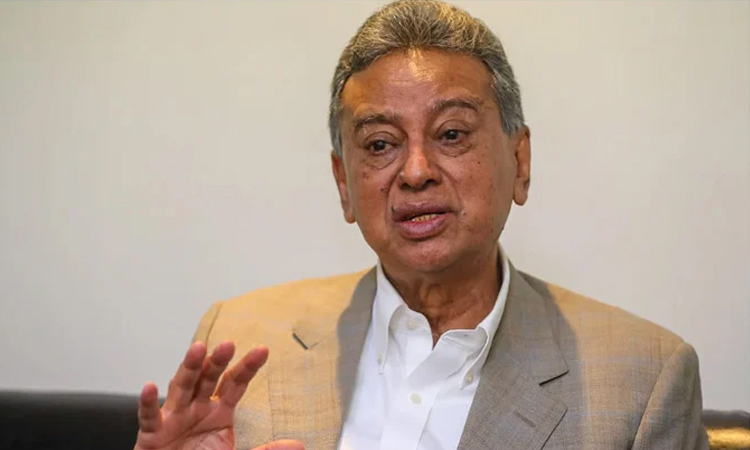
DHAKA, June 25, 2026 (BSS) - Finance Minister Amir Khosru Mahmud Chowdhury today said the government is working to reform the country's traditional budgetary framework and move toward a more inclusive and modern economic model aimed at ensuring broader participation in economic activities.
"We have attempted to make some changes to the budget model within a short period of time," he said, adding that the government is seeking to move away from the conventional budget structure and adopt a new approach to economic planning.
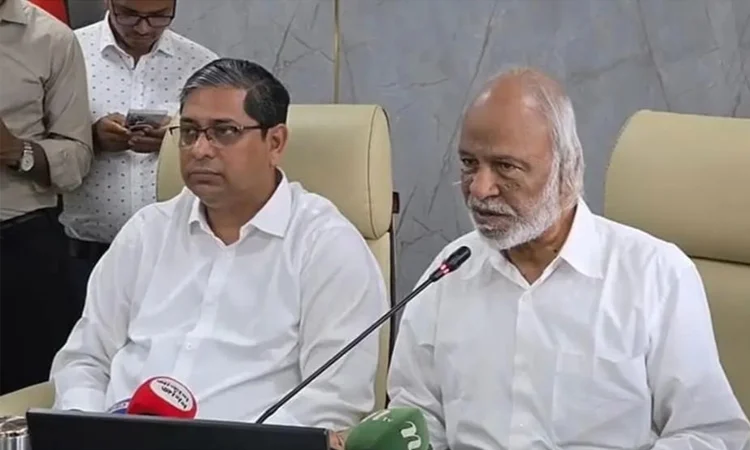
The finance minister made the remarks while addressing a seminar titled "Debate Budget and Beyond", organized by the Bangladesh Economic Association (BEA) at the Institute of Diploma Engineers in the capital.
Emphasizing the concept of the "democratization of the economy," Amir Khosru Mahmud Chowdhury said Bangladesh's economy has long been characterized by a patronage-based system, which has left many people outside the mainstream of economic activities.
"Democratization of the economy means every citizen of the country will have the opportunity to participate in the economic activities," he said.
The minister noted that the government's economic initiatives are designed to bring marginalized and traditionally overlooked groups into the development process.
These include blacksmiths, potters, cottage industry workers, people involved in cultural and sporting activities, and the ultra-poor, he added.
The minister said the government is placing special emphasis on creating opportunities for those who have historically remained deprived of the benefits of economic growth.
The seminar was chaired by Prof Dr Mahbub Ullah, convener of the interim committee of the Bangladesh Economic Association (BEA), while Prof Mohammad Helal Uddin, executive vice chairman of the Microcredit Regulatory Authority (MRA), moderated the discussion.
Referring to the creative economy, the finance minister said the government has undertaken special initiatives to increase the incomes of artisans engaged in pottery, shital pati (traditional cane mats), and other heritage handicrafts in rural areas.
He noted that if these products can be made more marketable, artisans' earnings could increase several fold.
He said that a product currently selling for Tk 700 could potentially be sold for Tk 2,000 through better marketing and value addition, thereby increasing artisans' incomes.
Higher incomes, he added, would strengthen the economy and have a positive impact on GDP.
Highlighting the potential of folk music, culture, and the film industry, the finance minister said the government aims to integrate creative industries and cultural activities more closely with economic development.
There are also plans to develop the entertainment sector into a significant source of income, he added.
"We want to monetize music, culture, films, and all other creative outputs. Entertainment can also become an important sector of the economy," he said.
The finance minister further stated, "When we assumed office, we inherited 1,300 development projects. These have become a burden for us. We can neither fully absorb them nor simply discard them. We have reviewed the projects."
Prof Dr Mahbub Ullah said that a comprehensive study should be conducted to examine all budget expenditures in detail and determine who benefits from each expenditure and how those benefits are received.
The seminar's panel discussants included prominent economist Prof Abu Ahmed; Chairman of Bangladesh Krishi Bank Mohammad Nurul Amin; and Executive Director of BRAC Institute of Governance and Development Dr Imran Matin.