News Flash

DHAKA, June 12, 2026 (BSS)- Bangladesh is moving to strengthen the state-owned Bangladesh Petroleum Exploration and Production Company Limited (BAPEX) and expand domestic gas exploration as part of efforts to reduce import dependence and improve energy security.
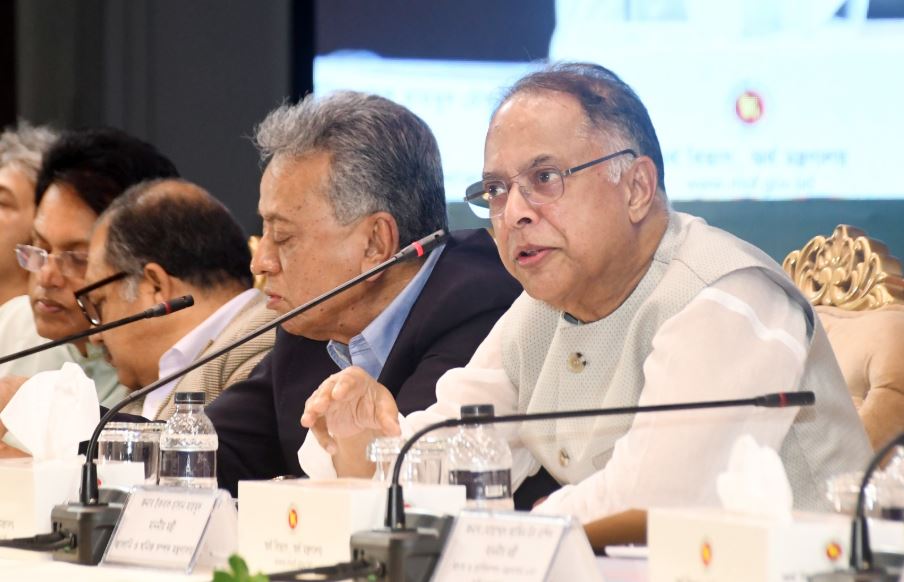
Power, Energy and Mineral Resources Minister Iqbal Hassan Mahmood said this while responding to journalists’ questions at a post-budget press conference at the Osmani Memorial Auditorium in the capital on Thursday.
“The energy sector was made almost entirely import-dependent over the past 17 years,” the minister said. “Despite securing our maritime boundaries and having potential areas for exploration on land, adequate initiatives were not taken to search for new gas resources.”
He said the government has decided to revive BAPEX and strengthen its operational capacity. “BAPEX has a success story, but it had effectively been sidelined. We have decided to reactivate BAPEX,” Mahmood said.
As part of the plan, the government will procure additional drilling equipment to expand exploration activities. “We will procure five additional drilling rigs to increase onshore exploration activities,” he said.
On offshore exploration, the minister said Bangladesh currently lacks sufficient experience and therefore international oil companies (IOCs) have been engaged.
“We invited international oil companies because BAPEX does not yet have offshore exploration experience,” he said, adding that the process for offshore exploration is already underway.
“Tenders have already been floated and, after the process is completed, we will negotiate with successful bidders and allocate the blocks,” he said.
The minister said Bangladesh would continue to rely on imported fuel in the short term. Referring to global energy disruptions, he said supply remained stable despite challenges linked to the Strait of Hormuz.
“Following the Hormuz crisis, some of our suppliers invoked force majeure provisions. We had to identify alternative sources of fuel. Despite the challenges, fuel supplies in Bangladesh remained stable and continue to remain stable,” he said.
He said the government already spent about USD 2.5 billion on fuel imports to ensure energy security. On the power sector, Mahmood acknowledged financial pressure due to subsidies and inherited liabilities.
“We purchase electricity from private power plants at higher prices and sell it to consumers at lower rates. The resulting gap has to be covered through government subsidies,” he said.
He said the government inherited around Taka 56,000 crore in unpaid dues in the sector. “When we assumed office, we found arrears of about Taka 56,000 crore. Those dues have to be paid, while current bills also need to be settled. This creates significant financial pressure,” he said.
On capacity payments to independent power producers, the minister said the issue is legally complex due to contractual obligations. “The agreements were structured in such a way that investors received extensive protections. If capacity payments are abruptly stopped, lenders may demand repayment and some power plants may become inoperable,” he said.
He said the government has sought legal opinion on the matter. “We have sought the opinion of the Law Ministry. If we receive a favourable opinion, we will consider appropriate legal measures,” he said.
Finance Minister Amir Khosru Mahmud Chowdhury, Information and Broadcasting Minister Zahir Uddin Swapon and cabinet members were present.