BSS
  12 Jun 2026, 20:11
Update : 12 Jun 2026, 20:13

Govt eyes 5,000MW solar generation by 2030 

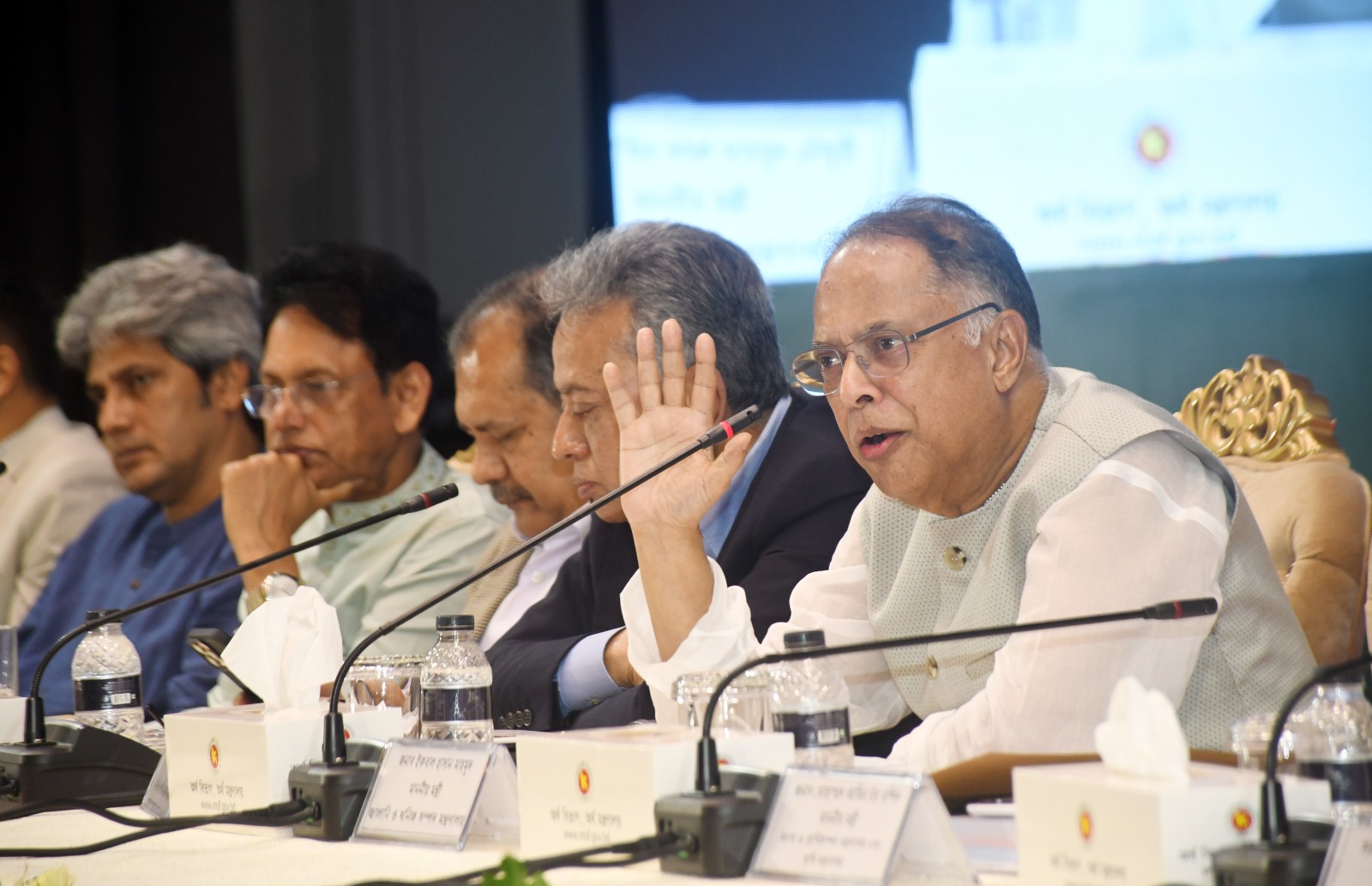
Power, Energy and Mineral Resources Minister Iqbal Hassan Mahmood spoke today at a post-budget press conference held at the Osmani Memorial Auditorium in the capital. Photo: BSS

DHAKA, June 12, 2026 (BSS)- Bangladesh has set a target of generating 5,000 MW solar power by 2030 as part of a broader strategy to enhance energy security, reduce import dependency and align with rising global demand for clean energy in export-oriented industries.

Power, Energy and Mineral Resources Minister Iqbal Hassan Mahmood announced the target while responding to journalists’ queries at a post-budget press conference held at the Osmani Memorial Auditorium in the capital this afternoon.

“We have set a target of generating 5,000 megawatts of solar power to national grid by 2030. I hope the actual capacity will be even higher,” the minister said.

Rejecting the view that solar energy is unnecessary, the minister said renewable energy has become a structural economic requirement rather than a policy preference.

“Some people say solar power is not necessary. I disagree. Solar power is necessary, and there are practical reasons for that,” he said.

He said Bangladesh’s export competitiveness is increasingly linked with clean energy usage, particularly in European markets. “We have to look at our export markets. European countries are making it clear that greater use of renewable energy is needed. To maintain the competitiveness of our export-oriented industries, we must increase the use of clean energy,” he added.

Mahmood stressed that solar expansion would be paired with battery storage systems to ensure reliability and round-the-clock supply.

“We have to move towards battery-based solar power. Electricity generated during a particular time must be stored and supplied when needed. Battery storage will be crucial for making solar energy more effective and reliable,” he said.

The minister said fiscal incentives have been introduced in the budget to encourage investment in the sector.

“Duties and taxes in the budget on solar batteries and related equipment have been reduced or withdrawn. The objective is to encourage investment and rapidly expand renewable energy use,” he said.
The minister said the renewable energy push is also aimed at addressing structural weaknesses in the country’s energy system, which he claimed had become heavily import-dependent over the past 17 years.

“The energy sector was made almost entirely import-dependent. Despite securing our maritime boundaries and having potential areas for exploration on land, adequate initiatives were not taken to search for new gas resources,” he said.

Mahmood said the government has decided to revive the state-owned Bangladesh Petroleum Exploration and Production Company Limited (BAPEX) and strengthen its capacity through additional equipment.

“BAPEX has a success story, but it had effectively been sidelined. We have decided to reactivate BAPEX and procure five additional drilling rigs to increase onshore exploration activities,” he said.
He also said international oil companies (IOCs) have been invited for offshore exploration as Bangladesh lacks sufficient experience in deep-sea operations.

“We invited international oil companies because BAPEX does not yet have offshore exploration experience. Tenders have already been floated and, after the process is completed, we will negotiate with successful bidders and allocate the blocks,” he said.

The minister said the country will continue to depend on imported fuel in the short term, but supply stability has been maintained despite global disruptions, including tensions linked to the Strait of Hormuz.

“Following the Hormuz crisis, some of our suppliers invoked force majeure provisions. We had to identify alternative sources of fuel. Despite the challenges, fuel supplies in Bangladesh remained stable and continue to remain stable,” he said.

He said Bangladesh has already spent about USD 2.5 billion on fuel imports to ensure energy security. At the same time, he acknowledged significant financial pressure in the power sector due to subsidies and inherited liabilities.

“We purchase electricity from private power plants at higher prices and sell it to consumers at lower rates. The resulting gap has to be covered through government subsidies,” he said.

The minister said the government inherited around Taka 56,000 crore in unpaid liabilities in the power sector.

“When we assumed office, we found arrears of about Taka 56,000 crore. Those dues have to be paid, while current bills also need to be settled. This creates significant financial pressure,” he said.

On capacity payments to independent power producers, Mahmood said the issue is legally and contractually complex. “The agreements were structured in such a way that investors received extensive protections. If capacity payments are abruptly stopped, lenders may demand repayment and some power plants may become inoperable,” he said.

The energy minister said the government has sought legal opinion on the matter. “We have sought the opinion of the Law Ministry. If we receive a favourable opinion, we will consider appropriate legal measures. But people must understand that we are carrying the burden of decisions made in the past,” he added.

The minister expressed hope that reforms in the energy sector, including expanded gas exploration and renewable energy development, would begin delivering results within the next few years.

Finance Minister Amir Khosru Mahmud Chowdhury, Information and Broadcasting Minister Zahir Uddin Swapon and other members of the cabinet were present.