BSS
  10 Jun 2026, 18:14
Update : 10 Jun 2026, 18:18

Govt takes measures to simplify investment processes: PM 

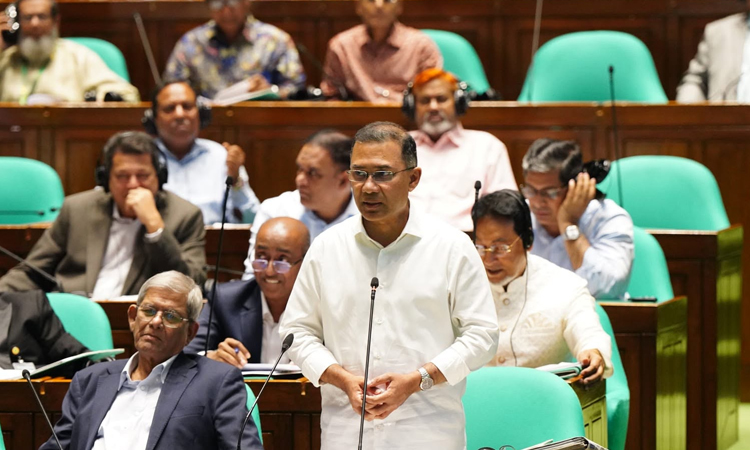
Prime Minister and Leader of the House Tarique Rahman spoke at the Jatiya Sangsad (JS) session. Photo: PMO

SANGSAD BHABAN, June 10, 2026 (BSS) – Prime Minister Tarique Rahman said the government has undertaken various initiatives to simplify investment procedures in order to attract both domestic and foreign investors.

He made the remarks while responding to a written question from treasury bench MP Md Mobasher Alam Bhuiyan of Cumilla-10 in the Jatiya Sangsad with Speaker Hafiz Uddin Ahmad, Bir Bikram, in the chair this afternoon.

The premier said import and export registration services are now being provided more quickly through online systems by the Office of the Chief Controller of Imports and Exports.

The Export Policy has been updated to create a more investment-friendly environment and the process of updating the Import Policy Order 2026–2029 is underway so that foreign investors can enter the market more easily, he said.

The prime minister said measures have been taken to remove non-tariff barriers for imports intended for export purposes. 

The scope of importing goods on a Free of Cost (FoC) basis is also being expanded for both bonded and non-bonded enterprises, he said.

The Leader of House said payment procedures for imports are being simplified, and importers will be allowed to import goods through contracts without Letters of Credit (L/Cs), regardless of the value involved.

Tarique Rahman said trade facilitation measures in line with international standards have been adopted to accelerate and increase transparency in trade processes through the implementation of agreements under the World Trade Organization (WTO).

In addition, the Bangladesh Investment Development Authority (BIDA) is implementing various policy and institutional reforms aimed at attracting local and foreign investments, improving the business environment, and accelerating industrialization, he said.

Photo : PMO

Highlighting some of the major initiatives, the prime minister said that steps have been taken to merge the Bangladesh Investment Development Authority (BIDA), Bangladesh Economic Zones Authority (BEZA), Public-Private Partnership Authority (PPPA), and Bangladesh Hi-Tech Park Authority in order to reduce institutional complexities and improve service efficiency for investors.

He said that once implemented, investors will be able to receive integrated services from a single platform. 

“This will also reduce policy inconsistencies and duplication of services while simplifying the decision-making process,” he said.

The premier said the government has strengthened inter-agency coordination to improve the investment climate, remove barriers to doing business, and quickly resolve policy-related issues. 

Regular coordination meetings are being held among relevant government agencies, he said, adding that in particular, monthly meetings between BIDA and the National Board of Revenue (NBR) are reviewing tax-related issues faced by investors and taking necessary corrective measures.

The prime minister also stated that consultation meetings and exchanges with foreign investors, business organizations, and representatives of various industries have been expanded. 

As a result, the practical experiences, challenges, and recommendations of the private sector are being directly reflected in policy formulation and implementation, he said.

To make the investment environment more attractive for foreign investors, the government has undertaken initiatives to simplify capital repatriation and investment return procedures, he added.

The prime minister said that many investors currently face delays and uncertainty when transferring invested capital and earnings abroad after selling shares, transferring ownership of businesses, or closing operations. 

These difficulties arise from complex valuation processes, lengthy procedures, and excessive documentation requirements, he said.

In this context, a National Committee on Capital Repatriation, formed in coordination with Bangladesh Bank, has reviewed the existing system and prepared a package of reform proposals, which are now in the final stage, said the premier.

The proposed reforms will make valuation, verification, and approval procedures simpler, more transparent, faster, and more predictable, he said, adding that at the same time, unnecessary administrative complexities and paperwork will be reduced, making the process of repatriating funds more investor-friendly.

The prime minister further stated that the government has launched extensive reforms of licensing and approval processes to make the initiation of investment activities faster, easier, and more predictable.

Under these reforms, all investment-related approvals, registrations, and licensing services are being brought under an integrated digital single-window platform, where all relevant service providers will be interconnected, he said.

He noted that many entrepreneurs and investors often do not know which institution to approach for specific services when investing in Bangladesh.

BIDA, with the support of the Japan International Cooperation Agency (JICA), has launched the “BanglaBiz” platform to address these informational and institutional challenges, he said.

Through this platform, the prime minister said, investors and entrepreneurs can access information on various government services, approvals, registrations, licenses, and related agencies through a single digital interface and can also submit applications online.

The system will reduce manual processes, ensure fully online service delivery, and establish specific time limits for each service, he said.

Tarique Rahman said the government is also implementing various programmes to improve infrastructure and enhance the efficiency of goods transportation systems necessary for investment and trade expansion.

“As part of these efforts, initiatives have been taken to simplify logistics processes, modernize port and transportation infrastructure, and rapidly operationalize new economic zones,” he said.

Additionally, the premier said new port infrastructure is being constructed and existing facilities expanded to increase Bangladesh’s import-export capacity and reduce the cost and time of international trade.

The Laldia Terminal is being prepared to commence operations this year, while implementation of the Bay Terminal Project is progressing rapidly, he said.

At the same time, construction of the Matarbari Deep Sea Port is moving forward, he said, adding that upon completion, large vessels will be able to dock directly at Bangladeshi ports, significantly enhancing the country’s foreign trade capacity, said the prime minister.