Wednesday
09 September, 2026
News Flash
News Flash
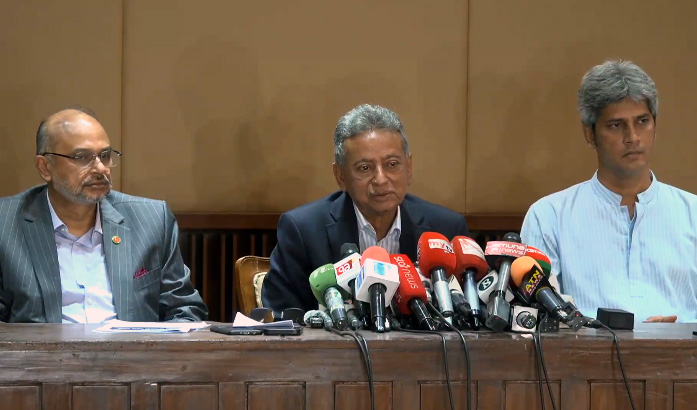
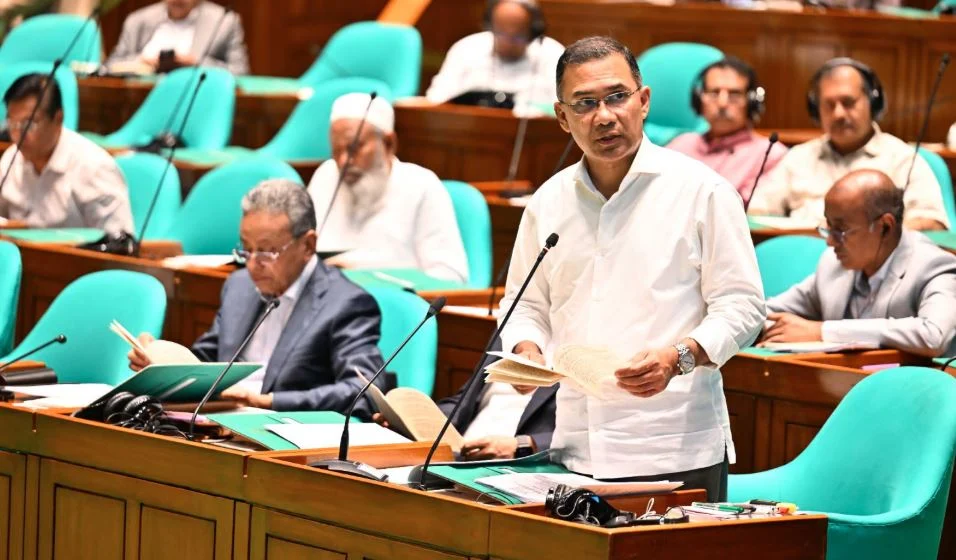
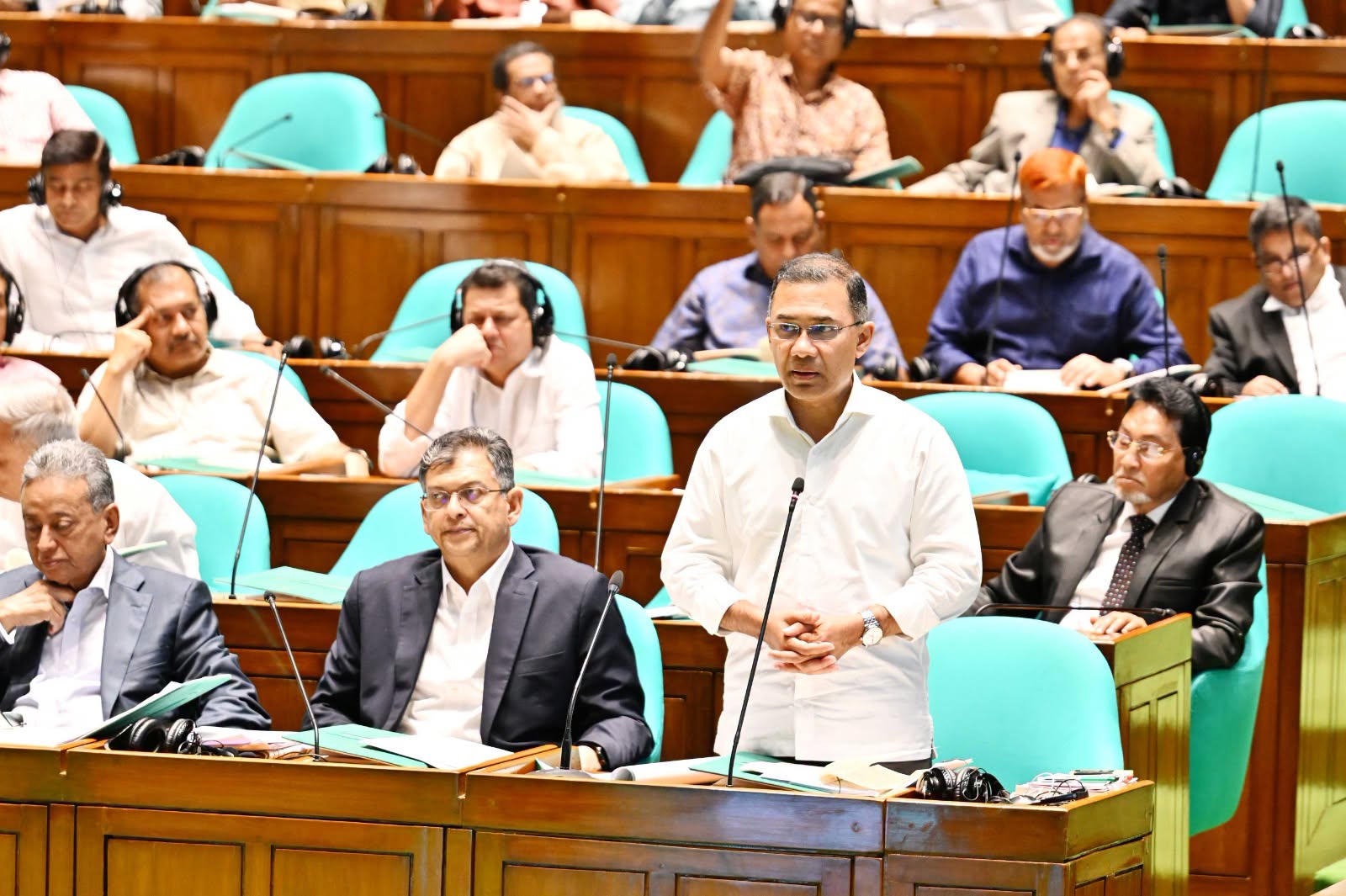
DHAKA, May 18, 2026 (BSS) - Finance and Planning Minister Amir Khosru Mahmud Chowdhury today said the government has adopted a comprehensive five-year strategic framework for reform and development aimed at rebuilding the economy through reforms, institutional restructuring, investment expansion and employment-oriented growth.
Speaking at a post-NEC meeting press briefing, the minister said the framework titled "Five-Year Strategic Framework for Reform and Development" would serve as Bangladesh's development roadmap over the next five years.
The meeting was presided over by Prime Minister Tarique Rahman at the NEC Conference Room in the city's Sher-e-Bangla Nagar area.
"It is essentially a roadmap for rebuilding the economy from fragility to prosperity through recovery, transition and reconstruction," he said.
The minister said the framework reflects the electoral commitments of the present elected government.
"We were elected by the people based on our manifesto and commitments. Naturally, this framework reflects those commitments and the aspirations of the people," he added.
Khosru said the first and foremost pillar of the framework is reform of the state structure.
According to him, the framework prioritises expansion of judicial and legal services, administrative digitalisation, strengthening law enforcement agencies and modernisation of public investment management systems.
The minister said the government also plans to launch a multi-year public programme mechanism to improve continuity, accountability and efficiency in public spending.
He said the Taka 3 lakh crore ADP for FY 2026-27 has been prepared in line with the strategic framework.
The minister said the government is restructuring development priorities by reviewing inherited projects and eliminating those lacking economic justification.
"We inherited nearly 1,300 projects. Many of them were initiated without proper priority, while some were linked with inefficiency, wastage and even corruption," he said.
"We are reviewing every project. Those that are not beneficial for the people or the economy will be dropped," he added.
The minister said projects that have already crossed certain implementation stages would be reassessed to determine whether completing them would bring meaningful economic returns.
"If we think completing a project will not benefit the country, there is no reason to continue it," he said.
Khosru said future development planning would place strong emphasis on employment generation and human resource development.
"We do not want jobless growth. Every investment must create jobs and improve productivity," he said.
The minister highlighted the government's increased focus on health, education and technical training sectors.
"We are increasing investment in technical and vocational education because we do not want our youths to remain unemployed after obtaining general degrees," he said.
Khosru said the government plans to establish more technical training institutes with international-standard accreditation and certification systems.
"Our goal is to create skilled manpower that can meet demand both inside and outside the country," he added.
The minister also stressed the importance of universal healthcare and primary health services.
"If we want to establish universal healthcare and strengthen education, investment in these sectors is unavoidable," he said.
Responding to concerns regarding implementation capacity, the minister said the government's commitment and leadership would play the decisive role.
"Leadership quality, commitment and dynamism matter. We have already demonstrated within three months that this government can take decisions quickly and implement them," he said.
Meanwhile, the Planning Ministry said the FY2026-27 ADP has been structured around five major pillars under the "Five Year Strategic Framework for Reform and Development".
The first pillar, "Reform of State Governance", focuses on expansion of judicial and legal services, administrative digitalisation, strengthening of law enforcement agencies and modernization of public investment management.
The planned introduction of a Multi-Year Public Investment Programme (MYPIP) is also a major component of this pillar.
The second pillar, "Discrimination free Socio-Economic Development", has received the highest priority with emphasis on education, healthcare, agriculture, technical education, skilled workforce development and social safety net programmes.
The third pillar, "Reconstruction and Recovery of a Fragile Economy", prioritises energy security, renewable energy, transport infrastructure, industrialisation and development of economic zones alongside employment generation and productivity enhancement.
The fourth pillar, "Balanced Regional Development", focuses on the northern region, coastal belt, hill tracts and port-centric development initiatives. Plans to develop Chattogram and Mongla as logistics hubs and strengthen coastal protection infrastructure have also been highlighted.
The fifth pillar, "Religion, Society, Sports, Culture and Solidarity", includes programmes aimed at promoting social harmony, cultural development, youth skill enhancement and sports infrastructure development.
Overall, the FY2026-27 ADP presents a reform-driven, inclusive and sustainable development framework that is expected to play an important role in Bangladesh's long-term development journey through coordinated advancement in governance, human resource development, regional balance and economic recovery.