Tuesday
25 August, 2026
News Flash
News Flash
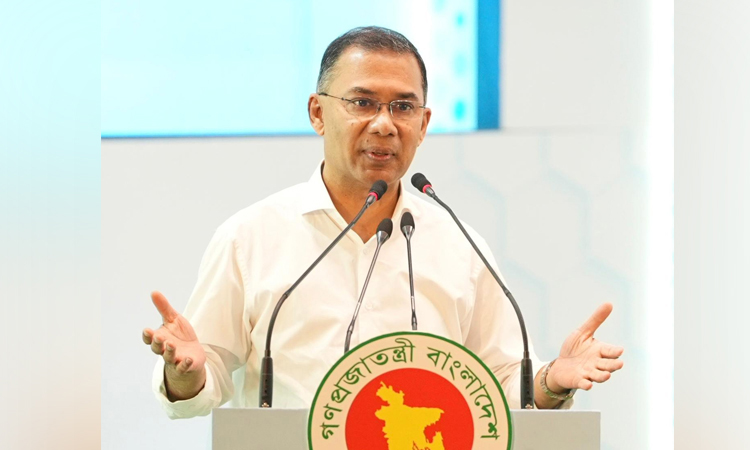
DHAKA, April 18, 2026 (BSS) - Prime Minister and BNP Chairman Tarique Rahman today said his government is committed to improving and decentralizing the healthcare, ensuring better services up to the upazila level.
"At present, specialist doctors and advanced labs are mostly Dhaka-centric. Coming out of this reality, the government is working to ensure advanced medical services through district and upazila-based hospitals," he said, addressing the 'Upazila Health and Family Planning Officers' Conference-2026' at the Osmani Memorial Auditorium in the capital this morning.
"Eliminating the disparity between urban and rural healthcare and decentralizing services is one of the top priorities of the current government. Although this cannot be implemented in a month or a year, the government is progressing step by step towards achieving this goal," said the Prime Minister.
The Health Services Division of the Ministry of Health and Family Welfare organized the conference to make the activities of Upazila Health and Family Planning Officers time-befitting to reach health services to the people at the field level.
Addressing the doctors and officials present at the conference, Tarique Rahman said the importance of the medical profession is greater than any other profession.
"Physicians are the closest friends of people suffering from illness and true companions in times of crisis. In many cases, a doctor's advice and sincere behavior play a more effective role than medicine," he said.
Therefore, alongside professional excellence, it is extremely important for doctors to grow as humane individuals, the premier added.
Noting that the current government wants to build a 'Healthy Bangladesh', he said "Before the national election, we presented the outline of the health policy to the people".
This government's policy in healthcare management is 'Prevention is better than cure', Tarique Rahman said, adding, "If we can take preventive measures at the early stage of a disease, it is possible to control its spread. The role of Upazila Health and Family Planning Officers is undeniable in implementing this policy".
According to various statistics and health experts, 71 percent of total deaths in the country occur due to non-communicable diseases, he said, adding, alongside creating proper awareness to prevent communicable diseases, work has already started to implement the 'joint declaration' formulated for the prevention and control of non-communicable diseases.
In recent years, due to environmental disasters and the impact of climate change, along with communicable diseases, non-communicable diseases such as respiratory problems, stroke, and heart disease are creating new challenges for the health system, the premier said.
"For these reasons, regular screening of non-communicable diseases like diabetes and high blood pressure at the upazila level is necessary. It is essential to create awareness among people about changing lifestyles," he added.
Stating that the BNP government believes that the Upazila Health and Family Planning Officers (UHFPOs) are the main driving force of Bangladesh's healthcare system, the Prime Minister said UHFPOs are frontline fighters in delivering quality healthcare services to the doorsteps of the people.
Noting that health care management and healthcare administrative management are closely interconnected, the BNP chairman said, an Upazila Health and Family Planning Officer has to properly perform both healthcare management and healthcare administrative management at their respective workplaces.
Without coordination and parallel development between these two aspects, he said, it will not be possible to gain desired outcomes in healthcare services.
Tarique Rahman mentioned that the BNP government has taken detailed plans for the country's health sector, saying the current government has planned to gradually allocate five percent of GDP to the health sector.
Quoting the famous American nutritionist late Jack LaLanne - "Today's healthcare is tomorrow's investment" - he said, "That is why there is a plan to establish one primary healthcare unit in each upazila and gradually in each union, following the model of the National Health Service (NHS) General Practitioner (GP) of the United Kingdom".
To serve in these healthcare units, the Prime Minister said, the current government has decided to recruit 1 lakh 'health carers' across the country in phases while 80 percent of them will be women.
The health carers will go to people's doorsteps to provide primary healthcare and necessary health advice, he added.
"In the interest of the future, we must ensure comprehensive healthcare for mothers and children at any cost. All upazila health complexes must be turned into safe places for full maternity care, safe childbirth, newborn and child healthcare," the premier stressed.
Noting that the 'life-threatening failure' of the previous two governments in not vaccinating children against measles across the country as an "unforgivable crime", he said, "We all have to be vigilant so that such incidents never happen again in the future".
"Due to the current government's emergency initiative to vaccinate against measles across the country, by the grace of Almighty Allah, it has been possible to prevent further deterioration of the situation," the Prime Minister said.
He added: "For this, I thank all doctors, health workers and everyone. I sincerely express my condolences to the parents and relatives who have lost their beloved children".
The premier, however, said it is now the demand of time to ensure healthcare services for citizens by bringing every hospital and health center under accountability.
Turning to the government initiatives undertaken in the country's health sector, he said the government is going to introduce an integrated e-health card soon, through which the health data of every citizen will be digitally stored.
This card will help every citizen receive treatment easily at any hospital in the country when needed, Tarique Rahman said, adding, "Alongside this, the current government has planned to gradually introduce a national health insurance system so that no citizen suffers financially due to medical expenses".
Informing that the government is sincere in ensuring housing, security and dignity of doctors and health workers, he said the government is determined to take appropriate steps to ensure housing, security, dignity and living standard of doctors and health professionals.
Addressing the UHFPOs again, the Prime Minister said, "Through this conference, I would like to deliver a message that you should build an effective, accountable, sustainable, humane and pro-people healthcare system in your respective areas.
"Each of you would turn your workplace into a model healthcare center-this is my expectation," he added.
Health and Family Welfare Minister Sardar Md Sakhawat Husain presided over the event while State Minister Dr MA Muhit, Health Services Division Secretary Md Quamruzzaman Chowdhury and Directorate General of Health Services (DGHS) Director General Professor Dr Pravath Chandra Biswas spoke, among others.
More than five hundred Upazila Health and Family Planning Officers from across the country participated.
At the event, the Prime Minister handed over crests to six best physicians nominated under the emergency service category, who are working at upazila level.
The six doctors are: Dr Shovan Kumar Bashakh, Dr Manjur Al Morshed Chowdhury, Dr Mojibur Rahman, Dr Sajid Hasan Siddiqui, Dr Suman Kanti Saha and Dr Tasnim Zubair.