Tuesday
25 August, 2026
News Flash
News Flash
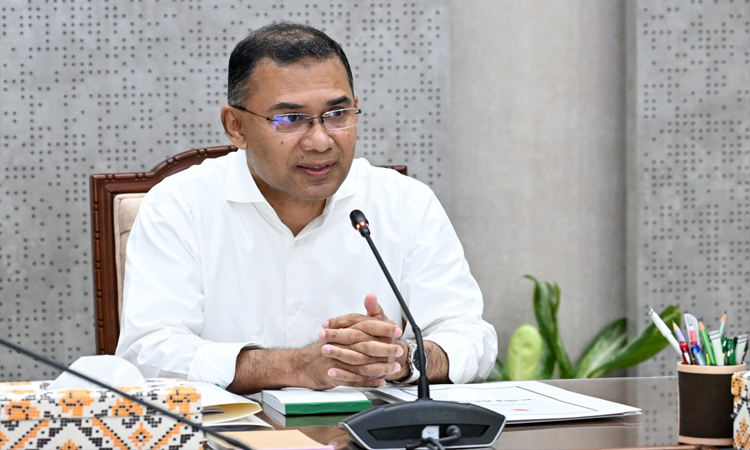
JASHORE, April 9, 2026 (BSS) –Prime Minister Tarique Rahman is set to visit Jashore on April 27 to inaugurate the re-excavation of the historic Ulasi–Jadunathpur canal in Sharsha upazila, a project deeply linked to the legacy of Shaheed President Ziaur Rahman.
During the daylong visit, the Prime Minister will also take part in several development activities, generating enthusiasm among local residents as well as leaders and activists of the district.
This will be Tarique Rahman's first visit to Jashore as Prime Minister following the 13th national election and his second visit to the district in last three months.
Earlier, on February 2, he addressed a mammoth election rally at Jashore Upashahar Degree College ground.
Jashore Zila Parishad Administrator and District unit of BNP General Secretary Delwar Hossain Khokon confirmed the visit, saying that preparatory meetings involving district administration officials will be held on Saturday to ensure the smooth arrangement of the visit, followed by a party preparatory meeting on the day.
State Minister for Power, Energy and Mineral Resources and Jashore-3 lawmaker Aninda Islam Amit is expected to attend the meetings.
According to the schedule, the Prime Minister will arrive in Jashore by air at 10:00 am.
He will first inaugurate the Ulasi–Jadunathpur canal re-excavation programme in Sharsha.
Later, the premier will lay the foundation stone of a 500-bed Jashore Medical College Hospital in the city.
In the afternoon, he will address a rally at Jashore Eidgah Maidan and return to Dhaka in the evening.
Historic ‘Ulasi Model’
Ulasi–Jadunathpur holds a unique place in Bangladesh’s rural development history. On November 1, 1976, President Ziaur Rahman launched a landmark social initiative from the area, later which is widely known as 'Ulasi Model'.
The programme promoted self-reliance through voluntary labour. Within six months and with the participation of the local people about four kilometres of canal were excavated, removing water-logging from around 22,000 acres of land across five water bodies in Uttar Sharsha.
The initiative enabled the introduction of Boro cultivation and significantly transformed the local agricultural system through irrigation support.
According to eyewitnesses, President Ziaur Rahman personally took part in the excavation work alongside local people, symbolizing grassroots participation and national unity.
The day still lives vividly in the memories of local elderly residents. Abdul Barik Mondal, a centenarian from Ulasi village, recalls that the President arrived by helicopter and personally cut soil, filling baskets with his own hands.
Another eyewitness of the same village, Abu Bakkar Siddiqui, said the President even took off his (Siddiqui’s) cone-shaped hat or cover worn on the head, traditionally made from bamboo or palm leaves locally known as ‘toka’ or 'Mathal' and wore it himself, working alongside the labours.
This close bond and shared labour transformed Ulasi into a symbol of national confidence and unity, they said.
Revival initiative
Over time, the canal has become silted and nearly defunct due to prolonged neglect, while associated monuments have also been eroded.
Responding to long-standing local demands, the government has undertaken initiatives to restore the canal and revive its economic importance.
State Minister Aninda Islam Amit said the Prime Minister’s visit would add a new dimension to Jashore’s development, noting that both the canal re excavation work and the introduction of medical college hospital were key electoral commitments.
Executive Engineer of the Water Development Board in Jashore Palash Kumar Banerjee said the project proposal has already been sent to the ministry for approval.
Once implemented, the canal is expected to ease water-logging and restore its potentiality as a major natural source of fish.
Local residents believe that reviving the historic Ulasi Model—pioneered by Shaheed President Ziaur Rahman and now being modernised under Prime Minister Tarique Rahman—could play a significant role in strengthening the rural economy and ensuring national food security.