Wednesday
26 August, 2026
News Flash
News Flash
DHAKA, March 1, 2026 (BSS) - Social Welfare Minister Abu Zafar Md. Zahid Hossain today said ‘Proxy Means Test’ (PMT) scoring will be used to ensure that the distribution of Family Cards remains completely free from political influence.
“During the pilot phase, families classified within the 1st, 2nd, and 3rd quantiles of the 0–1000 score range—representing the ultra-poor, poor, and vulnerable lower-income groups—will be automatically included in the list,” he said, according to an official handout.
He said the poverty tiers may be redefined periodically based on reviews and evaluations of the country’s socio-economic conditions.
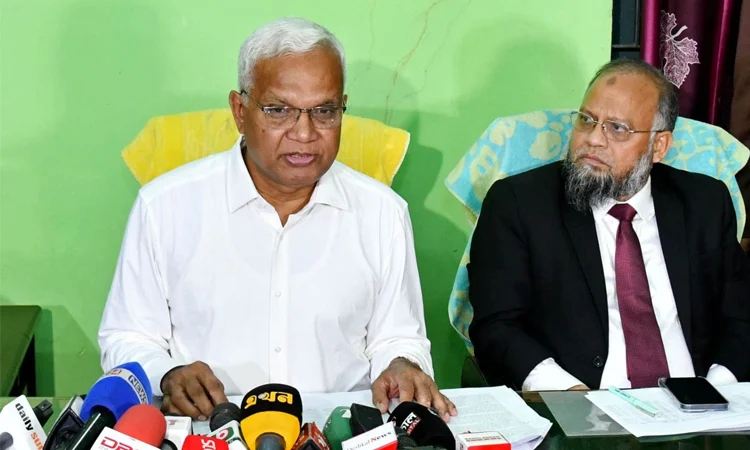
Zahid, also minister for women and children affairs, said this in a press briefing after visiting the Family Card piloting activities organized by T&T Boys’ School during his inspection of the Banani Karail slum and Sattala slum areas in Dhaka.
He said the “Family Card Piloting Implementation Guidelines 2026” have been formulated to translate the state’s constitutional commitment into reality through a modern digital framework.
The minister said the core philosophy of the programme is that “the family—not the individual—is the fundamental unit of development.”
The initiative aims to eliminate existing inconsistencies among more than 95 social safety net programs currently in operation, prevent multiple benefits being received by the same individual, and address the significant exclusion of genuine poor households—thereby establishing a non-discriminatory and humane welfare state.
Zahid said eligibility in rural areas will be determined based on ownership of homestead and cultivable land of 0.50 acres or less, along with family income and assets.
To ensure women’s empowerment, the card will be issued directly in the name of the family’s “mother” or “female head”, he said adding under the pilot program, each selected family will receive a monthly direct cash assistance of TK 2,500.
The funds will be transferred from the government treasury to the beneficiary woman’s mobile wallet or bank account through the Government-to-Person (G2P) method, said the minister.
He said to implement this extensive initiative; a strong organizational structure has been established—from the Cabinet Committee level down to the grassroots.
Separate implementation and monitoring committees have been formed at the upazila, union, and ward levels, he said.
In the pilot phase, 14 diverse areas across the country have been selected, including Banani Karail slum, Mirpur’s Alimiartek slum, and Baganbari slum in Dhaka (urban slum areas); Patenga in Chattogram (industrial area); Lama in Bandarban (hilly region); Dirai in Sunamganj (haor region); and Thakurgaon Sadar (border area), said Zahid.
Poverty concentration, geographical challenges, and backwardness were given priority in selecting these areas, he said adding according to the implementation roadmap, 10,000 families across 14 units will receive the card in the first phase of the pilot programme.
Zahid said subsequently, the number will be increased by 10,000 families at each stage, bringing a total of 40,000 families under the Family Card programme by June 2026.
The initiative is expected to be regarded as a historic charter for the economic emancipation of Bangladesh’s poor population, ensuring the dignity and rights of every citizen, he said.
Social Welfare Ministry Secretary Dr. Mohammad Abu Yusuf, along with officials from the ministry and the Department of Social Services and teachers, were present at the event.