Wednesday
26 August, 2026
News Flash
News Flash
DHAKA, Feb 21, 2026 (BSS)- As the country embarked on hard earned democratic process the nation today paid homage to the martyrs of the language movement with new zeal and renewed nationalistic spirit.
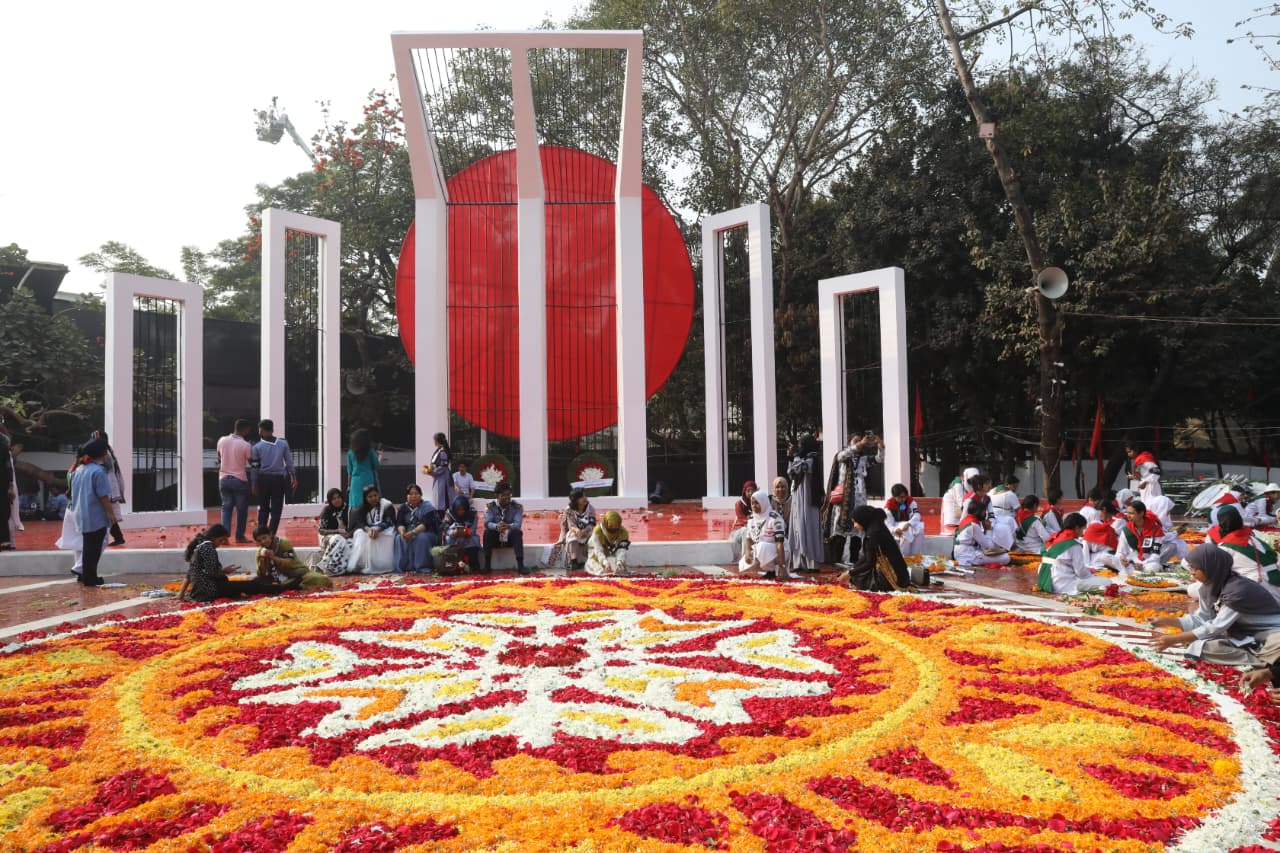
People from all walks of life, including students, professionals, government and private officials, and members of social, cultural, and political organizations paid glowing tribute to the Language Martyrs by placing wreaths on altar of Shaheed Minar across the country.
The day was observed as Martyrs’ Day and International Mother Language Day with solemnity commemorating the martyrdom of Rafique, Shafique, Salam, Barkat, Jabbar and others on February 21, 1952 during the Language Movement.
Clad in traditional white and black attire of Amar Ekushey visitors offered flowers at the Shaheed Minar altar, lining up barefoot in respect.
As part of the national programme the paying of homage began in Dhaka at one minute past zero hours and continued until Sahri, after which the pre-dawn procession resumed around 6:30 am, with participants from educational institutions, offices, and various organizations took part.
Security was significantly tightened around the Shaheed Minar on the occasion.
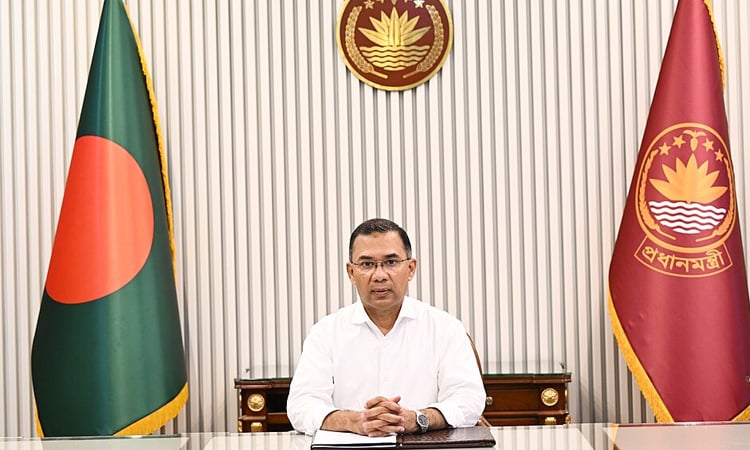
This year marks the 74th anniversary of the Language Movement. At the zero hour, President Mohammed Shahabuddin and Prime Minister Tarique Rahman paid their tributes to the martyrs.
The President laid a wreath at 12:01 am, followed by the Prime Minister at 12:07 am, marking his first official tribute as premier.
The Prime Minister stood in solemn silence, offered prayers for the eternal peace of the martyrs, and later laid wreaths again at the Shaheed Minar along with his cabinet colleagues and family.
Opposition Leader in Parliament and Jamaat-e-Islami Ameer Dr Shafiqur Rahman and leaders of the 11-party alliance, also paid homage at the Shaheed MInar, offering prayers for the martyrs' eternal peace.
This marked the first formal participation in offering tributes to language martyrs by Jamaat at the central Shaheed Minar.
The chiefs of the three services also paid tributes. Diplomats of different country paid tributes to the language martyrs later.
Chief Justice Zubayer Rahman Chowdhury and other judges of the Supreme Court paid tributes this morning.
Political parties including ruling BNP and its various units, National Citizen Party (NCP), Gano Odhikar Parishad, NDM, AB Party, Jatiya Party, Jasad and Communist Party of Bangladesh placed wreaths at the Shaheed Minar.
Student organizations including DACSU, Jatiyatabadi Chhatra Dal, Chhatra Union, Chhatra Front and Anti-Discrimination Student Movement also laid wreaths at the altar of the Shaheed Minar in honor of the martyrs.
Educational institutions, including Dhaka University and Jagannath University, and various social, cultural organizations, government and private institutions paid their tributes.
As the day progressed, the queues of common citizens—including children, youth, and elderly persons—grew longer, turning the Shaheed Minar area into a sea of people.
The entire area resonated with the somber tunes of 'Amar Bhaier Rokte Rangano Ekushey February,' as the nation united in deep love and respect for the mother tongue.
Prime Minister Tarique Rahman released a commemorative postage stamp, an opening envelope and a canceller on the occasion of the great Martyrs’ Day and the International Mother Language Day at his office in the city’s Tejgaon area.
The day is being observed around the world as the UNESCO recognised the 'February 21 (Ekushey February)' as the International Mother Language Day on November 17, 1999.
On February 21 in 1952, Salam, Rafique, Shafique, Jabbar and Barkat embraced martyrdom in police firing in front of the Dhaka Medical College and Hospital (DMCH) as they took to the street to intensify the campaign to establish Bangla as the state language of the then Pakistan, sowing the seeds of subsequent movements for the country's independence.
The movement for Bangla, however, did not stop and the Pakistan government on February 29, 1956 was compelled to recognise Bangla as one of the state languages apart from Urdu.
However, the movement against repression and misrule of the Pakistani government continued and subsequently led to the War of Independence and ultimately the emergence of Bangladesh.
Today was a public holiday.
President Mohammed Shahabuddin and Prime Minister Tarique Rahman issued separate messages on the eve of the day.
National flags were flown at half-mast at government, semi-government, autonomous and private buildings and educational institutions and offices across the country.
Cross section of people also laid wreath and attended pre-dawn processions (Prabhatferi) at Azimpur graveyard and other locations in the city.
Identical programmes were also held in divisional cities, districts towns and upazilas across the country
State-run broadcasters Bangladesh Betar and BTV and private television, channels aired special programmes, while newspapers published commemorative supplements to mark the day.
Various street islands and important points in Dhaka were decorated with festoons featuring alphabets of all ethnic communities of the country, including Bangla.
Special prayers were offered in mosques, temples, churches and other places of worship across the country for the eternal peace of the souls of the language martyrs.
The Mass Communication Department organised mobile musical concerts on trucks across Dhaka metropolis and boat-based cultural programmes on waterways surrounding the capital. Films on language movement were screened at district and upazila levels.
Bangladesh missions abroad observed the day with due respect.
Bangladesh Shishu Academy arranged drawing competitions, recitations of rhymes and poems, and cultural programmes for children.
Bangla Academy will host month long Ekushey Book Fair from February 25.
Bangladesh National Museum and other museums under it, Shilpacharya Zainul Folk and Crafts Museum, Bangladesh Folk and Crafts Foundation, and all archaeological sites and museums under the Department of Archaeology offered free entry to children, adolescents, students, senior citizens and persons with special needs on the day.
Additionally, the Bangladesh National Museum and Museum of Independence screened documentaries, displayed archival materials on the Language Movement, showcased graffiti from the 2024 mass uprising, and organised Bangla handwriting competitions and seminars for children and adolescents.
Department of Public Libraries held essay and drawing competitions and discussions on the Language Movement at public libraries at divisional, district and upazila levels.