Thursday
27 August, 2026
News Flash
News Flash
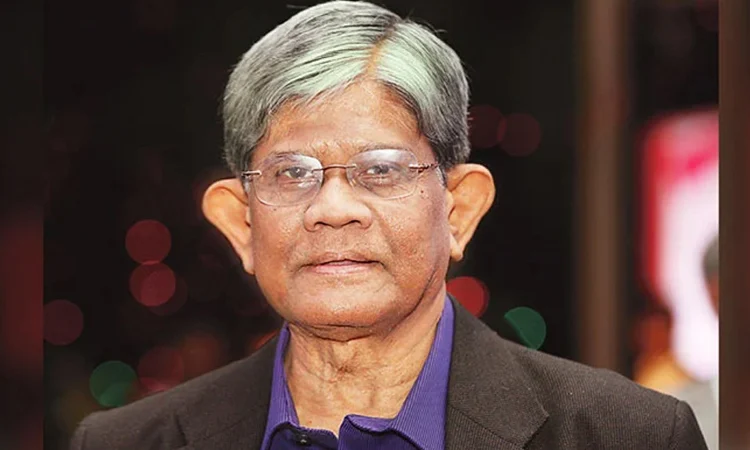
DHAKA, Feb 9, 2026 (BSS) - Finance Adviser Dr Salehuddin Ahmed today said
that Bangladesh's economy is not in a bad shape right at this moment although
it is facing formidable challenges that require sustained reforms, better
coordination and strong political commitment from the next government.
Speaking at a discussion meeting, the adviser said that despite multiple
domestic and global pressures, Bangladesh has managed to maintain
macroeconomic stability and avoid a deep crisis. "The economy was on the
verge of collapsing. But, we are managing the situation...the challenges are
there and must not be underestimated," he said.
The Finance Adviser was addressing an event titled "Macroeconomic Insights:
An Economic Reform Agenda for the Elected Government" as the chief guest held
at a hotel in the capital this afternoon.
The Policy Research Institute of Bangladesh (PRI) and Department of Foreign
Affairs and Trade (DFAT) of the Australian Government jointly organised the
event.
Presided over by Dr. Zaidi Sattar, chairman of PRI,
Dr. KAS Murshid, former director general of Bangladesh Institute of
Development Studies (BIDS), Clinton Pobke, deputy high commissioner of High
Commission of Australia to Bangladesh, spoke as special guests.
Dr. Ashikur Rahman, principal economist of PRI made the keynote presentation
while Dr. Fahmida Khatun, executive director of Centre for Policy Dialogue
(CPD), Dr. M. Masrur Reaz, chairman and CEO of Policy Exchange Bangladesh
(PEB) spoke as distinguished panelists.
The closing remark was made by Dr. Ahmad Ahsan, director of PRI.
Dr Salehuddin noted that Bangladesh has shown resilience amid global shocks,
including post-pandemic disruptions, geopolitical tensions, energy price
volatility and tightening global financial conditions. Prudent macroeconomic
management has helped the country navigate a difficult period, he added.
Referring to inflation, balance of payments pressure and fiscal stress, he
said these issues are not unique to Bangladesh. "Many countries are going
through similar problems. What matters is how we respond through reforms and
institutional strengthening," he continued.
The Finance Adviser said the interim government has focused on stabilising
the macroeconomy, ensuring fiscal discipline, managing foreign exchange
pressure and keeping essential economic operations continuing.
"We have tried to take balanced decisions so that the economy continues to
function while protecting the vulnerable," he said.
He highlighted that revenue mobilisation remains a major challenge, noting
that Bangladesh's tax-to-GDP ratio is still very low compared to peer
economies. "It is extremely difficult to run a modern state with such a low
level of revenue collection," he said, stressing the need for tax reform,
expansion of the tax base and improved compliance.
MORE..............