Thursday
27 August, 2026
News Flash
News Flash
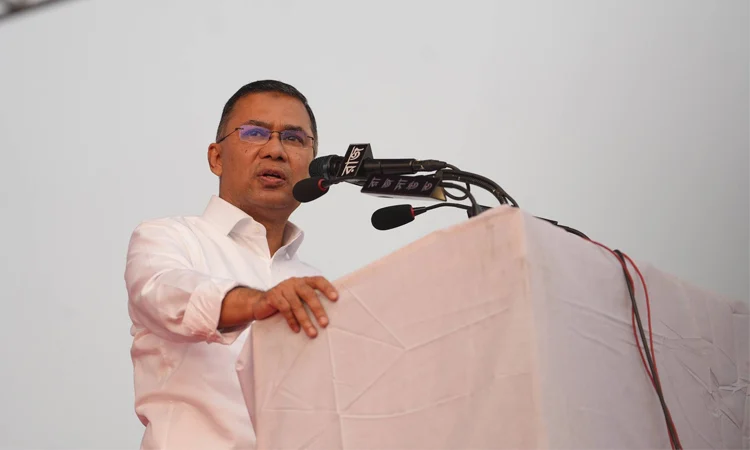
DHAKA, Feb 4, 2026 (BSS) - US-based news magazine The Diplomat today carried an analysis on Bangladesh's February 12 elections predicting as the sequel to voting process BNP Chairman Tarique Rahman would emerge as the South Asian nation's next prime minister.
The article titled "An Interview With Tarique Rahman - Likely Bangladesh's Next Prime Minister" referred to several opinion polls ahead of the elections suggesting Rahman to be the next premier.
The Diplomat dubbed him as the future premier after global news outlets like the Bloomberg, Time and The Economist called him as the frontrunner ahead of the polls under the oversight of Nobel Peace Prize winner Prof Muhammad Yunus' interim government.
The report noted one of the opinion surveys conducted in December showed support for the Bangladesh Nationalist Party (BNP) at around 70 percent, with its nearest challenger, the Jamaat Islami (JI) at 19 percent.
Another survey conducted by private Innovision Consulting showed that more than 47 percent of people now see the possibility of Rahman becoming the prime minister while 22.5 percent expect the JI chief Shafiqur Rahman to become the premier.
The Diplomat observed the youths dubbed as Gen Z to be a major deciding factor in the voting saying "a large portion of voters in this election are from Gen Z, meaning Bangladesh's youth will decide the next prime minister".
"And many Gen Z voters are attending the political program(me)s of the BNP, especially those helmed by party chairman Tarique Rahman," it read.
The interviewer talked to Rahman on his way to central Tangail on a bus to address an election rally after attending another one in northwestern Sirajganj when he responded to a series of questions on his plan for domestic and foreign policies.
Replying to a question about the Gen Z, Rahman told The Diplomat that they are engaging with the thinking of Gen Z.
"We are prioritizing job creation, technical education, sports, the IT sector, and job market, which I believe resonates strongly with Gen Z. If you look at today's atmosphere, you'll notice that most of the attendees in the meeting were Gen Z," he said.
Rahman told the outlet he listened to them through a programme called "The Plan," where students from different universities and backgrounds share their thoughts, concerns, and ideas and "I truly enjoy connecting with them".
The Diplomat pointed out that there was a criticism that during deposed prime minister Sheikh Hasina's Awami League regime, there was an India-oriented foreign policy while the United States, China and India had their eyes on Bangladesh.
The outlet asked Rahman what would be his foreign policy outlook to which the BNP chairman said "our national interest must come first".
"Our foreign policy will be a 'Bangladesh First' policy. We will prioritize an economy-based foreign policy that safeguards Bangladesh's interests. We believe in mutual trust, mutual respect, and mutual benefit in our foreign relations," he said.
"No matter which countries we engage with, our national interest must come first."
Reflecting the aspirations of the people, he said BNP would promote peaceful coexistence in society and mutual respect in politics and "we will uphold the rule of law, freedom of speech, and ensure human rights for all," he said.
Regarding the voting, the Diplomat reminded Rahman that a section of Gen Z particularly inclined to the National Citizens Party or NCP would oppose him and challenge BNP in Parliament and on the streets in the coming days.
"I don't feel challenged. We are a political party. We are going to the people with our plans and commitments, and others are doing the same. The people will decide which plan is better for them," Rahman said as asked how much challenge he felt about the hostile Gen Z.
He added that BNP was engaging with the thinking of Gen Z and "we are prioritizing job creation, technical education, sports, the IT sector, and job market, which I believe resonates strongly with Gen Z".
Asked if it was a "pipe dream" as Rahman committed to make Bangladesh a trillion-dollar economy while Bangladesh's 2025 GDP was around US$475 billion and could Bangladesh realistically achieve a trillion-dollar economy with cheap labor and garments.
"Becoming a trillion-dollar economy is difficult but not impossible," he said.
He said out of 200 million people, 50 million needed jobs while "we have to fix law and order. We also have to strengthen the economy and help businesses grow across the country".
Rahman said Bangladesh economy now stood on two major pillars - garments and remittances - which, he said, were introduced under the BNP government.
"We will (now) emphasize the IT sector. At the same time, we will also pay attention to the semiconductor industry, light engineering, footwear, and SMEs," he said.
Rahman said the food sector, including processed food, has strong potentials and "we can produce enough fish and vegetables and export them abroad. We are also exploring opportunities in the creative economy".
Asked about how to deal with the challenges of loan default and money laundering, he said, "If we ensure strong financial governance, this problem can be solved. Our commitment is to build a transparent and accountable system where corruption will not be tolerated and abusers of power will be brought to justice".
Replying to a question regarding challenge of maintaining the law and order, he said his party wanted to take law and order to a place where people's everyday security was not disrupted and where "people can return home without fear at night (while) the economy runs properly".
Asked for elaborating his commitment to deal with climate change challenges, Rahman said "We will begin, because we must begin. And we will responsibly manage resources and also will mobilize funds from the Global Climate Fund"
He said BNP would prioritize excavating 20,000 kilometers of canals and planting 250 million trees.
"The reality is stark. In the past, digging just 20 feet was enough to access groundwater, but today even drilling 300 feet often fails to reach water. So, is this really 'too ambitious' or simply unavoidable?"
About his electoral pledges, Rahan said "we will work to implement our 31-point charter. In particular, we have identified seven core priorities such as the family card, farmer card, health care, employment, education, and we will place special emphasis on these issues".
"We will bring positive change to society by addressing the people's interests and aspirations. We will uphold the aspirations of the people. We will establish the power of the people - this is my commitment to the people of the country," he concluded.